
Carved Teak Indian Manjus Dowry Chest From Banswara - 19th Century
This exceptional 19th-century Indian manjus dowry chest is a striking example of traditional craftsmanship from Gujarat, richly decorated with intricate chip carving of remarkable quality. Originally presented as part of a bride’s dowry, pieces such as this held great cultural significance, symbolising wealth, status, and the hopes of a prosperous marriage.
The façade is adorned with beautifully carved panels and retains layers of original paint in vivid tones of blue, red, and green, now softly worn to a wonderfully distressed patina. Three front-opening doors reveal a generous internal storage space, making the piece as practical as it is decorative. Raised on sturdy legs, the chest has a strong architectural presence and would make a captivating focal point in both traditional and contemporary interiors.
- Origin: Gujarat, India
- Date: 19th Century
- Material: Solid Wood
- Features: Exceptional Chip Carving, Three Doors, Large Internal Storage, Original Painted Finish
- Condition: Good Antique Condition With Age-Related Wear, Losses To Paint Consistent With Age
- Dimensions: W145 x D48 x H82 cm
More Images




Carved Teak Indian Manjus Dowry Chest From Banswara - 19th Century
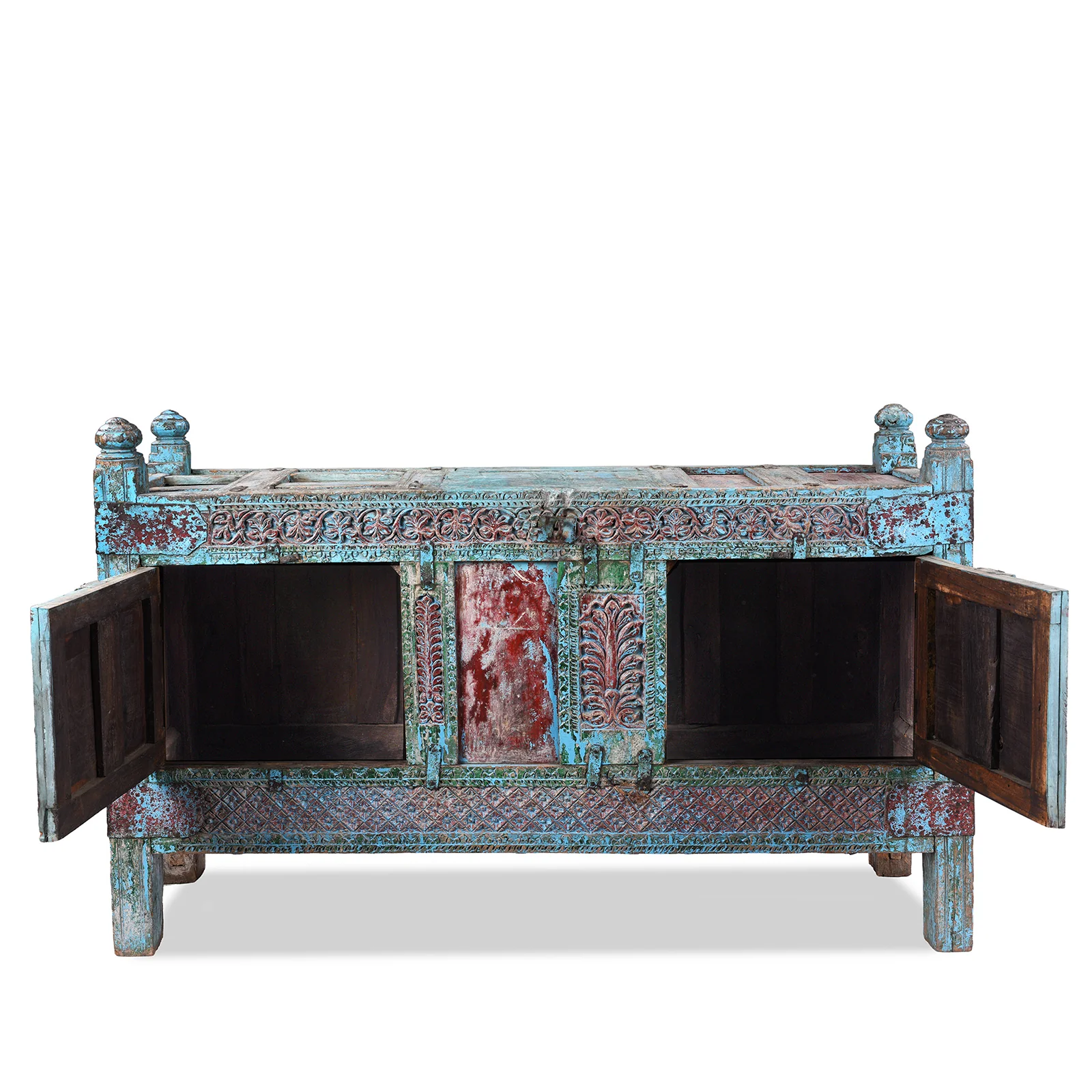
This exceptional 19th-century Indian manjus dowry chest is a striking example of traditional craftsmanship from Gujarat, richly decorated with intricate chip carving of remarkable quality. Originally presented as part of a bride’s dowry, pieces such as this held great cultural significance, symbolising wealth, status, and the hopes of a prosperous marriage.
The façade is adorned with beautifully carved panels and retains layers of original paint in vivid tones of blue, red, and green, now softly worn to a wonderfully distressed patina. Three front-opening doors reveal a generous internal storage space, making the piece as practical as it is decorative. Raised on sturdy legs, the chest has a strong architectural presence and would make a captivating focal point in both traditional and contemporary interiors.
- Origin: Gujarat, India
- Date: 19th Century
- Material: Solid Wood
- Features: Exceptional Chip Carving, Three Doors, Large Internal Storage, Original Painted Finish
- Condition: Good Antique Condition With Age-Related Wear, Losses To Paint Consistent With Age
- Dimensions: W145 x D48 x H82 cm
Product Information
Product Information
Shipping & Returns
Shipping & Returns
Description
This exceptional 19th-century Indian manjus dowry chest is a striking example of traditional craftsmanship from Gujarat, richly decorated with intricate chip carving of remarkable quality. Originally presented as part of a bride’s dowry, pieces such as this held great cultural significance, symbolising wealth, status, and the hopes of a prosperous marriage.
The façade is adorned with beautifully carved panels and retains layers of original paint in vivid tones of blue, red, and green, now softly worn to a wonderfully distressed patina. Three front-opening doors reveal a generous internal storage space, making the piece as practical as it is decorative. Raised on sturdy legs, the chest has a strong architectural presence and would make a captivating focal point in both traditional and contemporary interiors.
- Origin: Gujarat, India
- Date: 19th Century
- Material: Solid Wood
- Features: Exceptional Chip Carving, Three Doors, Large Internal Storage, Original Painted Finish
- Condition: Good Antique Condition With Age-Related Wear, Losses To Paint Consistent With Age
- Dimensions: W145 x D48 x H82 cm