Gilded Teak Standing Mandalay Buddha - Ca 1920
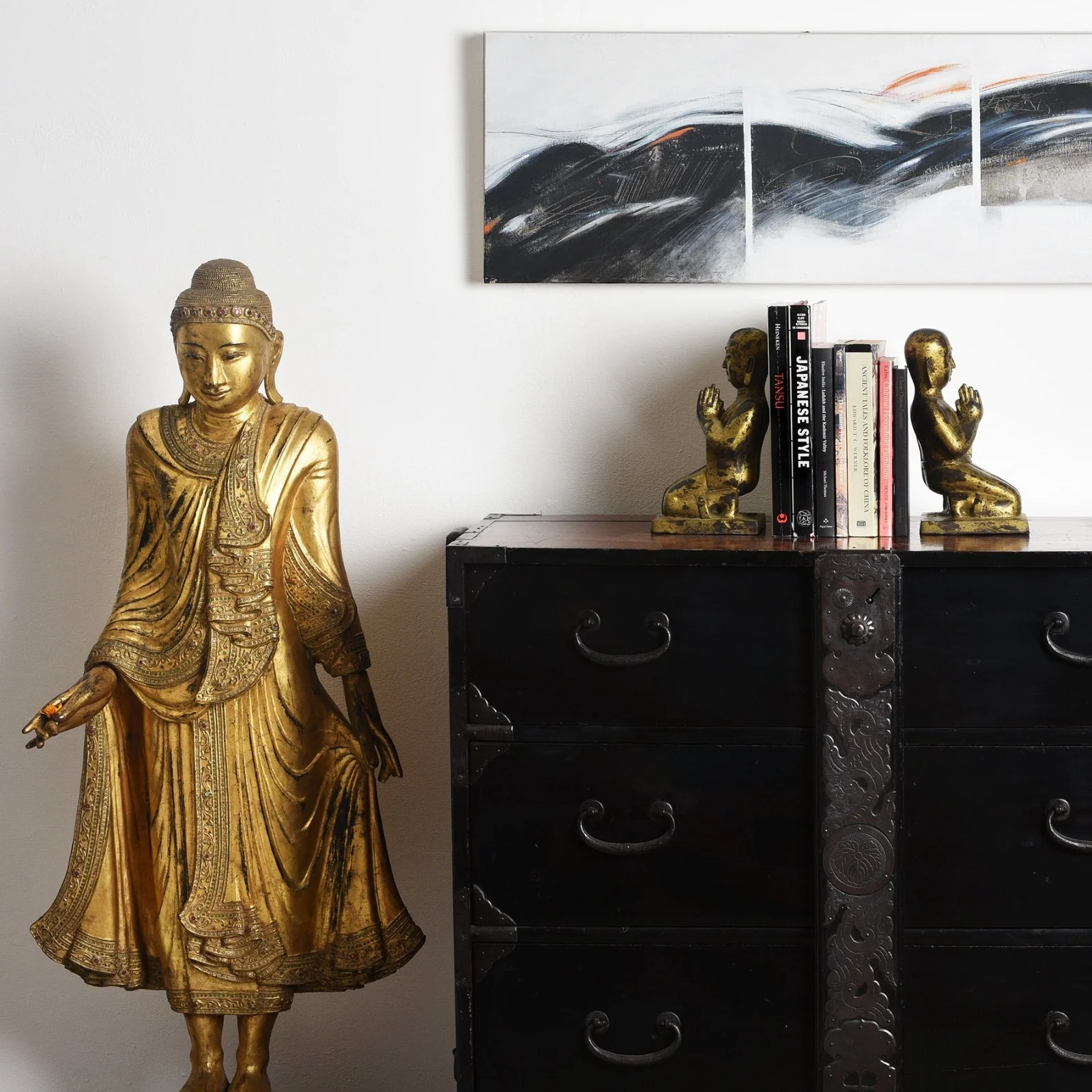
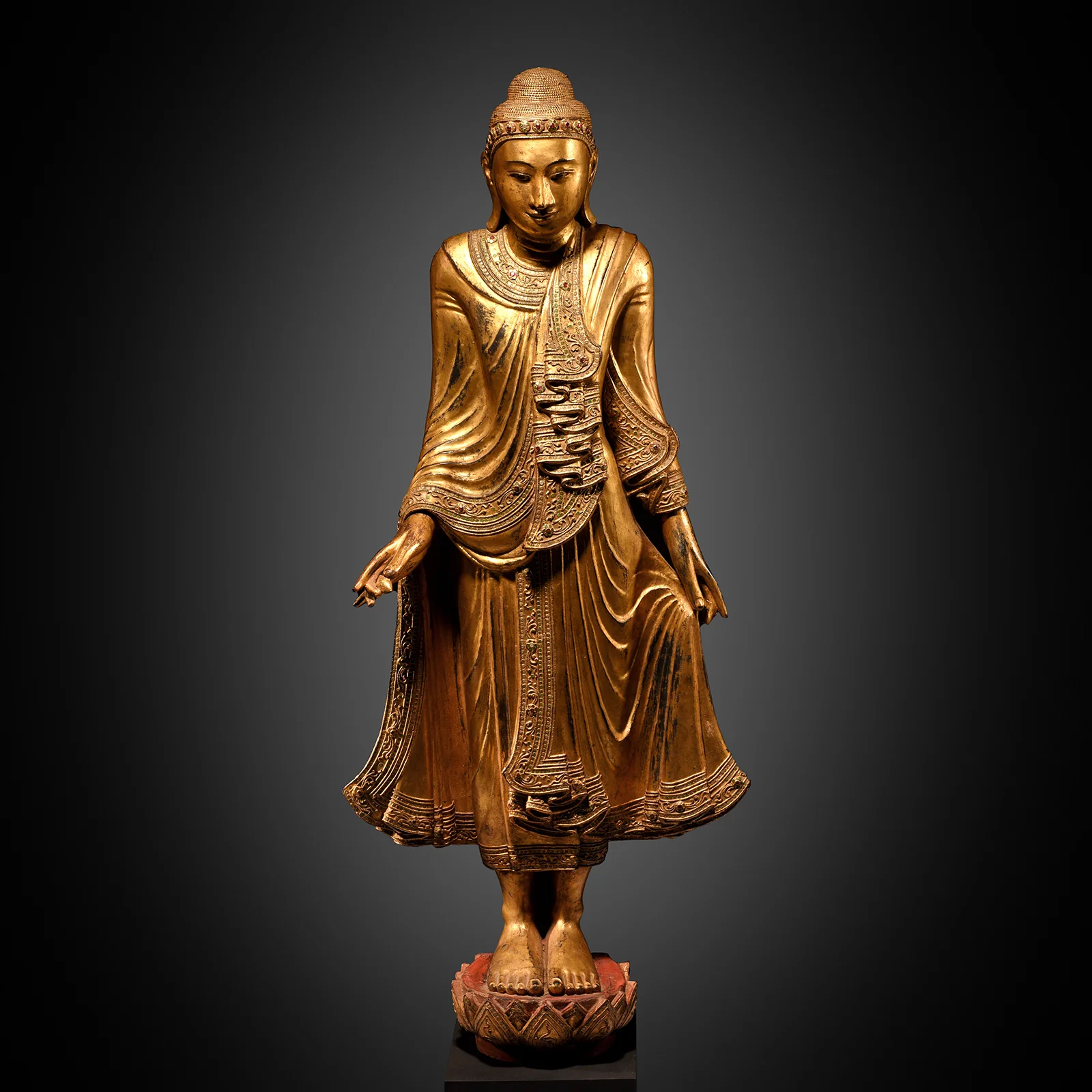
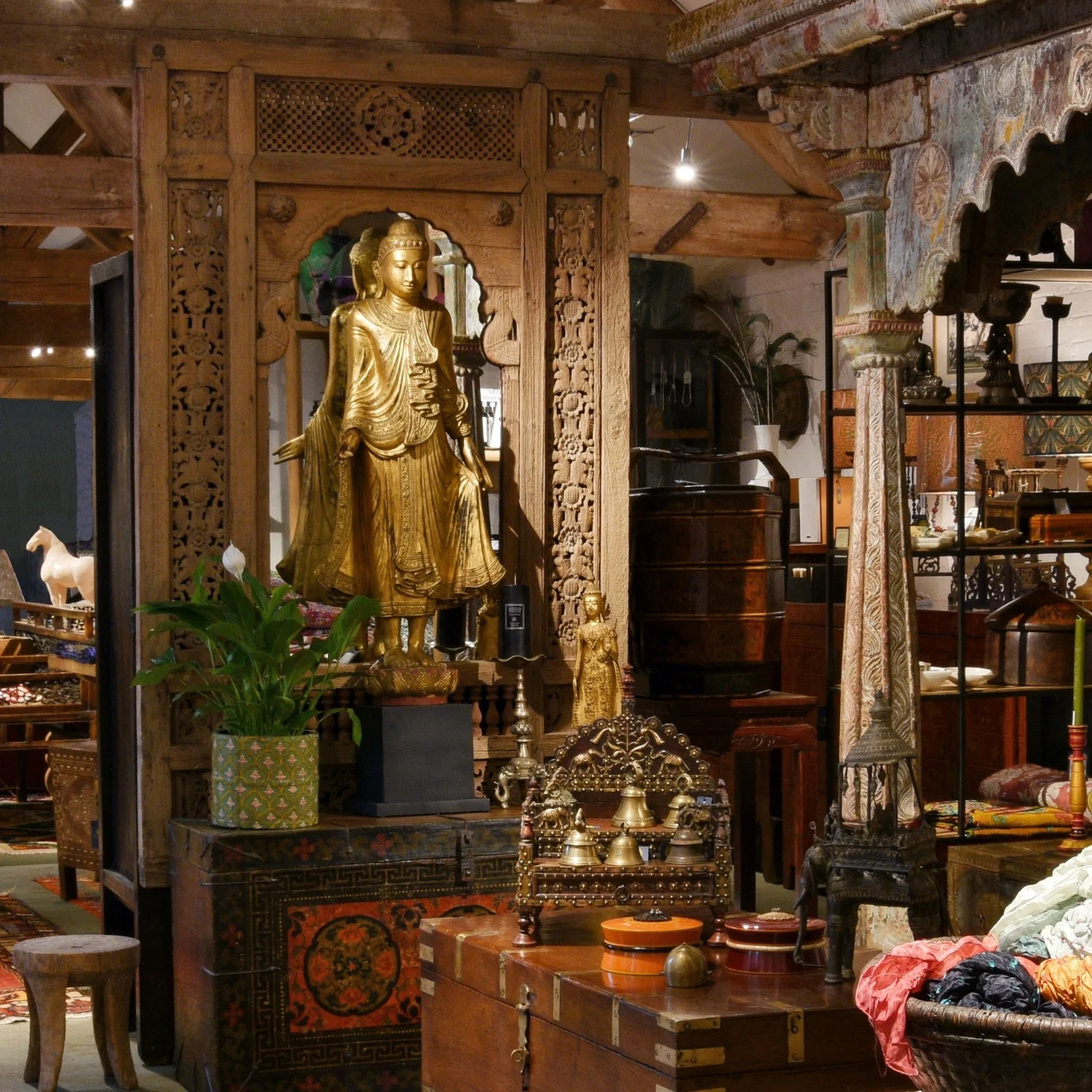
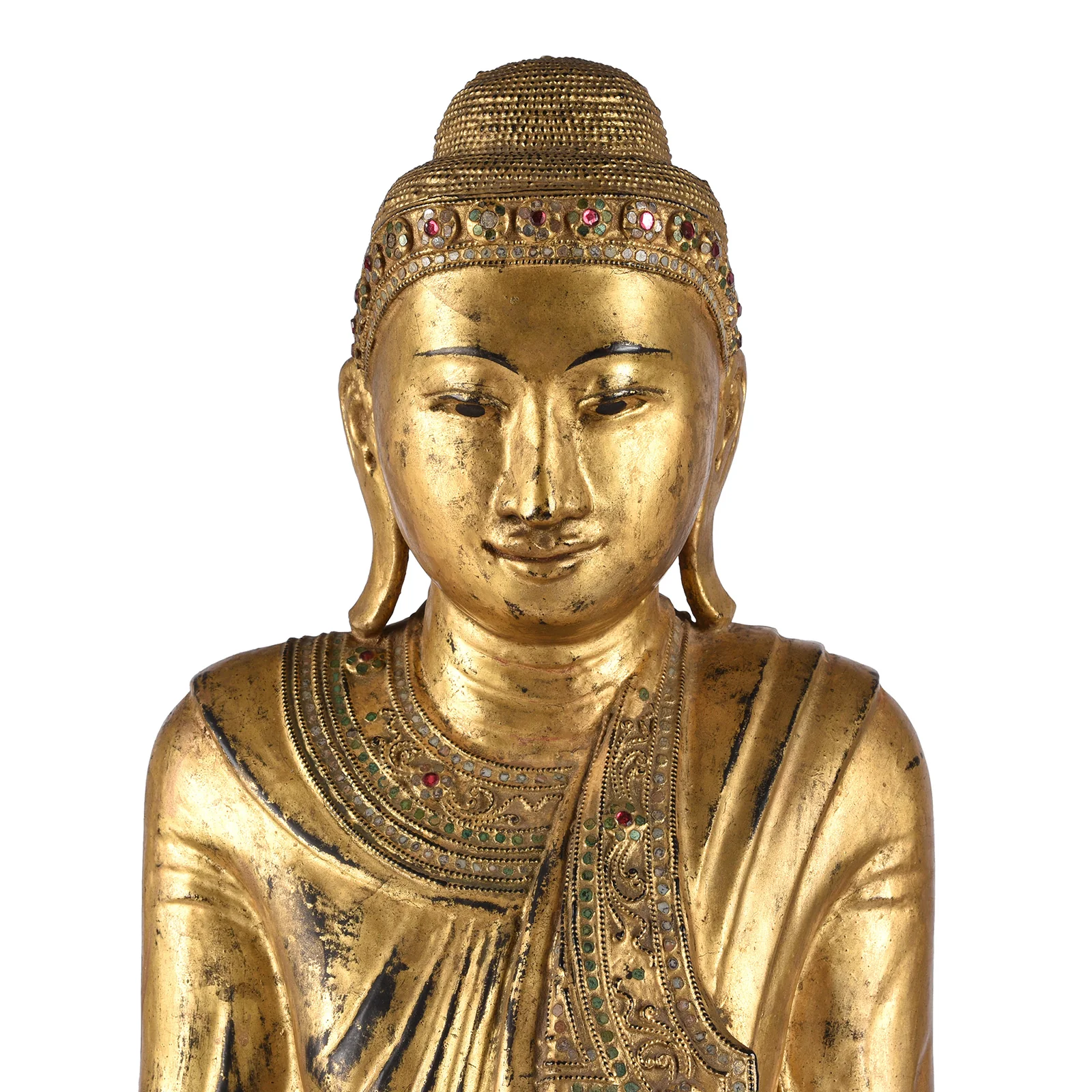
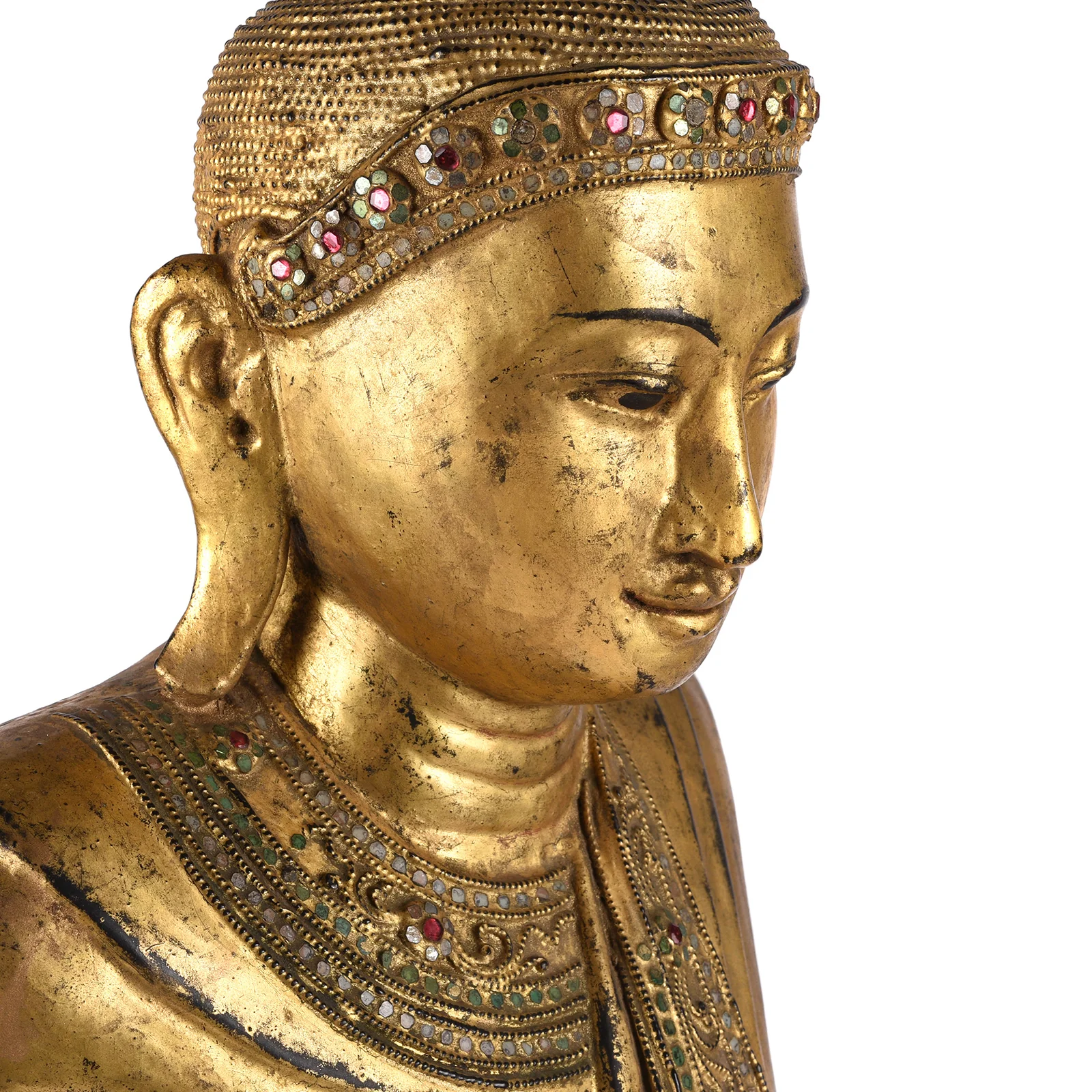
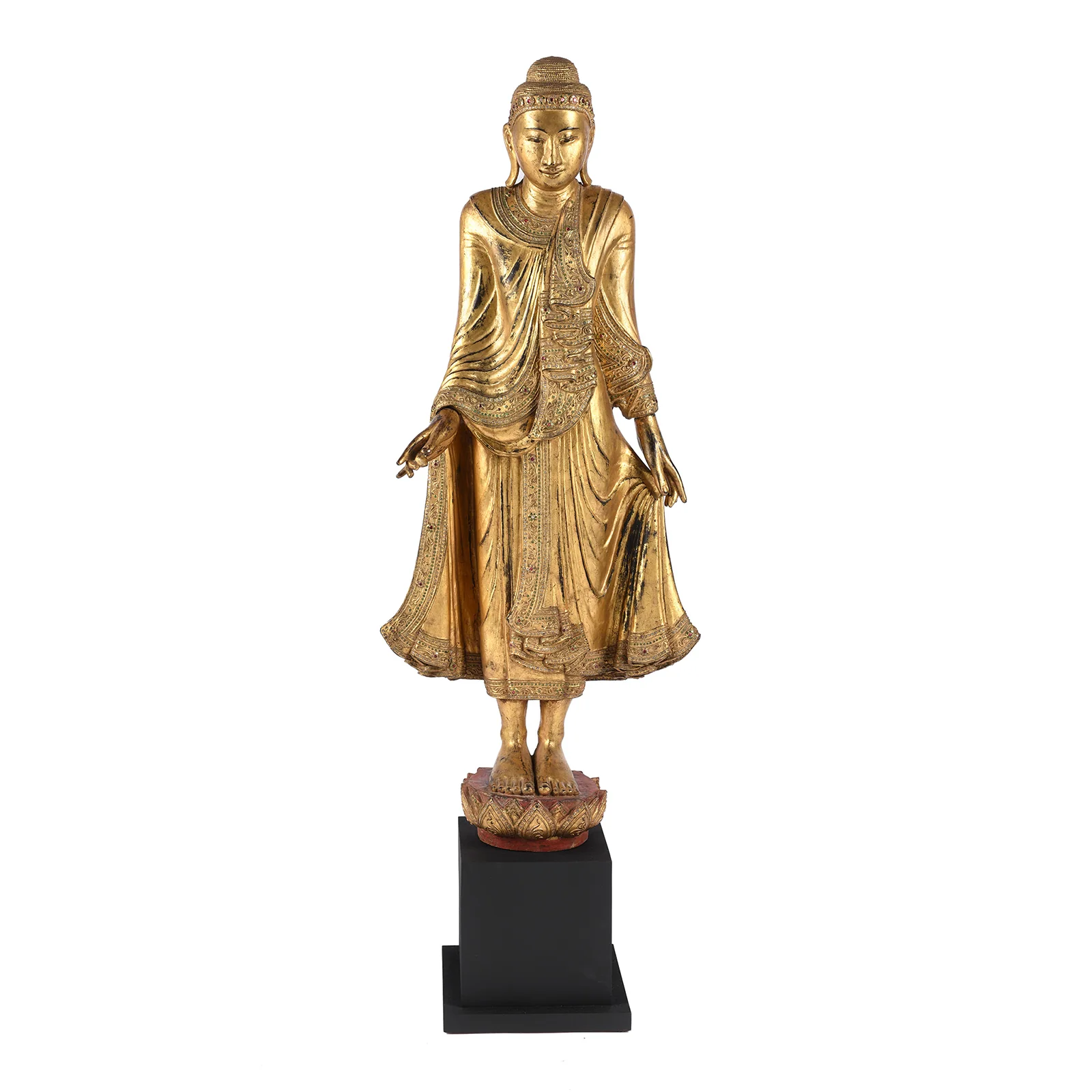
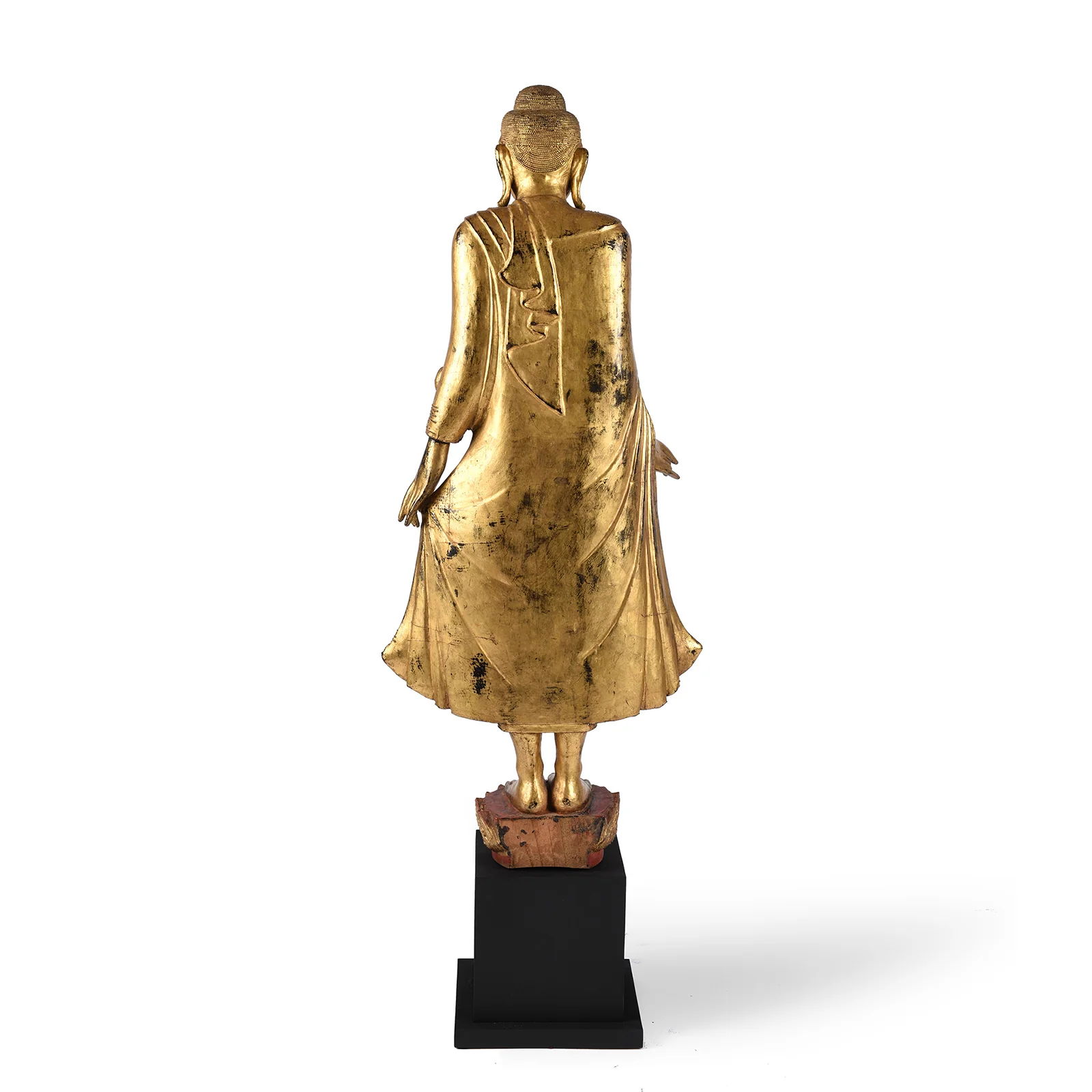
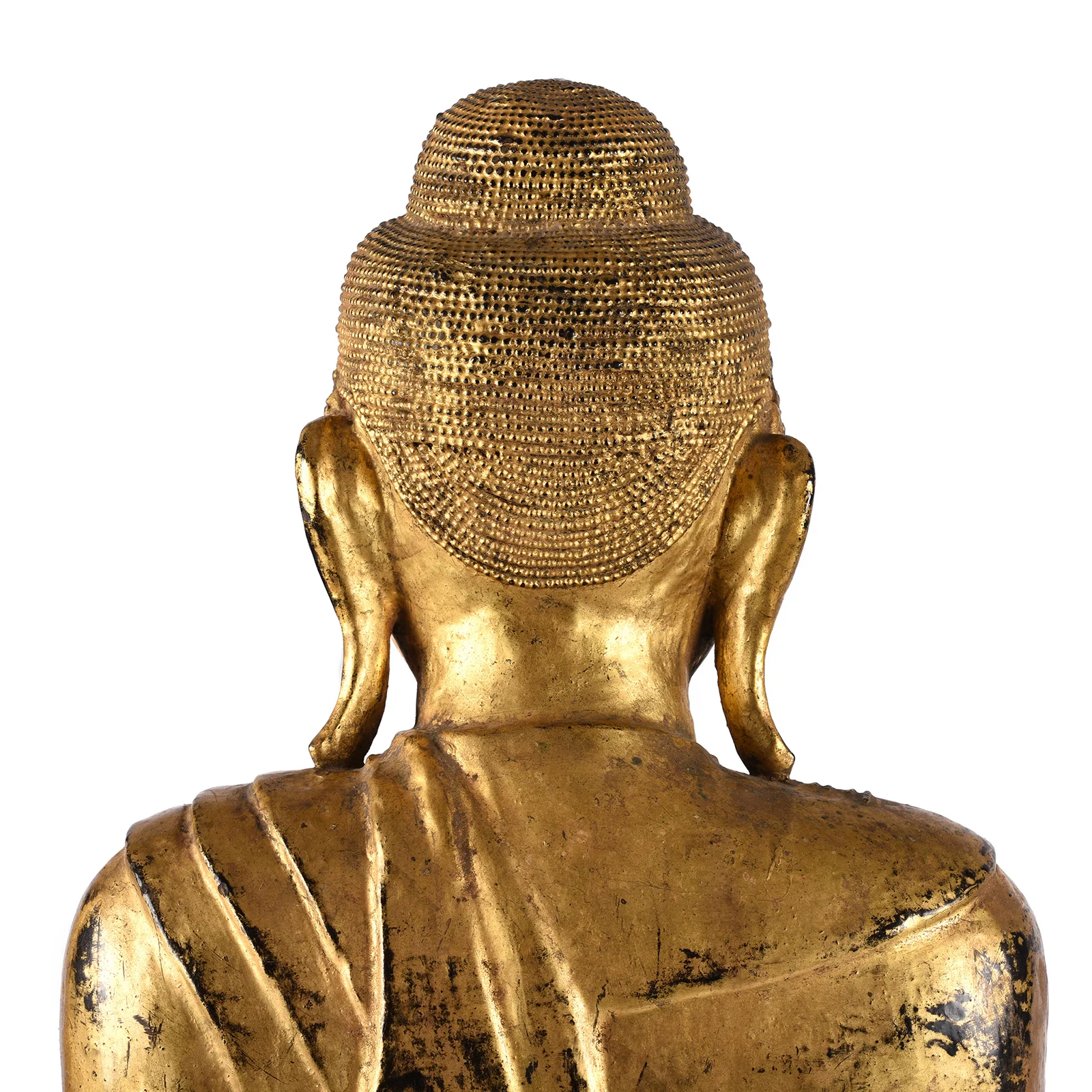
This unusual gilded teak standing Mandalay Buddha is from Burma and was crafted during the Mandalay period (1853 - 1948), more specifically circa 1920's. It has clear Tai Yai influences, specifically the painted eyes and uncommon atire which are uncommon for Mandalay Buddhas.
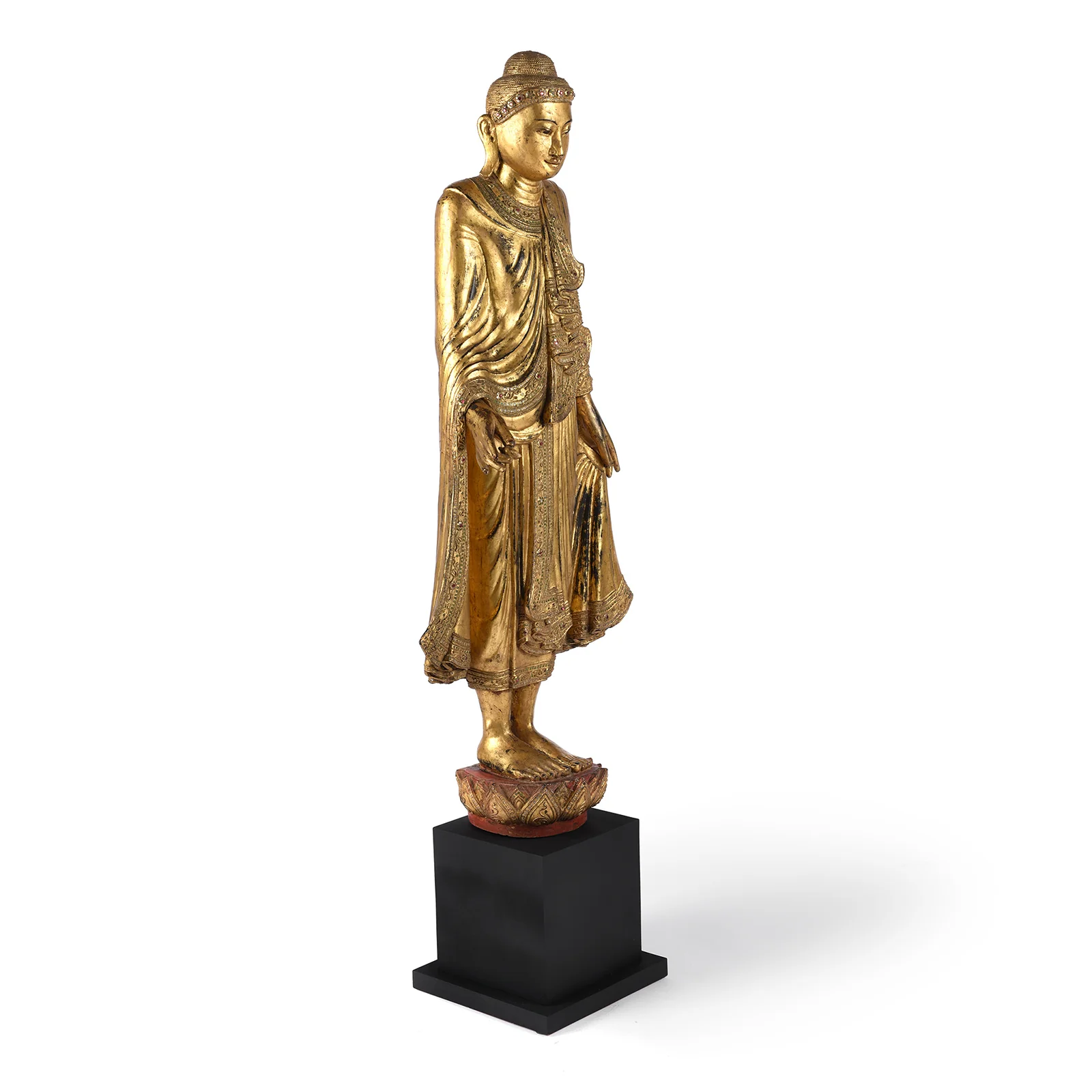
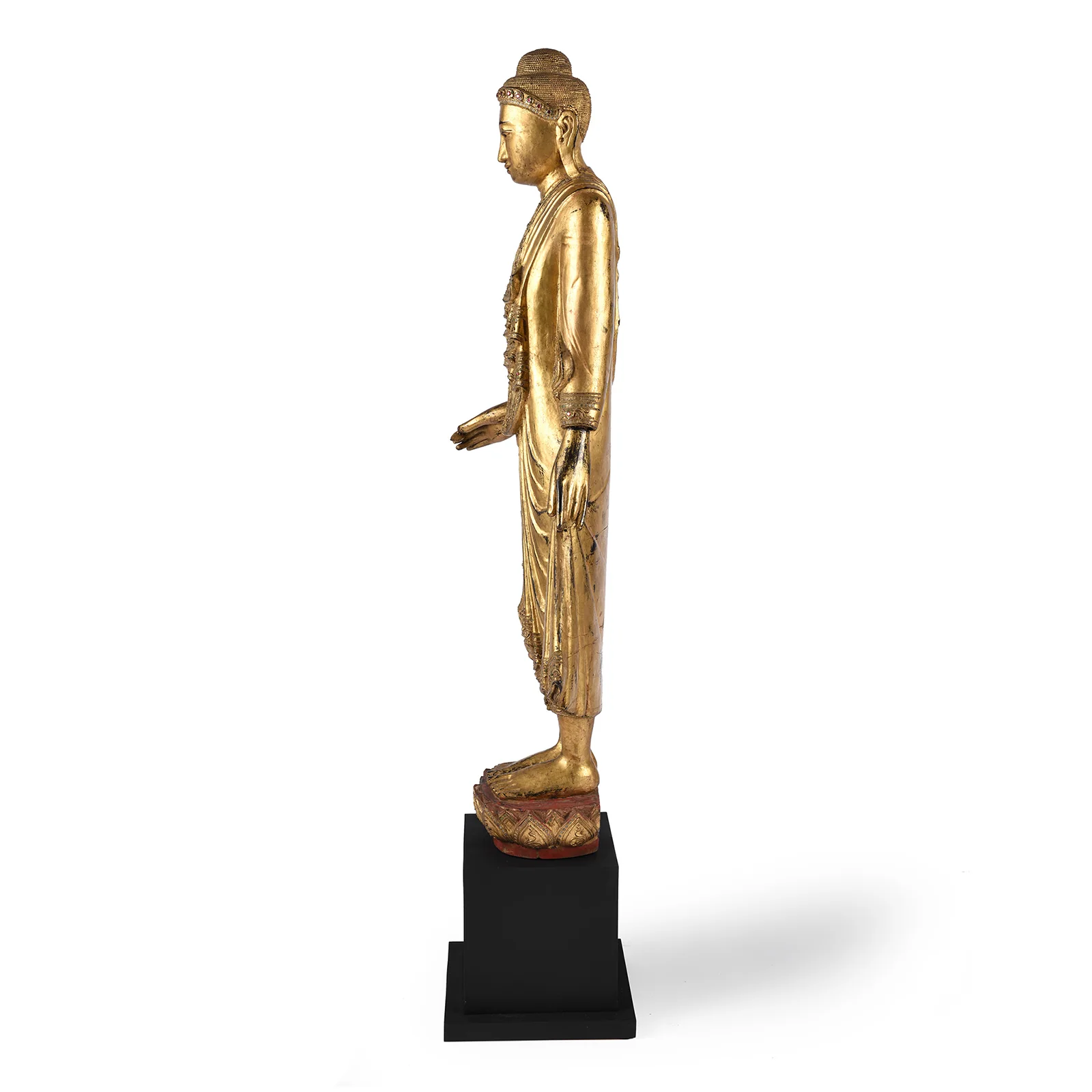
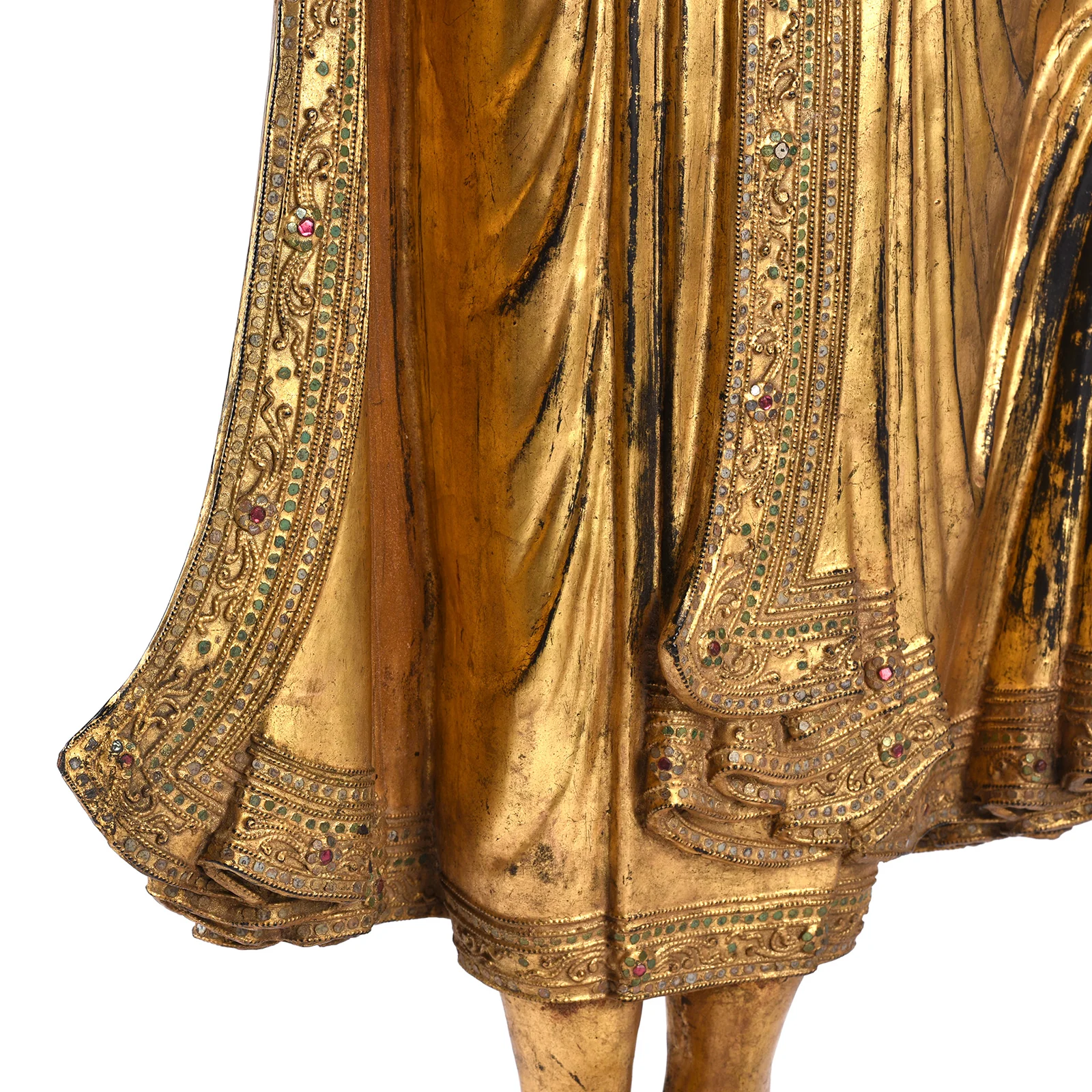
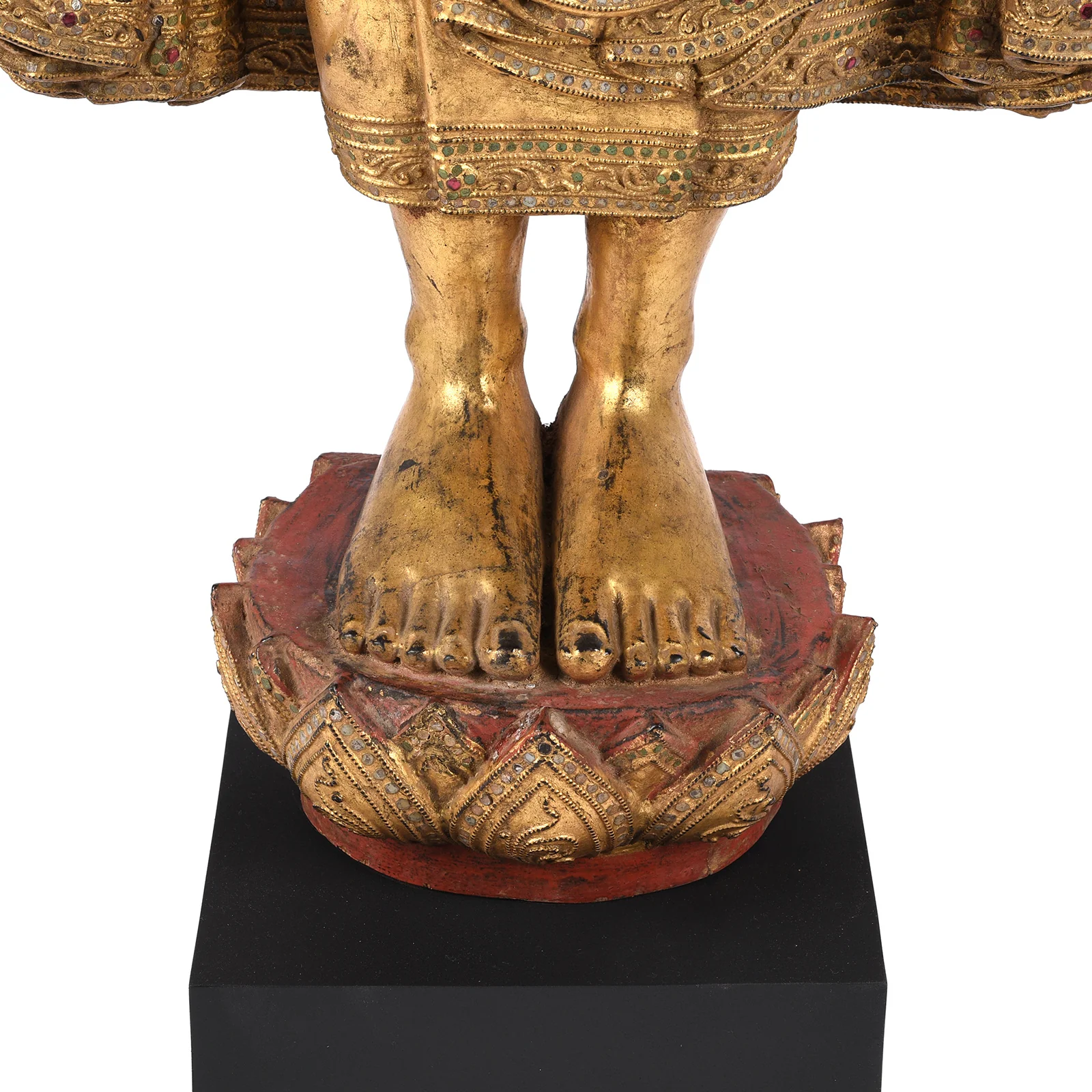
Buddha can be seen with a youthful expression wearing traditional Burmese attire with inlaid coloured glass decoration, unlike earlier pieces, his eyes are painted, not glass. He stands on a lotus flower mounted on a modern black melamine base.
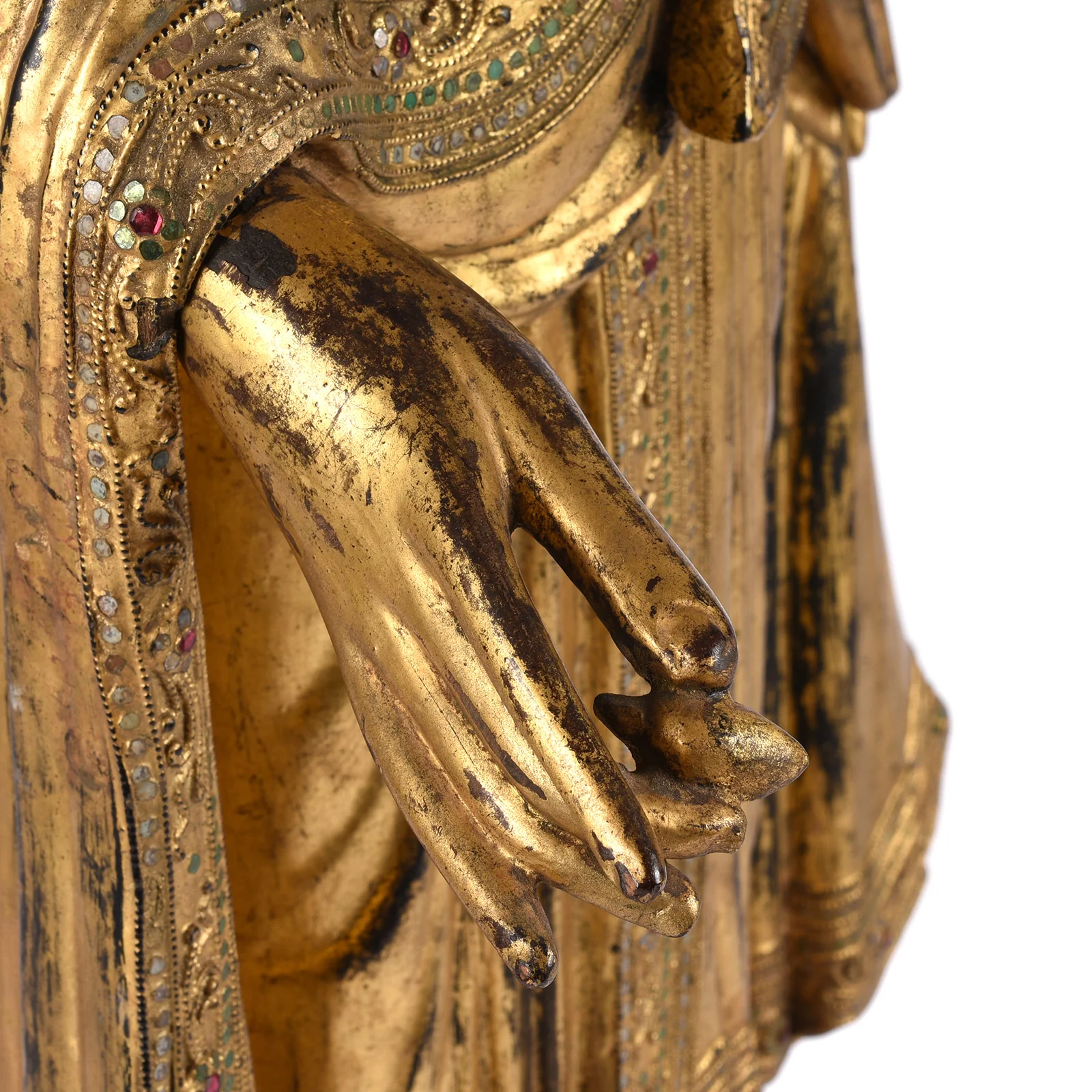
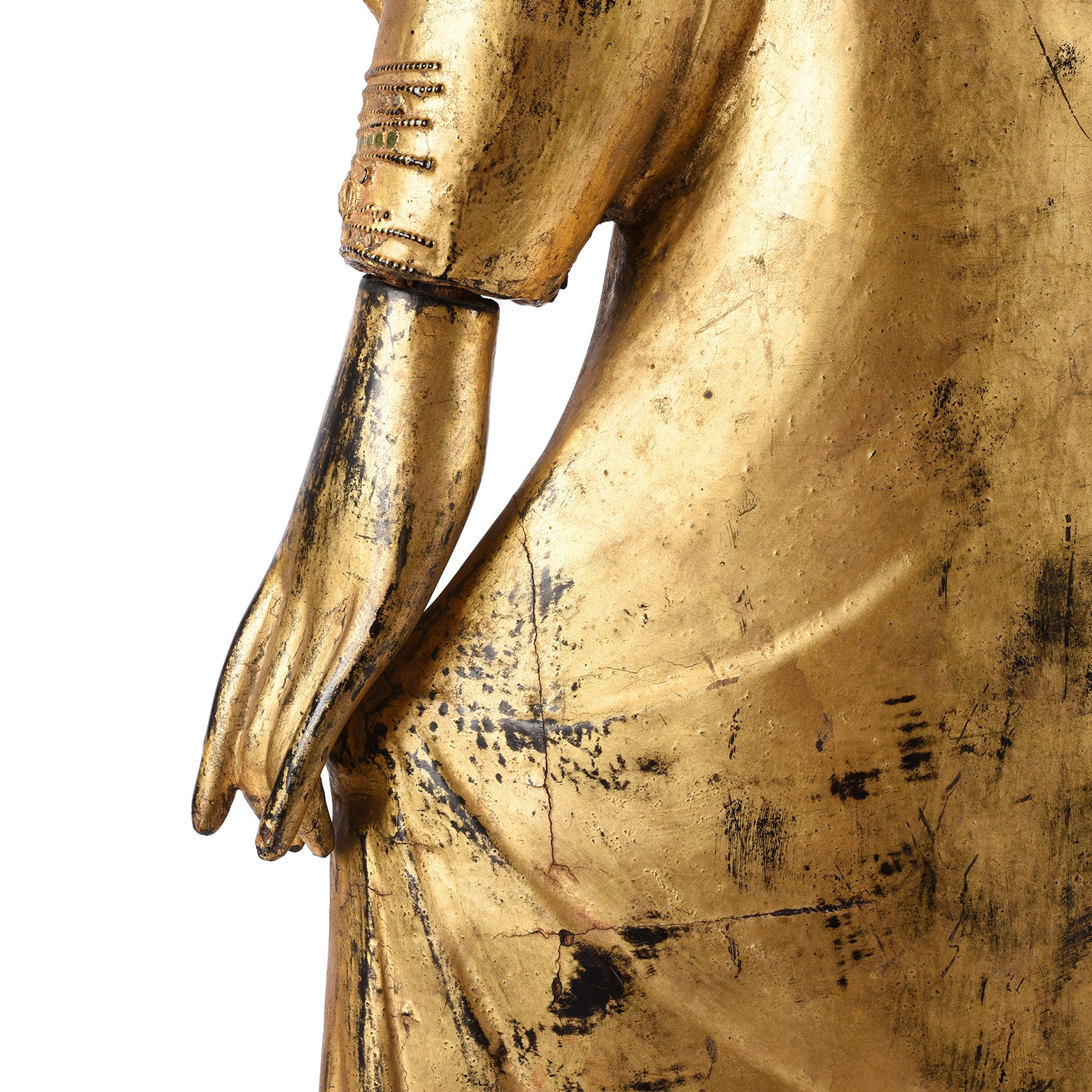
Buddha is depicted here in the traditional Mandalay Buddha form standing in samabhanga posture with his left hand holding his robe and his right hand forming the vitarka mudra whilst holding the fruit of the myrobalan, a bitter medicinal fruit. The myrobalan fruit is often seen held by Mandalay Buddhas.
His uttarasanga (robes of fully ordained Buddhist monks) hangs closed covering his arms and chest. The antaravasaka (a Buddhist undergarment) can be seen on the waist. The sanghati (the outer robe hanging from the shoulder) falls in folds from his left shoulder.
Dimensions:
Excluding Stand: 45 x 22 x 107 (wxdxh cms)
Including Stand: 45 x 22 x 130.5 (wxdxh cms)
Provenance:
Originally purchased from Asiatica, Fine Oriental Antiques and Art Objects, Bangkok, c.1999 and subsequently sold and purchased at auction in the UK.
From Burma
UK Delivery Charge - except Highlands & Islands £40
More delivery options available at checkout
Original: $3,940.67
-65%$3,940.67
$1,379.23More Images
Gilded Teak Standing Mandalay Buddha - Ca 1920
This unusual gilded teak standing Mandalay Buddha is from Burma and was crafted during the Mandalay period (1853 - 1948), more specifically circa 1920's. It has clear Tai Yai influences, specifically the painted eyes and uncommon atire which are uncommon for Mandalay Buddhas.
Buddha can be seen with a youthful expression wearing traditional Burmese attire with inlaid coloured glass decoration, unlike earlier pieces, his eyes are painted, not glass. He stands on a lotus flower mounted on a modern black melamine base.
Buddha is depicted here in the traditional Mandalay Buddha form standing in samabhanga posture with his left hand holding his robe and his right hand forming the vitarka mudra whilst holding the fruit of the myrobalan, a bitter medicinal fruit. The myrobalan fruit is often seen held by Mandalay Buddhas.
His uttarasanga (robes of fully ordained Buddhist monks) hangs closed covering his arms and chest. The antaravasaka (a Buddhist undergarment) can be seen on the waist. The sanghati (the outer robe hanging from the shoulder) falls in folds from his left shoulder.
Dimensions:
Excluding Stand: 45 x 22 x 107 (wxdxh cms)
Including Stand: 45 x 22 x 130.5 (wxdxh cms)
Provenance:
Originally purchased from Asiatica, Fine Oriental Antiques and Art Objects, Bangkok, c.1999 and subsequently sold and purchased at auction in the UK.
From Burma
UK Delivery Charge - except Highlands & Islands £40
More delivery options available at checkout
Product Information
Product Information
Shipping & Returns
Shipping & Returns
Description
This unusual gilded teak standing Mandalay Buddha is from Burma and was crafted during the Mandalay period (1853 - 1948), more specifically circa 1920's. It has clear Tai Yai influences, specifically the painted eyes and uncommon atire which are uncommon for Mandalay Buddhas.
Buddha can be seen with a youthful expression wearing traditional Burmese attire with inlaid coloured glass decoration, unlike earlier pieces, his eyes are painted, not glass. He stands on a lotus flower mounted on a modern black melamine base.
Buddha is depicted here in the traditional Mandalay Buddha form standing in samabhanga posture with his left hand holding his robe and his right hand forming the vitarka mudra whilst holding the fruit of the myrobalan, a bitter medicinal fruit. The myrobalan fruit is often seen held by Mandalay Buddhas.
His uttarasanga (robes of fully ordained Buddhist monks) hangs closed covering his arms and chest. The antaravasaka (a Buddhist undergarment) can be seen on the waist. The sanghati (the outer robe hanging from the shoulder) falls in folds from his left shoulder.
Dimensions:
Excluding Stand: 45 x 22 x 107 (wxdxh cms)
Including Stand: 45 x 22 x 130.5 (wxdxh cms)
Provenance:
Originally purchased from Asiatica, Fine Oriental Antiques and Art Objects, Bangkok, c.1999 and subsequently sold and purchased at auction in the UK.
From Burma
UK Delivery Charge - except Highlands & Islands £40
More delivery options available at checkout