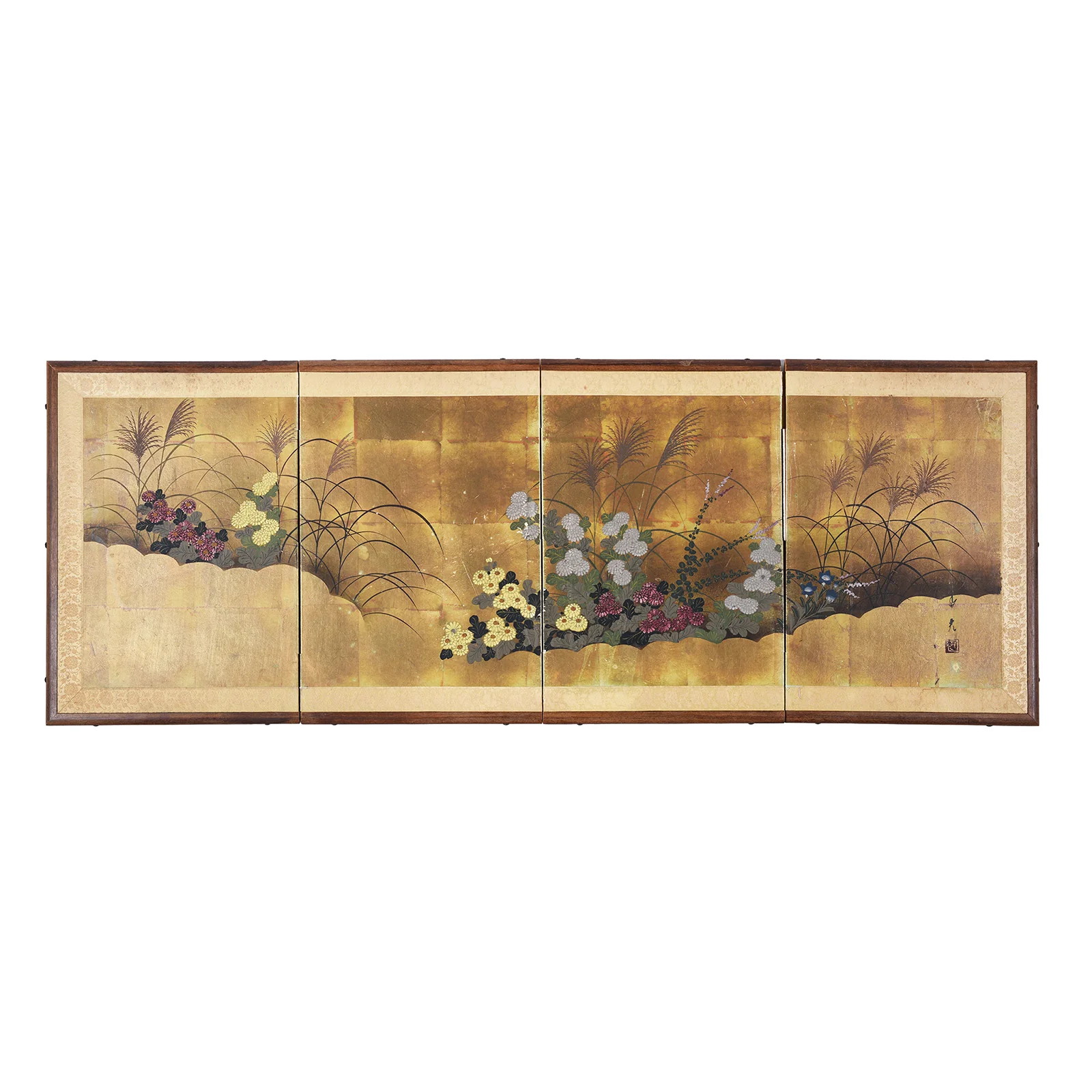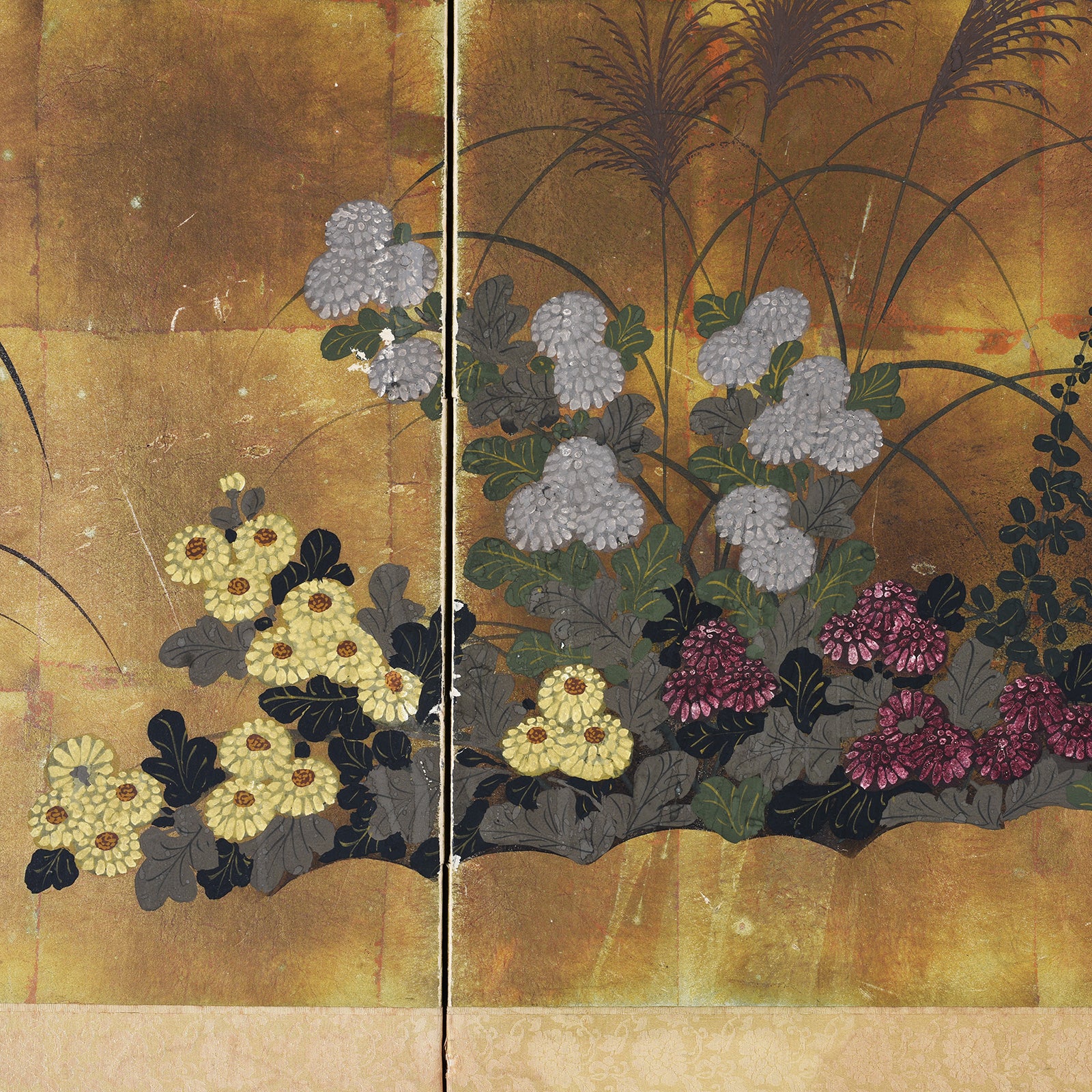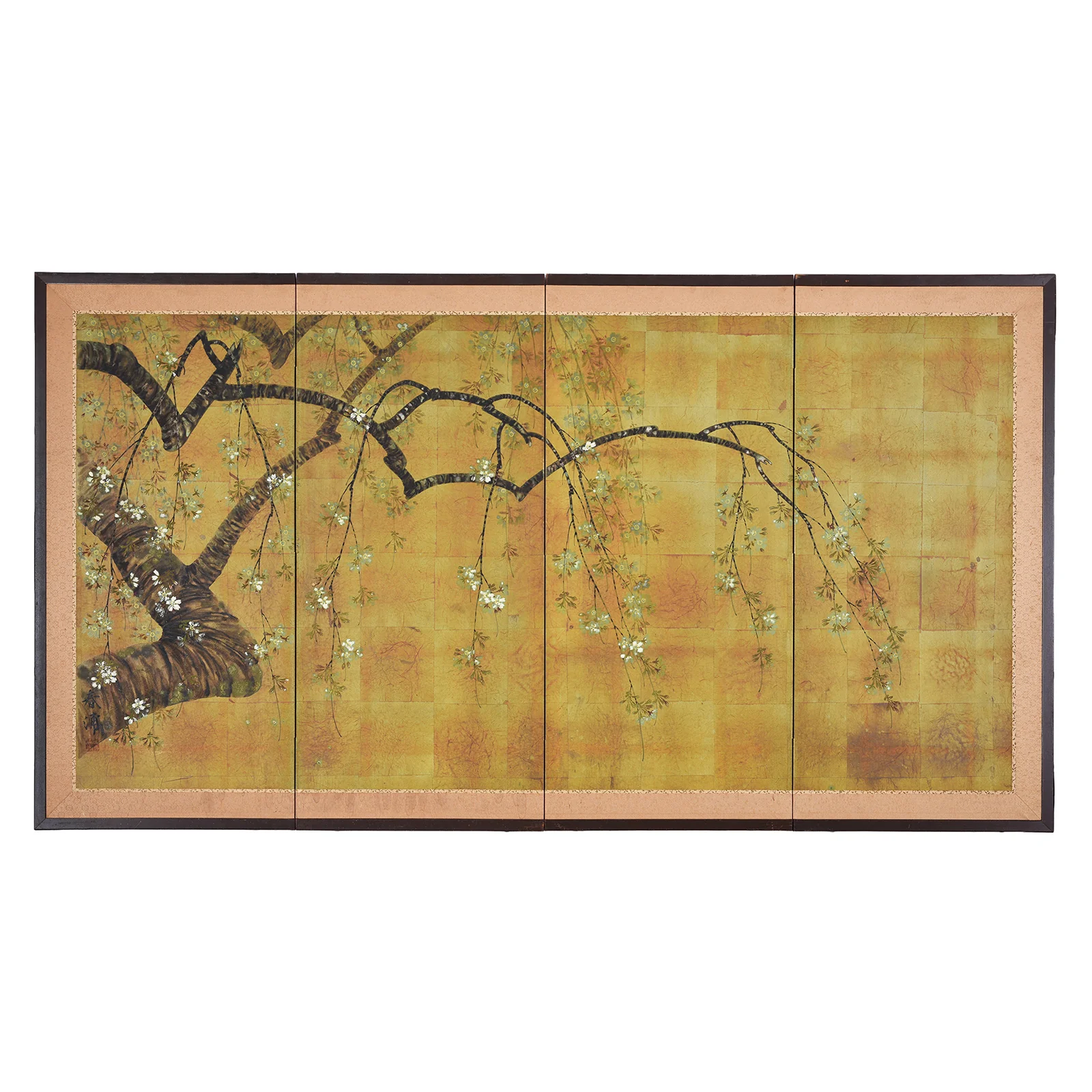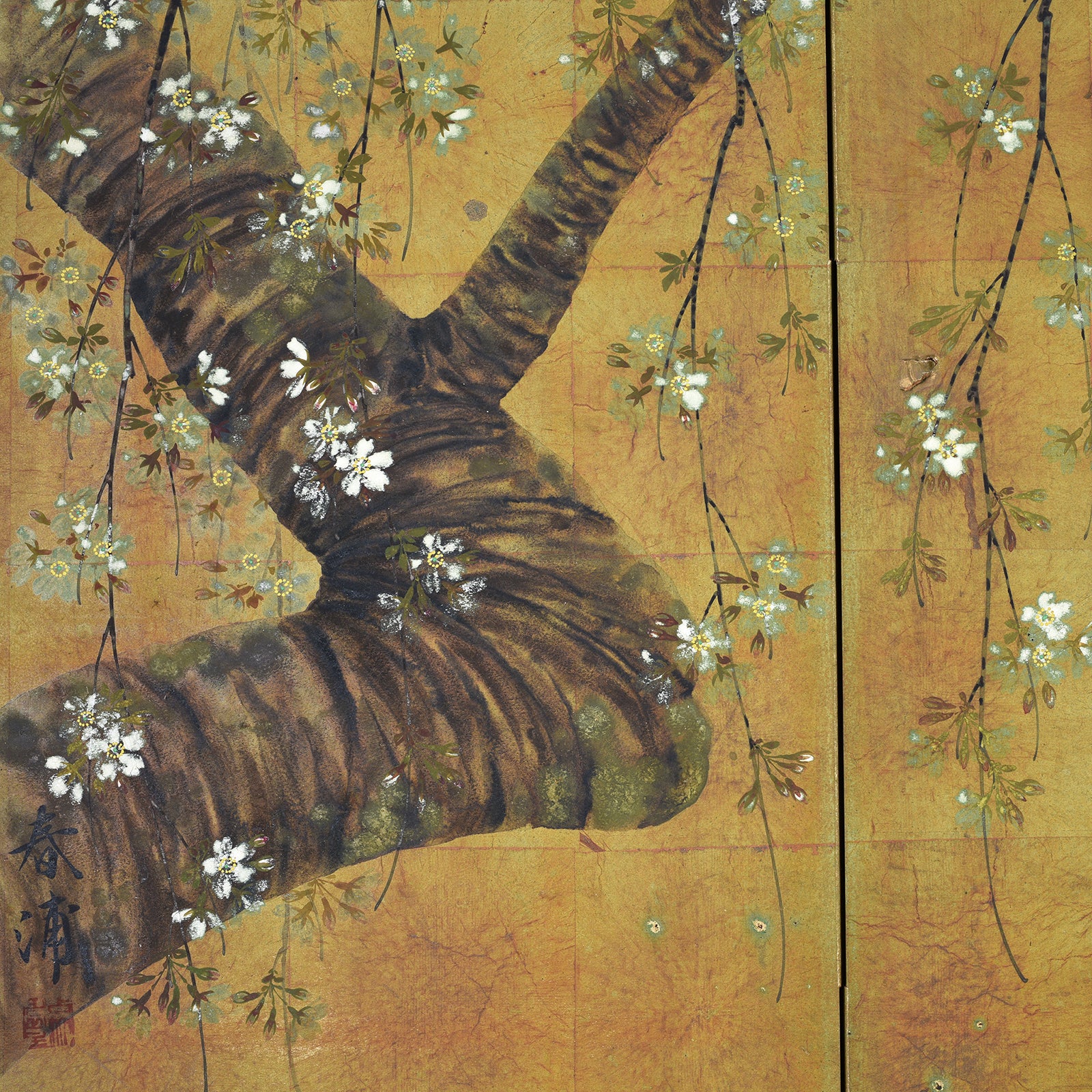
Silver Rinpa Byobu Screen - Edo Period (Ca 1850)
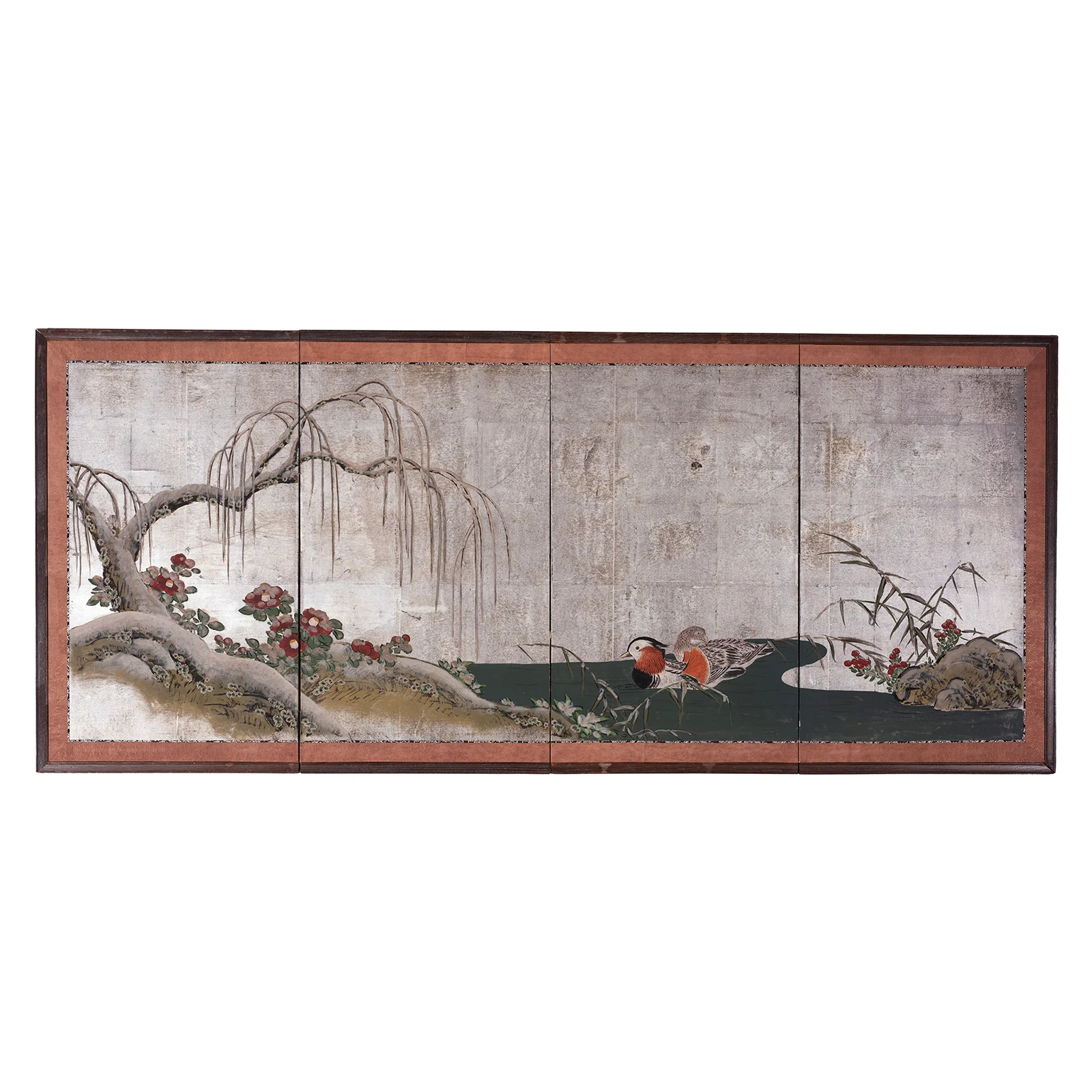
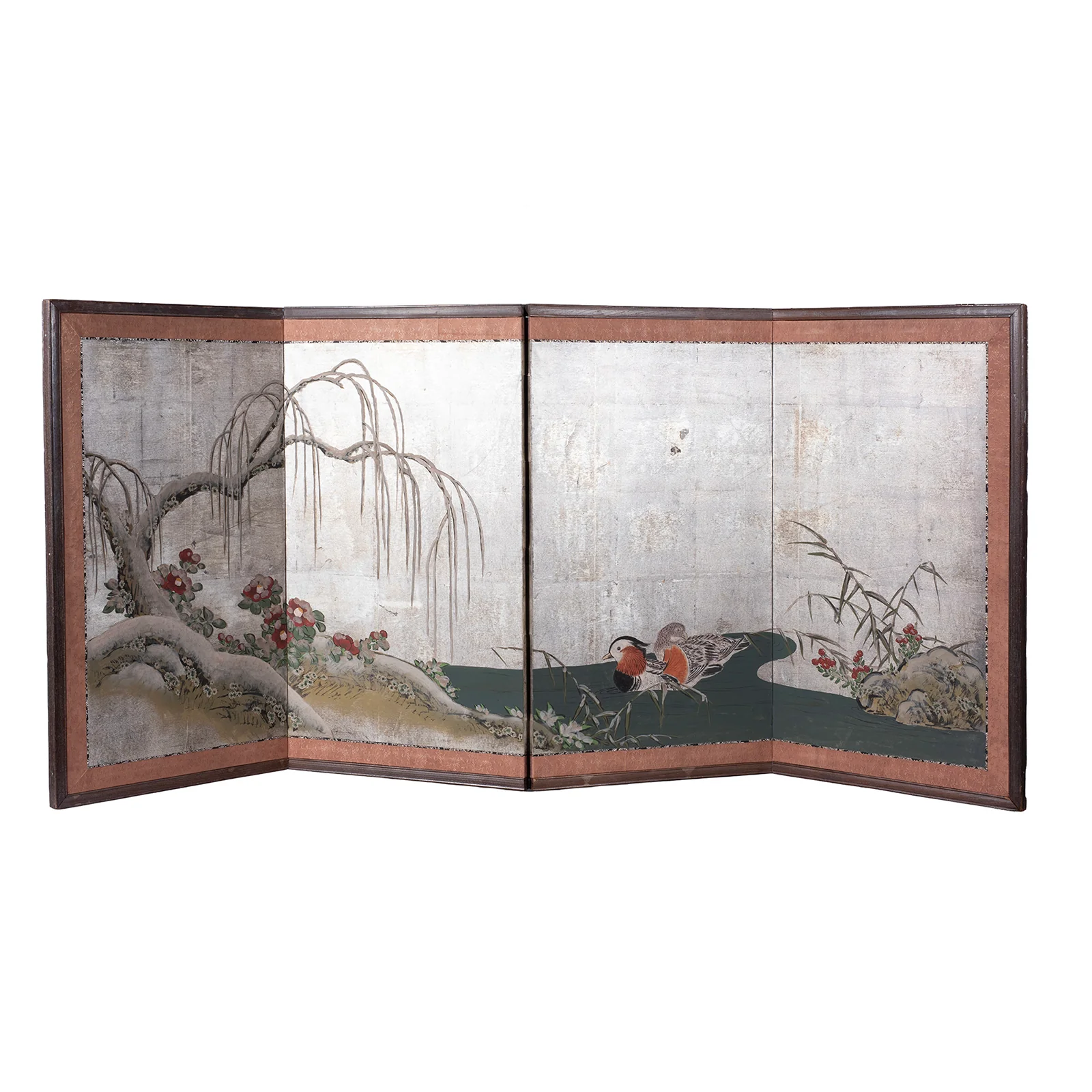
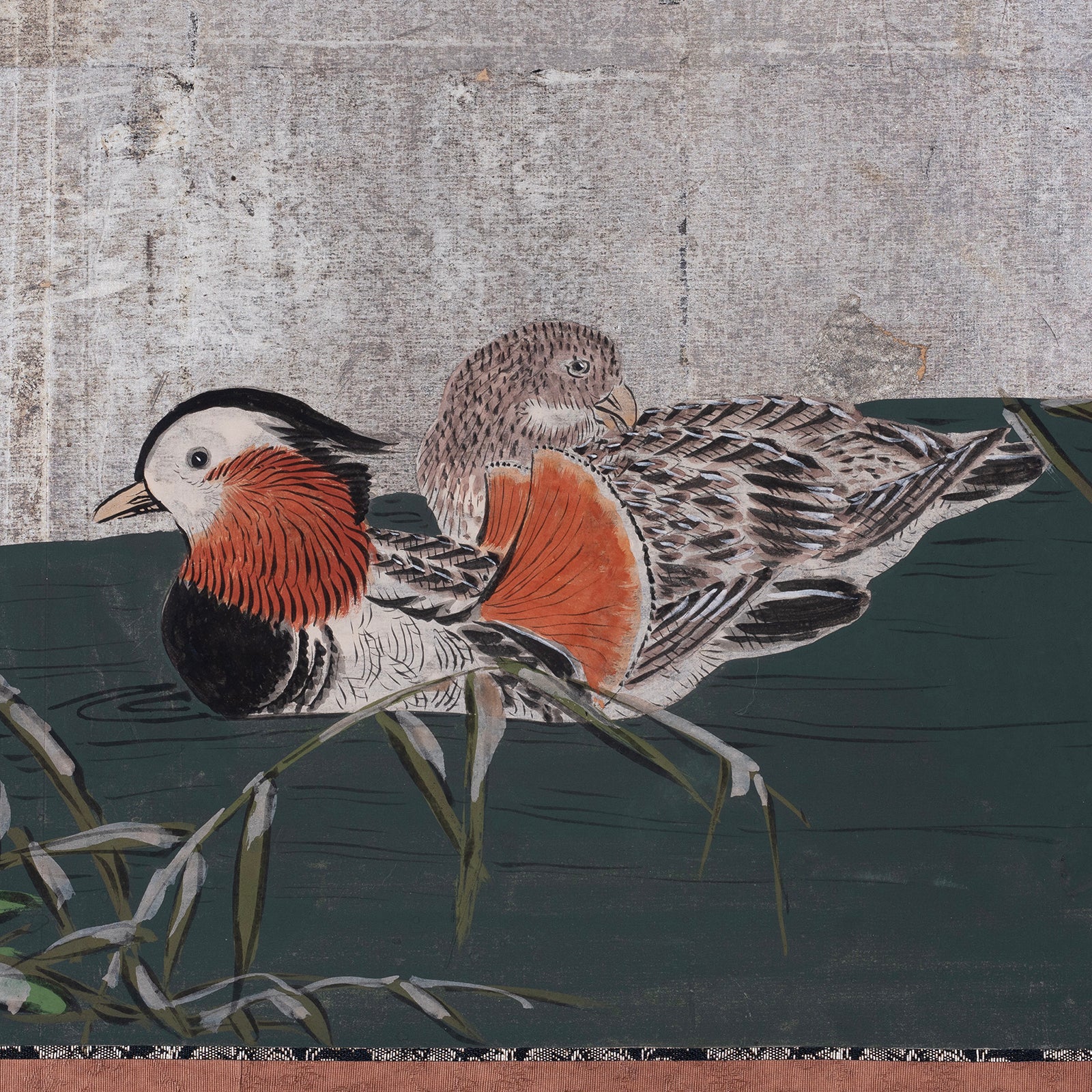
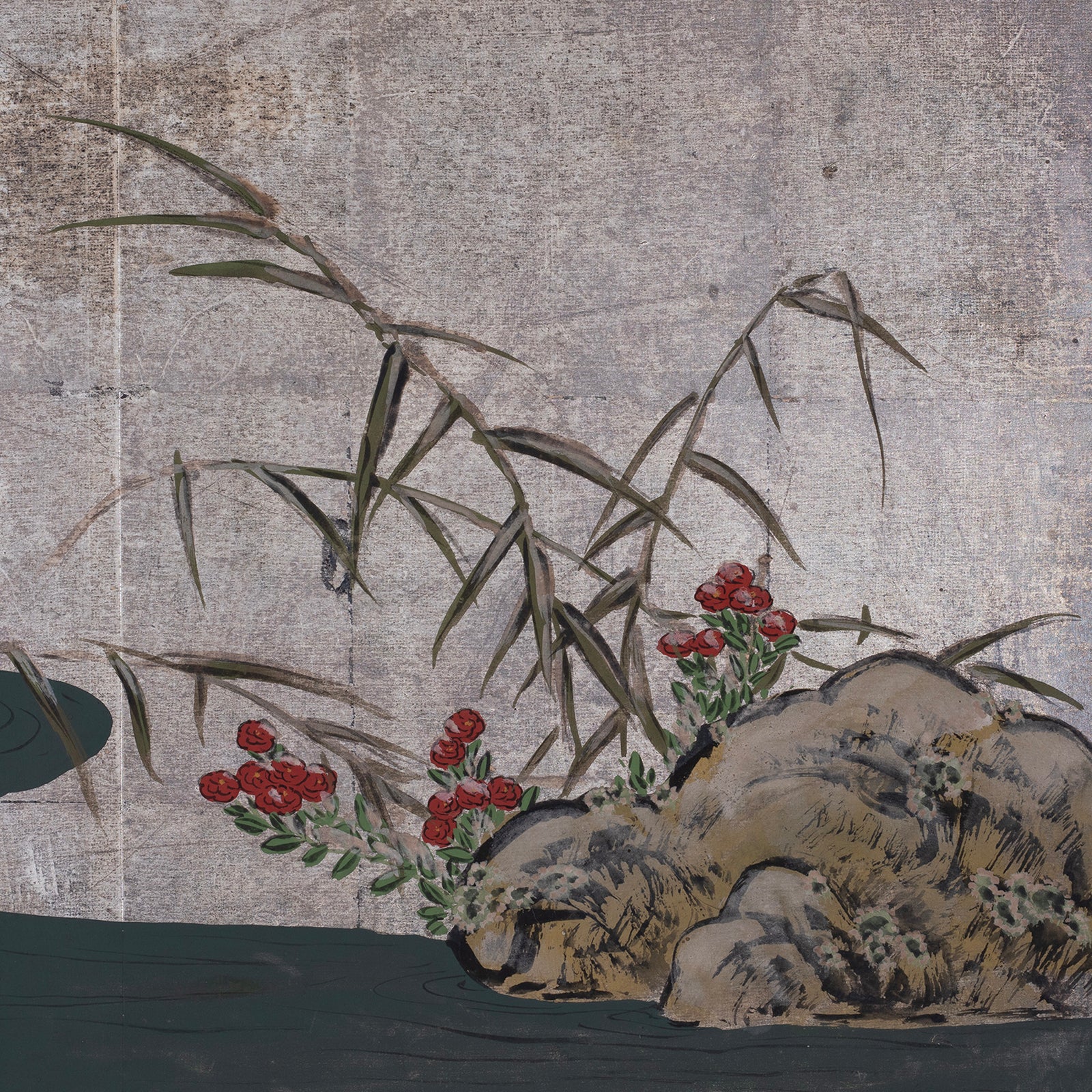
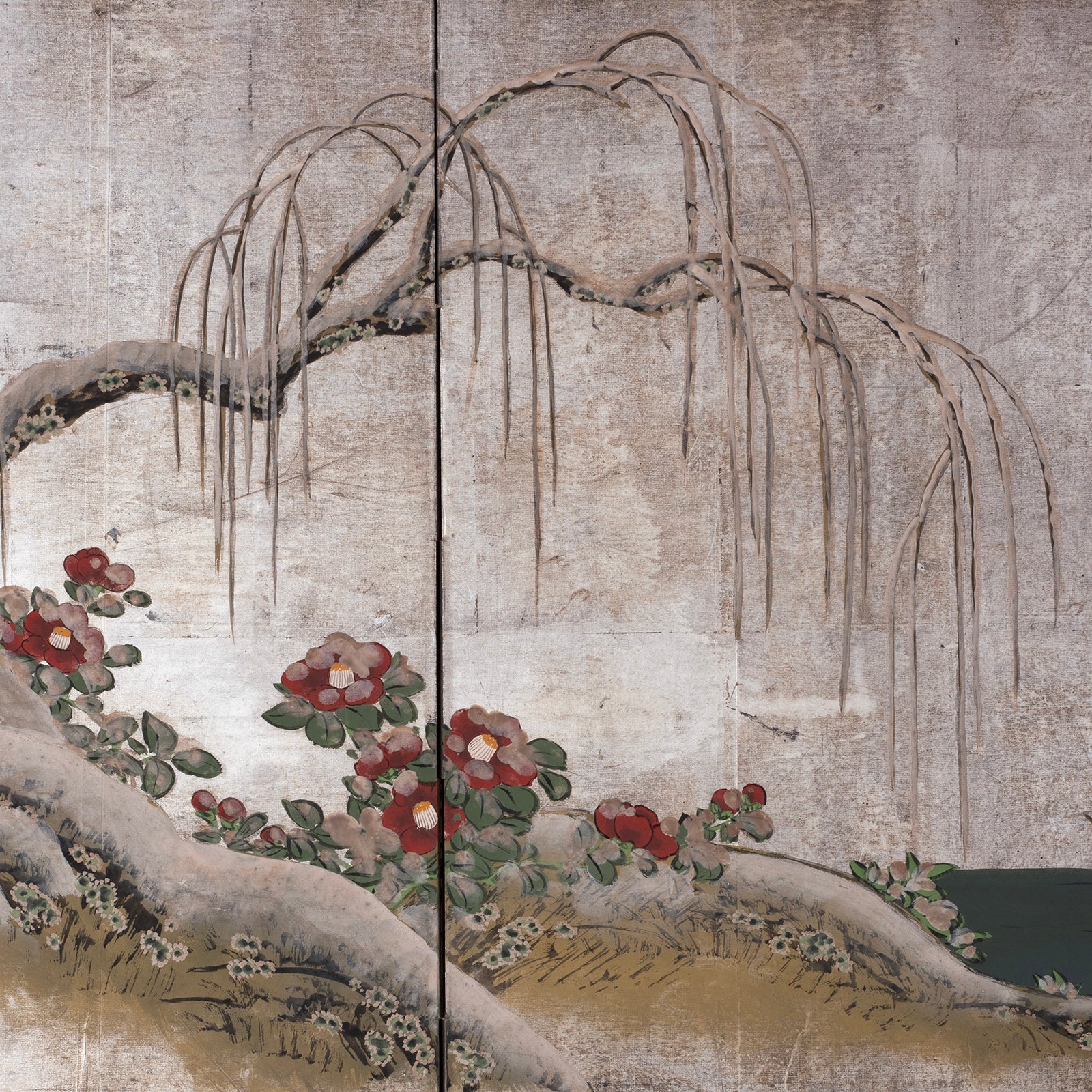
In the hush of a silvered pond, a pair of oshidori (mandarin ducks) glide beneath a trailing willow, ringed by seasonal grasses and blossoms. The scene unfolds across softly oxidised silver leaf—an atmospheric ground favoured by the Rinpa school—its gentle pewter shimmer lending depth to the calm water and reeds. Balanced, lyrical and exquisitely restrained, the composition distils nature into elegant pattern and rhythm, the left-leaning willow counter-poised by a right-hand islet where reeds and stones gather.
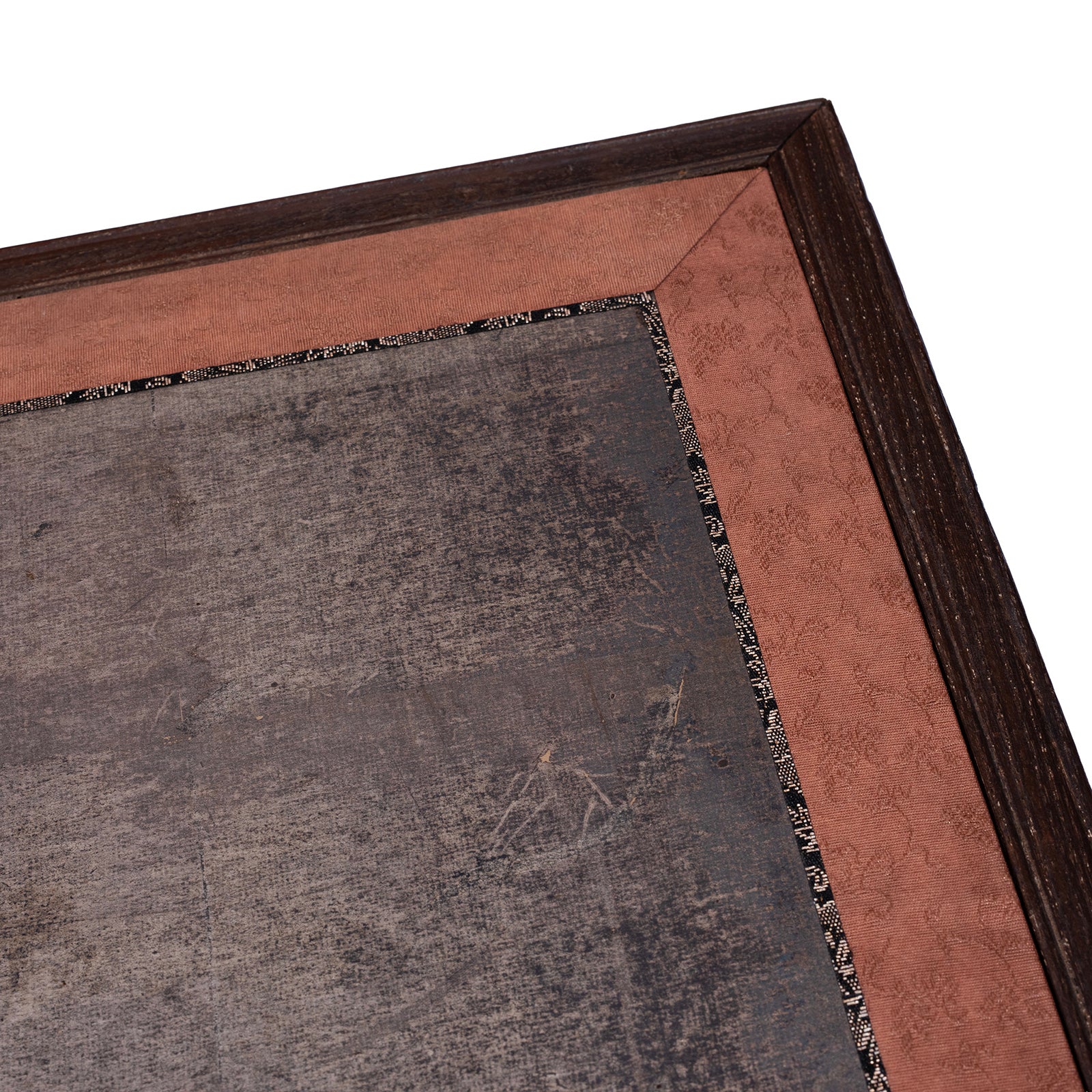
Dating & attribution. Materials and layout point to the late Edo period, c. 1840–1860, in the Rinpa revival after Sakai Hōitsu and Suzuki Kiitsu. Tell-tales include the silver-leaf ground, mineral pigments with light ink/iron-oxide drawing, and the compact four-panel horizontal format intended for wall mounting over a tokonoma or low cabinet. Even oxidation of the silver and period-appropriate paper “brocade” borders further support the dating. The iconography—yanagi (willow) and paired oshidori—symbolises grace and conjugal harmony.
- Origin: Japan
- Date: Late Edo period, circa 1840–1860
- Style: Rinpa school (Edo revival circle after Hōitsu/Kiitsu)
- Materials: Mineral pigments and ink on silver-leaf paper; paper brocade (printed/embossed) border; hardwood frame
- Format & imagery: Four-panel byōbu; willow, pair of mandarin ducks, reeds and seasonal flowers; low horizontal format for wall mounting
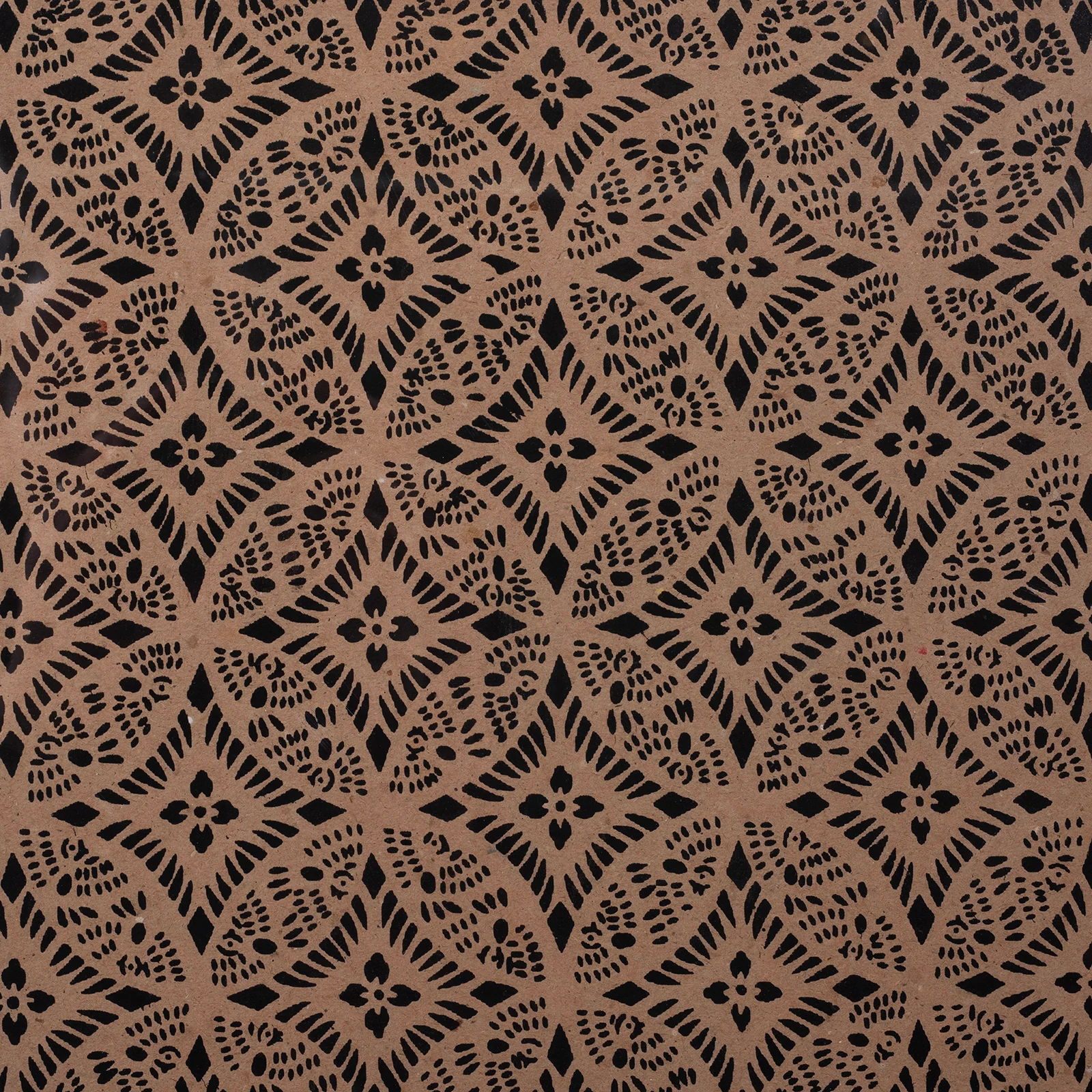
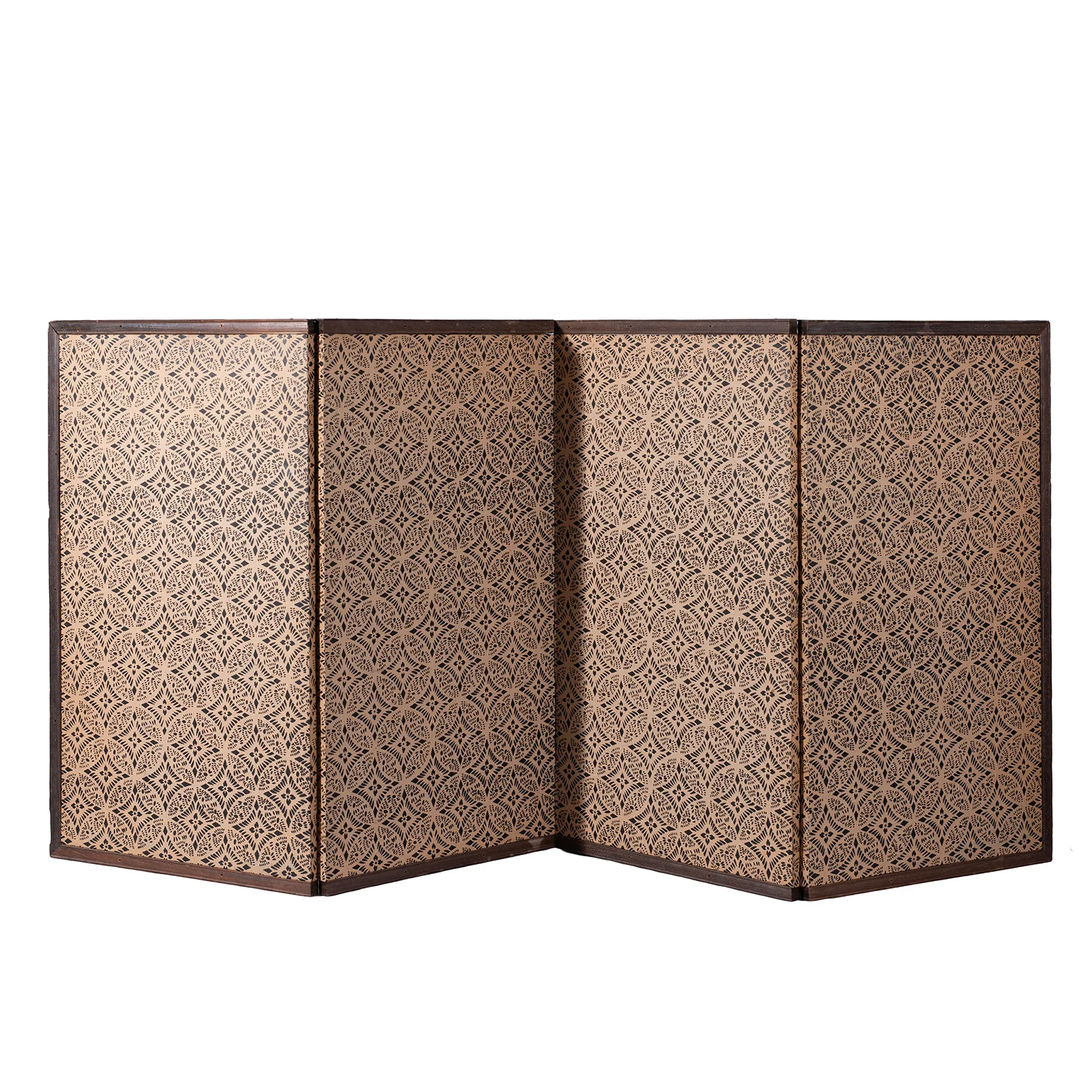
- Restoration: Professionally re-backed with block-printed karakami paper to the reverse (shippo motif); seams consolidated; original patina retained
- Condition: Mild silver oxidation and light surface wear consistent with age; structurally sound
A serene, wall-ready Rinpa composition on silver leaf—oshidori and willow in poised, mid-19th-century harmony.
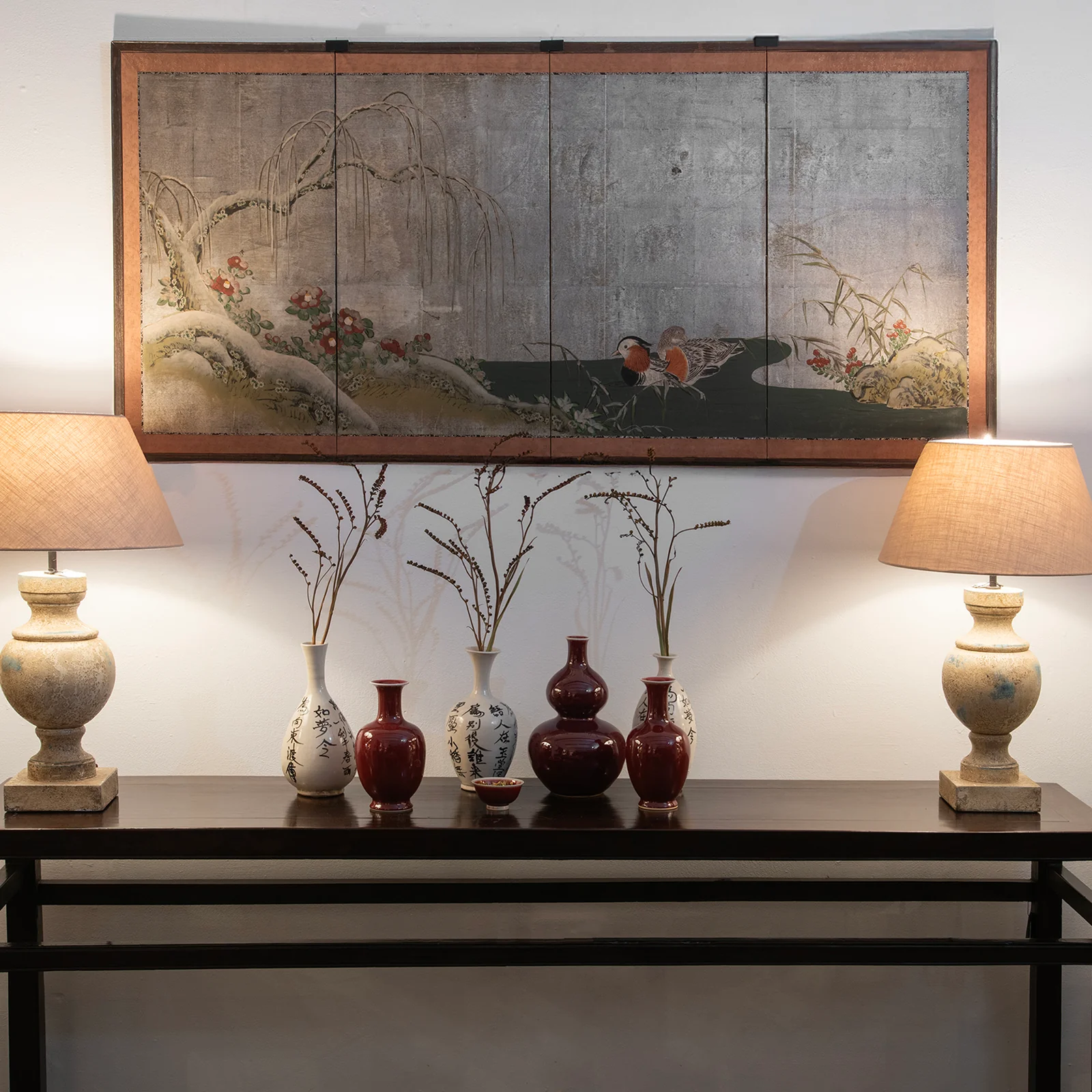
Note: Contact us for hanging advice; we can supply a discreet mounting system for byōbu screens.
Original: $5,159.88
-65%$5,159.88
$1,805.96More Images
Silver Rinpa Byobu Screen - Edo Period (Ca 1850)
In the hush of a silvered pond, a pair of oshidori (mandarin ducks) glide beneath a trailing willow, ringed by seasonal grasses and blossoms. The scene unfolds across softly oxidised silver leaf—an atmospheric ground favoured by the Rinpa school—its gentle pewter shimmer lending depth to the calm water and reeds. Balanced, lyrical and exquisitely restrained, the composition distils nature into elegant pattern and rhythm, the left-leaning willow counter-poised by a right-hand islet where reeds and stones gather.
Dating & attribution. Materials and layout point to the late Edo period, c. 1840–1860, in the Rinpa revival after Sakai Hōitsu and Suzuki Kiitsu. Tell-tales include the silver-leaf ground, mineral pigments with light ink/iron-oxide drawing, and the compact four-panel horizontal format intended for wall mounting over a tokonoma or low cabinet. Even oxidation of the silver and period-appropriate paper “brocade” borders further support the dating. The iconography—yanagi (willow) and paired oshidori—symbolises grace and conjugal harmony.
- Origin: Japan
- Date: Late Edo period, circa 1840–1860
- Style: Rinpa school (Edo revival circle after Hōitsu/Kiitsu)
- Materials: Mineral pigments and ink on silver-leaf paper; paper brocade (printed/embossed) border; hardwood frame
- Format & imagery: Four-panel byōbu; willow, pair of mandarin ducks, reeds and seasonal flowers; low horizontal format for wall mounting
- Restoration: Professionally re-backed with block-printed karakami paper to the reverse (shippo motif); seams consolidated; original patina retained
- Condition: Mild silver oxidation and light surface wear consistent with age; structurally sound
A serene, wall-ready Rinpa composition on silver leaf—oshidori and willow in poised, mid-19th-century harmony.
Note: Contact us for hanging advice; we can supply a discreet mounting system for byōbu screens.
Product Information
Product Information
Shipping & Returns
Shipping & Returns
Description
In the hush of a silvered pond, a pair of oshidori (mandarin ducks) glide beneath a trailing willow, ringed by seasonal grasses and blossoms. The scene unfolds across softly oxidised silver leaf—an atmospheric ground favoured by the Rinpa school—its gentle pewter shimmer lending depth to the calm water and reeds. Balanced, lyrical and exquisitely restrained, the composition distils nature into elegant pattern and rhythm, the left-leaning willow counter-poised by a right-hand islet where reeds and stones gather.
Dating & attribution. Materials and layout point to the late Edo period, c. 1840–1860, in the Rinpa revival after Sakai Hōitsu and Suzuki Kiitsu. Tell-tales include the silver-leaf ground, mineral pigments with light ink/iron-oxide drawing, and the compact four-panel horizontal format intended for wall mounting over a tokonoma or low cabinet. Even oxidation of the silver and period-appropriate paper “brocade” borders further support the dating. The iconography—yanagi (willow) and paired oshidori—symbolises grace and conjugal harmony.
- Origin: Japan
- Date: Late Edo period, circa 1840–1860
- Style: Rinpa school (Edo revival circle after Hōitsu/Kiitsu)
- Materials: Mineral pigments and ink on silver-leaf paper; paper brocade (printed/embossed) border; hardwood frame
- Format & imagery: Four-panel byōbu; willow, pair of mandarin ducks, reeds and seasonal flowers; low horizontal format for wall mounting
- Restoration: Professionally re-backed with block-printed karakami paper to the reverse (shippo motif); seams consolidated; original patina retained
- Condition: Mild silver oxidation and light surface wear consistent with age; structurally sound
A serene, wall-ready Rinpa composition on silver leaf—oshidori and willow in poised, mid-19th-century harmony.
Note: Contact us for hanging advice; we can supply a discreet mounting system for byōbu screens.