
Japanese Ryobirake Kasane Dansu- Meiji Period From Kanto
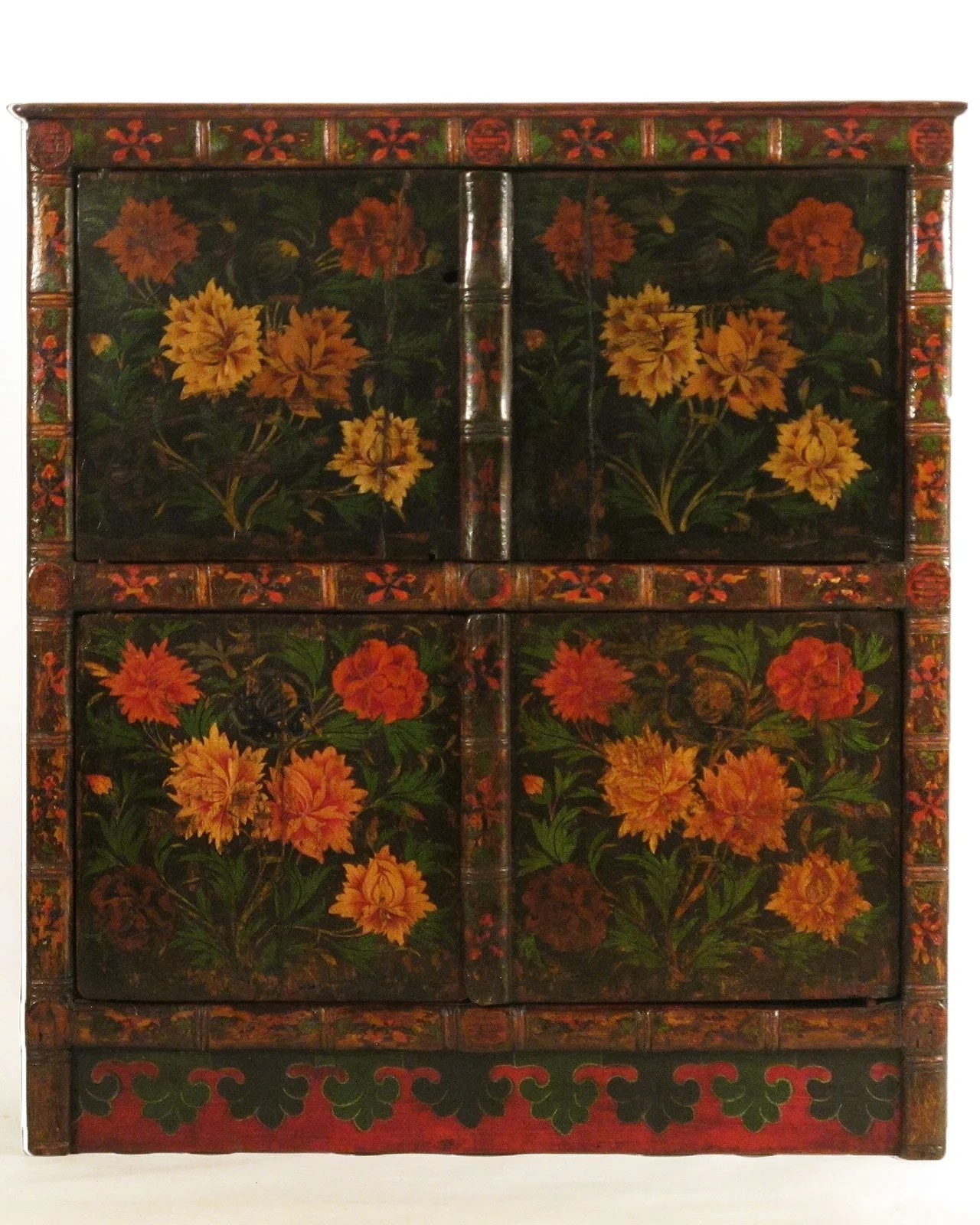
A fine Japanese Ryobirake Kasane Dansu from the Meiji period (1868–1912), crafted in the Kantō region. This traditional stacking chest exemplifies the restrained elegance and practical design of Japanese domestic cabinetry, combining utility with carefully balanced proportions.
The Kasane Dansu form separates into two sections for ease of transport and use — a characteristic feature of chests made for urban homes. The upper cabinet features double doors opening to reveal two broad drawers, while the lower section contains two large drawers and a cash box compartment with three small drawers, one concealing a hidden compartment.
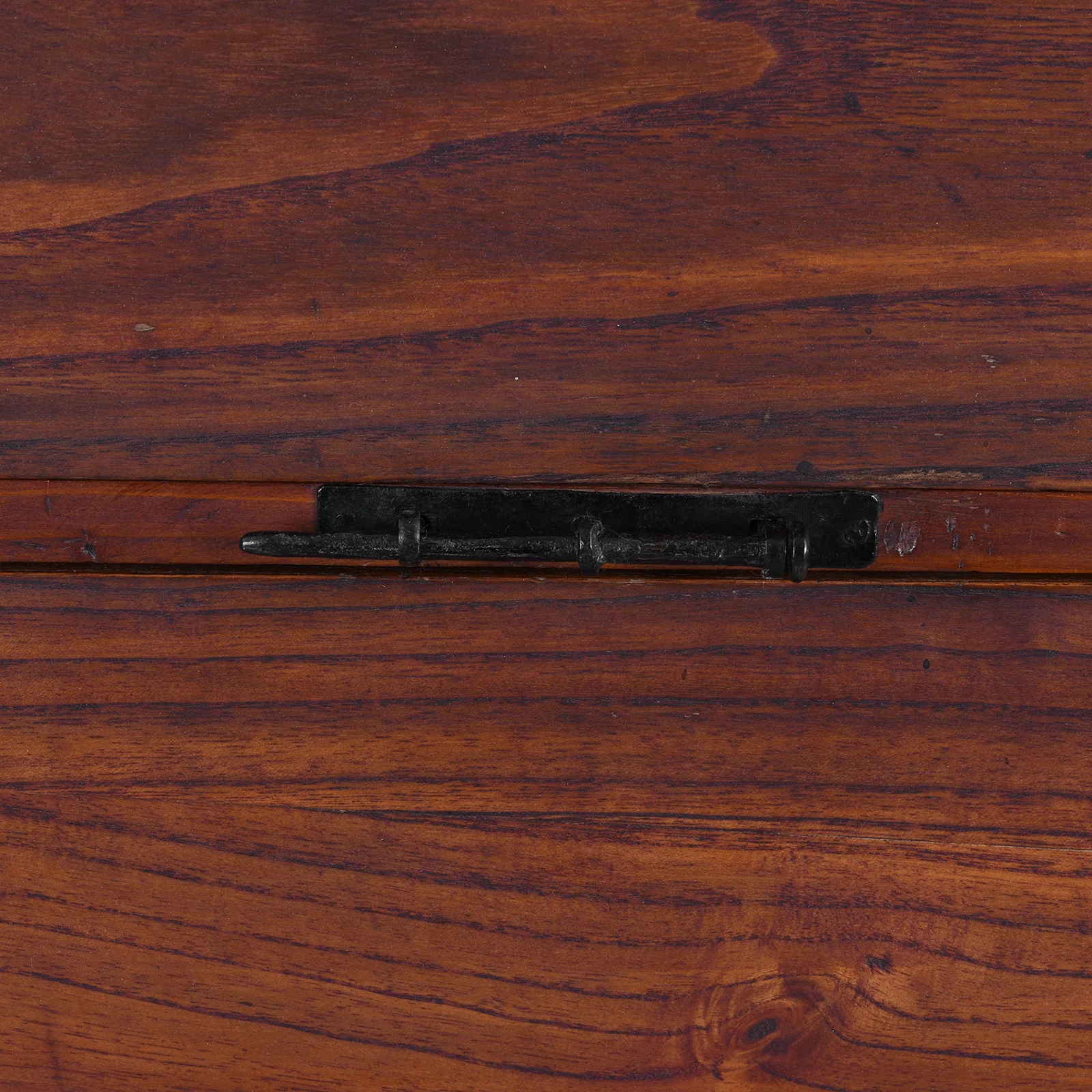
The chest reflects the collaborative craft typical of its period — the work of the carpenter, ironworker, and lacquerer. The body is constructed from cryptomeria (Japanese cedar), while the drawers and doors are made from kiri (paulownia), valued for its lightness and natural insect resistance. The forged iron fittings include hand-riveted corner plates and a prominent circular lock plate featuring a mokko-gata (quatrefoil) floral medallion — a stylised motif associated with protection, good fortune, and prosperity. Though sometimes mistaken for a family crest (mon), this form was a decorative emblem popular among merchant chests of the Meiji era, its lobed symmetry recalling both the cucumber blossom (kyūri no hana) and the melon form, each auspicious symbols of fertility, renewal, and the turning of the seasons.
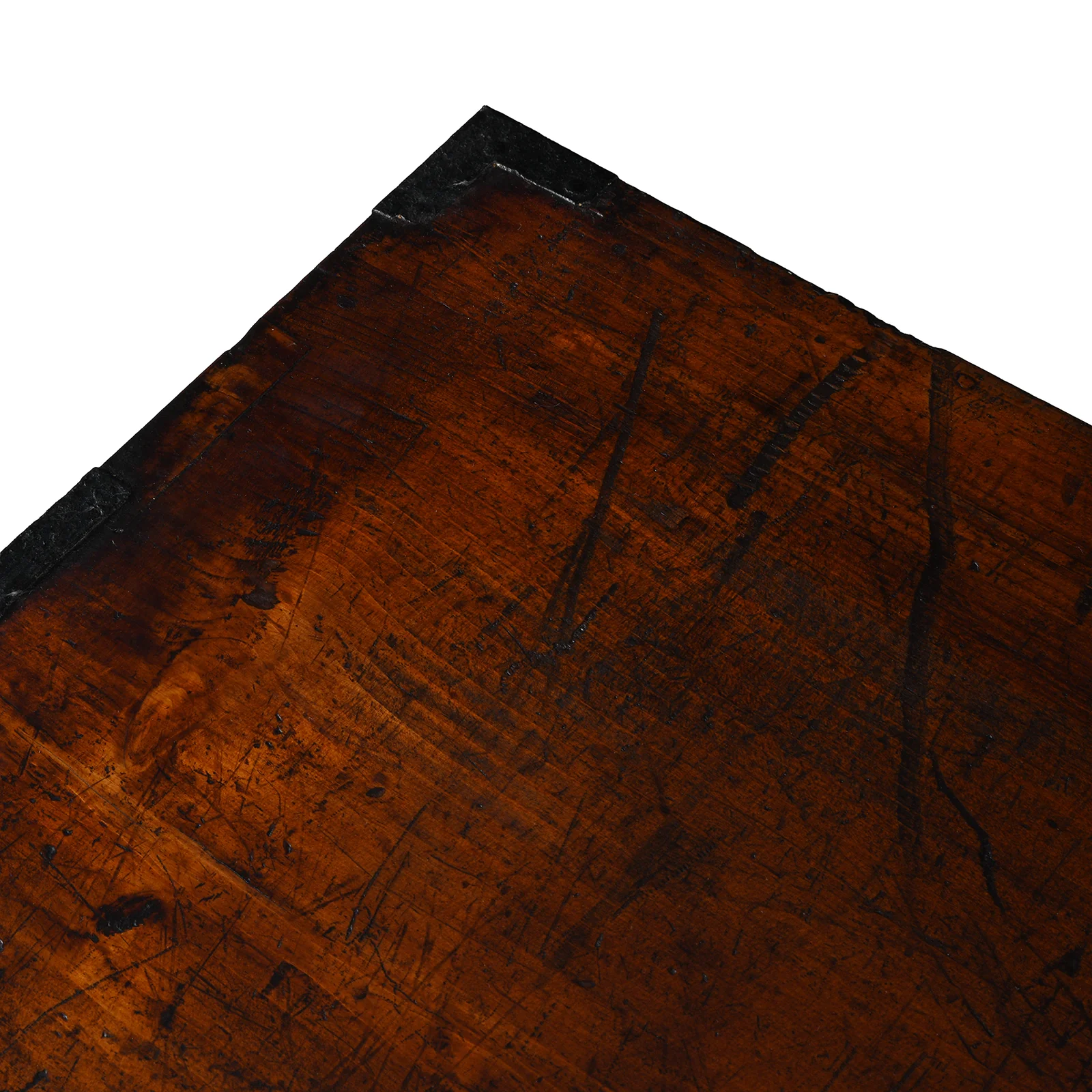
Once finished in dark lacquer, the surface has mellowed to a warm, rich patina that enhances the natural cedar grain. A well-made and authentic example of Meiji-period Kanto cabinetry, it represents the quiet refinement of everyday Japanese craftsmanship in the late 19th century.
- Origin: Kanto region, Japan
- Date: Meiji Period (1868–1912)
- Materials: Cryptomeria carcass with kiri (paulownia) drawers and doors; forged iron fittings
- Features: Two-part stacking design, four large drawers, two smaller drawers, secret compartment, circular lock plate with mokko-gata floral medallion, carrying handles
- Condition: Very good antique condition with age-appropriate wear; small drawers in the lower section replaced in keeping with the original design
- Dimensions: W96 × D43 × H103 cm
Comparable Meiji-period examples can be found in museum and private collections, illustrating the refined yet practical aesthetic of urban cabinetry in late 19th-century Japan.
Original: $3,283.44
-65%$3,283.44
$1,149.20More Images




Japanese Ryobirake Kasane Dansu- Meiji Period From Kanto
A fine Japanese Ryobirake Kasane Dansu from the Meiji period (1868–1912), crafted in the Kantō region. This traditional stacking chest exemplifies the restrained elegance and practical design of Japanese domestic cabinetry, combining utility with carefully balanced proportions.
The Kasane Dansu form separates into two sections for ease of transport and use — a characteristic feature of chests made for urban homes. The upper cabinet features double doors opening to reveal two broad drawers, while the lower section contains two large drawers and a cash box compartment with three small drawers, one concealing a hidden compartment.
The chest reflects the collaborative craft typical of its period — the work of the carpenter, ironworker, and lacquerer. The body is constructed from cryptomeria (Japanese cedar), while the drawers and doors are made from kiri (paulownia), valued for its lightness and natural insect resistance. The forged iron fittings include hand-riveted corner plates and a prominent circular lock plate featuring a mokko-gata (quatrefoil) floral medallion — a stylised motif associated with protection, good fortune, and prosperity. Though sometimes mistaken for a family crest (mon), this form was a decorative emblem popular among merchant chests of the Meiji era, its lobed symmetry recalling both the cucumber blossom (kyūri no hana) and the melon form, each auspicious symbols of fertility, renewal, and the turning of the seasons.
Once finished in dark lacquer, the surface has mellowed to a warm, rich patina that enhances the natural cedar grain. A well-made and authentic example of Meiji-period Kanto cabinetry, it represents the quiet refinement of everyday Japanese craftsmanship in the late 19th century.
- Origin: Kanto region, Japan
- Date: Meiji Period (1868–1912)
- Materials: Cryptomeria carcass with kiri (paulownia) drawers and doors; forged iron fittings
- Features: Two-part stacking design, four large drawers, two smaller drawers, secret compartment, circular lock plate with mokko-gata floral medallion, carrying handles
- Condition: Very good antique condition with age-appropriate wear; small drawers in the lower section replaced in keeping with the original design
- Dimensions: W96 × D43 × H103 cm
Comparable Meiji-period examples can be found in museum and private collections, illustrating the refined yet practical aesthetic of urban cabinetry in late 19th-century Japan.
Product Information
Product Information
Shipping & Returns
Shipping & Returns
Description
A fine Japanese Ryobirake Kasane Dansu from the Meiji period (1868–1912), crafted in the Kantō region. This traditional stacking chest exemplifies the restrained elegance and practical design of Japanese domestic cabinetry, combining utility with carefully balanced proportions.
The Kasane Dansu form separates into two sections for ease of transport and use — a characteristic feature of chests made for urban homes. The upper cabinet features double doors opening to reveal two broad drawers, while the lower section contains two large drawers and a cash box compartment with three small drawers, one concealing a hidden compartment.
The chest reflects the collaborative craft typical of its period — the work of the carpenter, ironworker, and lacquerer. The body is constructed from cryptomeria (Japanese cedar), while the drawers and doors are made from kiri (paulownia), valued for its lightness and natural insect resistance. The forged iron fittings include hand-riveted corner plates and a prominent circular lock plate featuring a mokko-gata (quatrefoil) floral medallion — a stylised motif associated with protection, good fortune, and prosperity. Though sometimes mistaken for a family crest (mon), this form was a decorative emblem popular among merchant chests of the Meiji era, its lobed symmetry recalling both the cucumber blossom (kyūri no hana) and the melon form, each auspicious symbols of fertility, renewal, and the turning of the seasons.
Once finished in dark lacquer, the surface has mellowed to a warm, rich patina that enhances the natural cedar grain. A well-made and authentic example of Meiji-period Kanto cabinetry, it represents the quiet refinement of everyday Japanese craftsmanship in the late 19th century.
- Origin: Kanto region, Japan
- Date: Meiji Period (1868–1912)
- Materials: Cryptomeria carcass with kiri (paulownia) drawers and doors; forged iron fittings
- Features: Two-part stacking design, four large drawers, two smaller drawers, secret compartment, circular lock plate with mokko-gata floral medallion, carrying handles
- Condition: Very good antique condition with age-appropriate wear; small drawers in the lower section replaced in keeping with the original design
- Dimensions: W96 × D43 × H103 cm
Comparable Meiji-period examples can be found in museum and private collections, illustrating the refined yet practical aesthetic of urban cabinetry in late 19th-century Japan.