
Lhoka Trunk From Southern Tibet - 18th Century
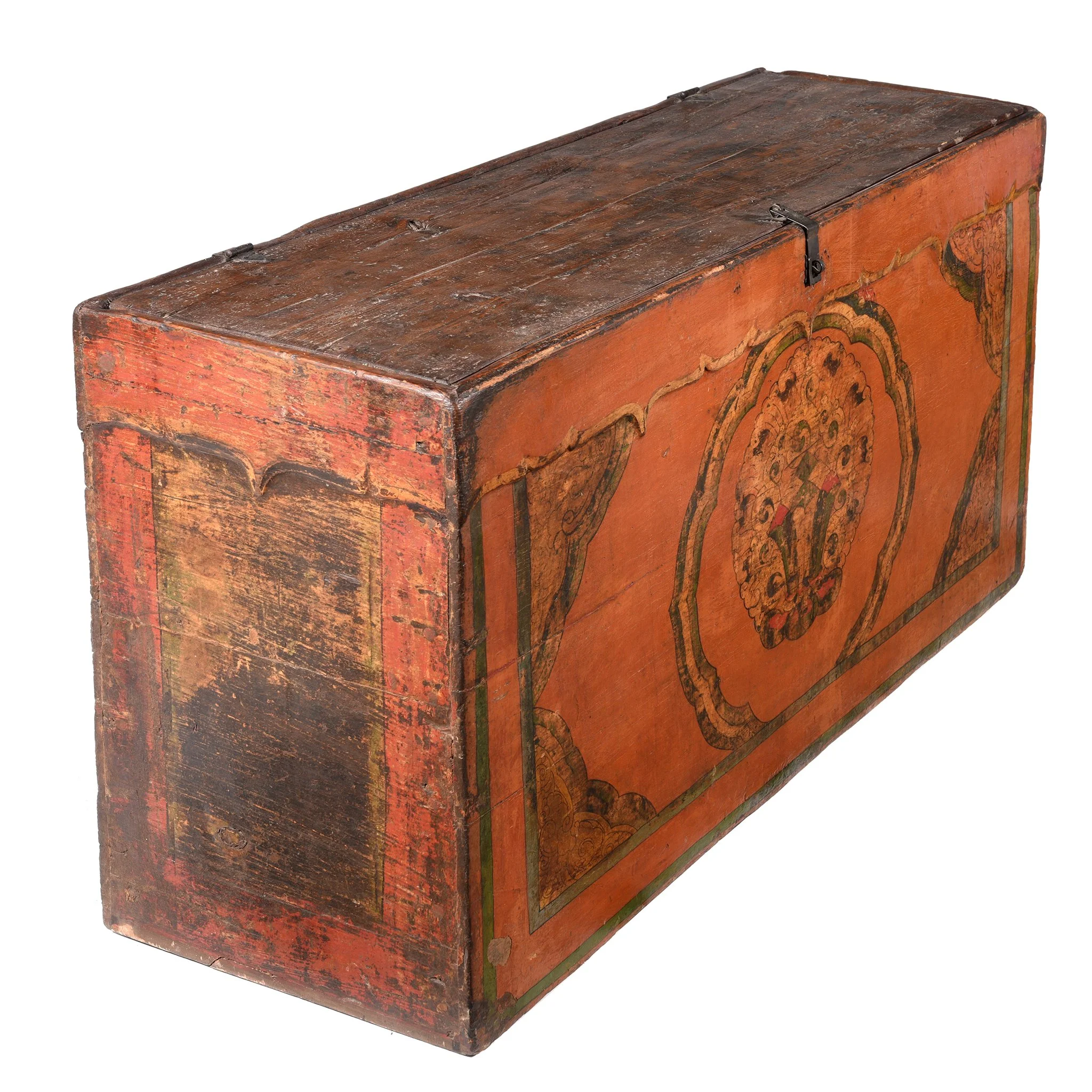
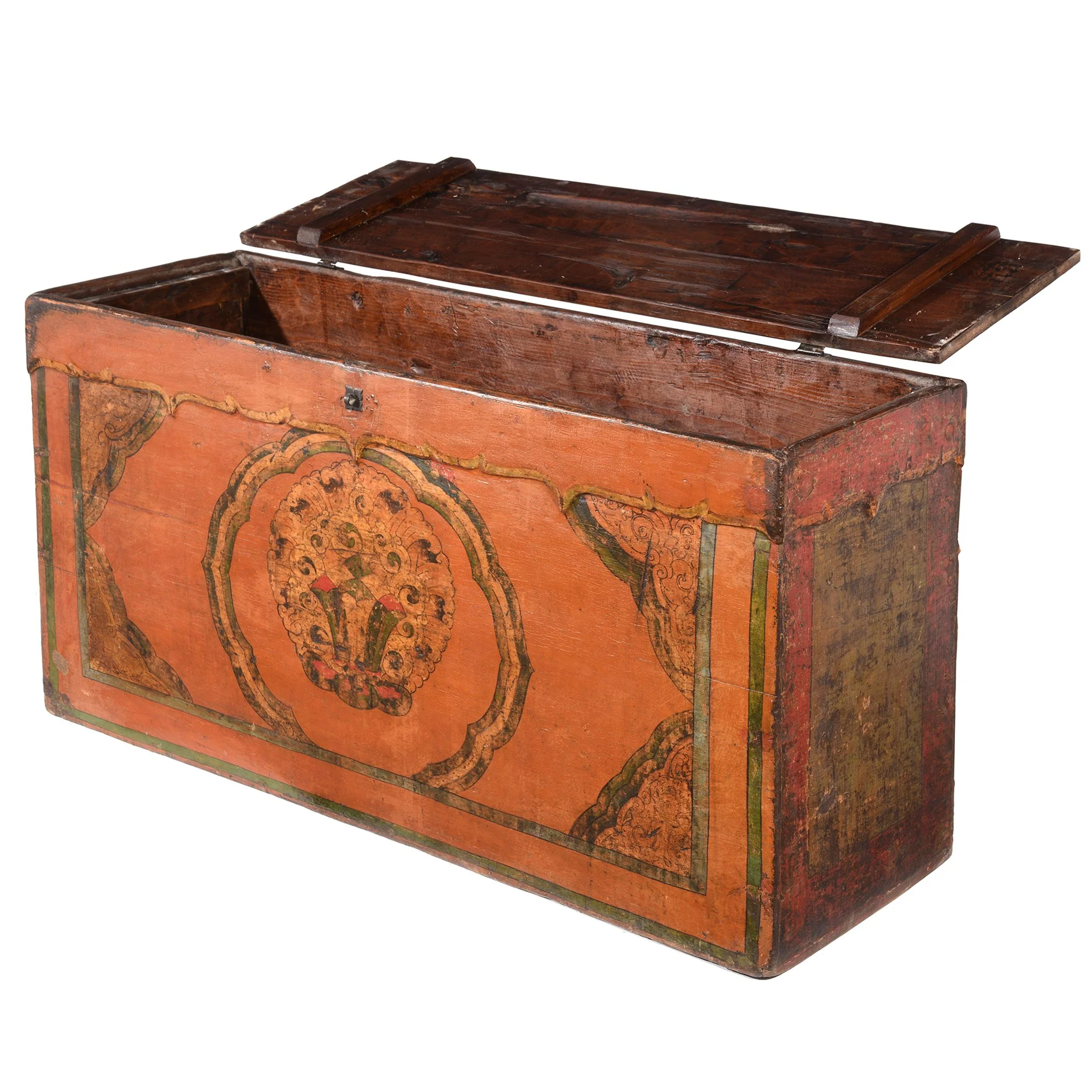
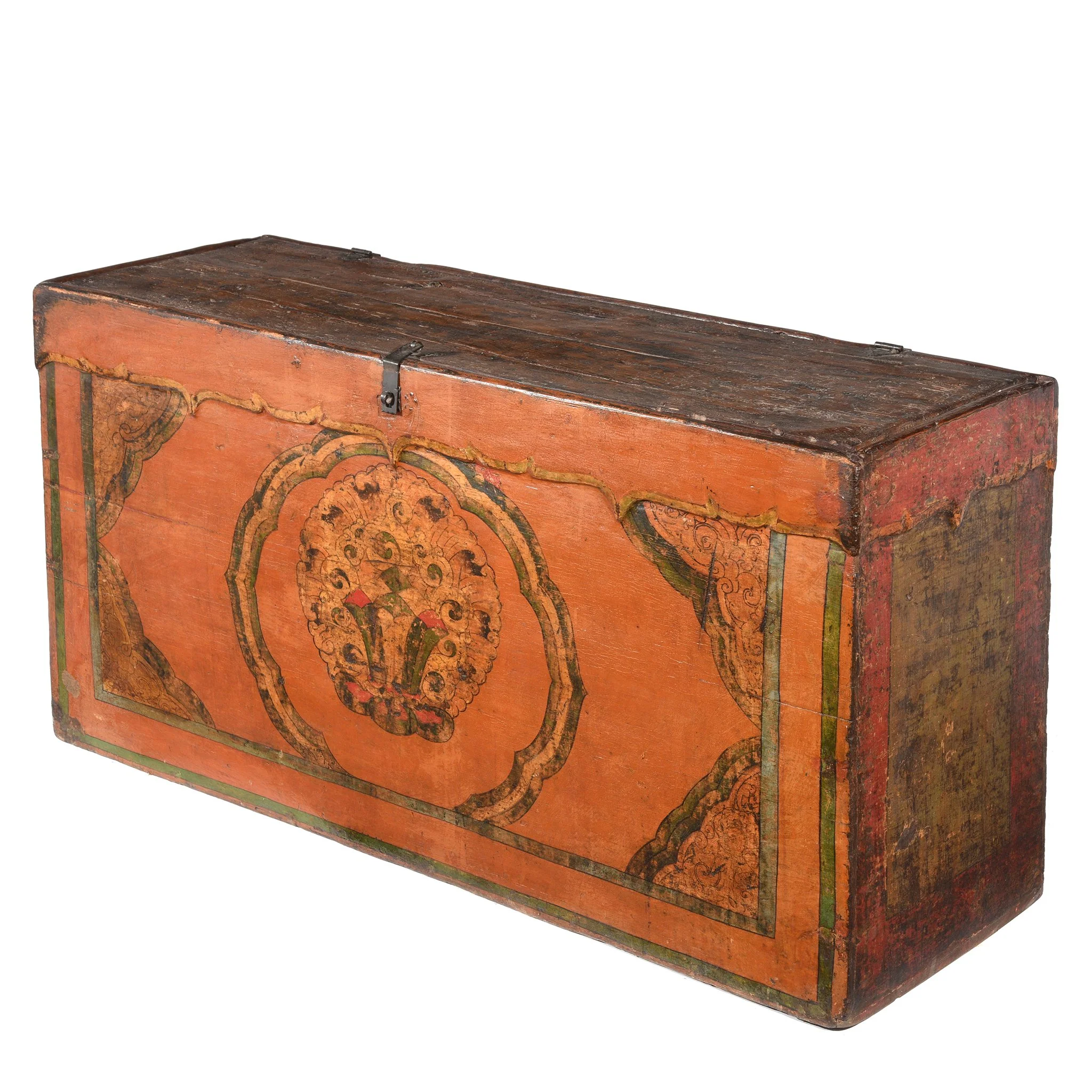
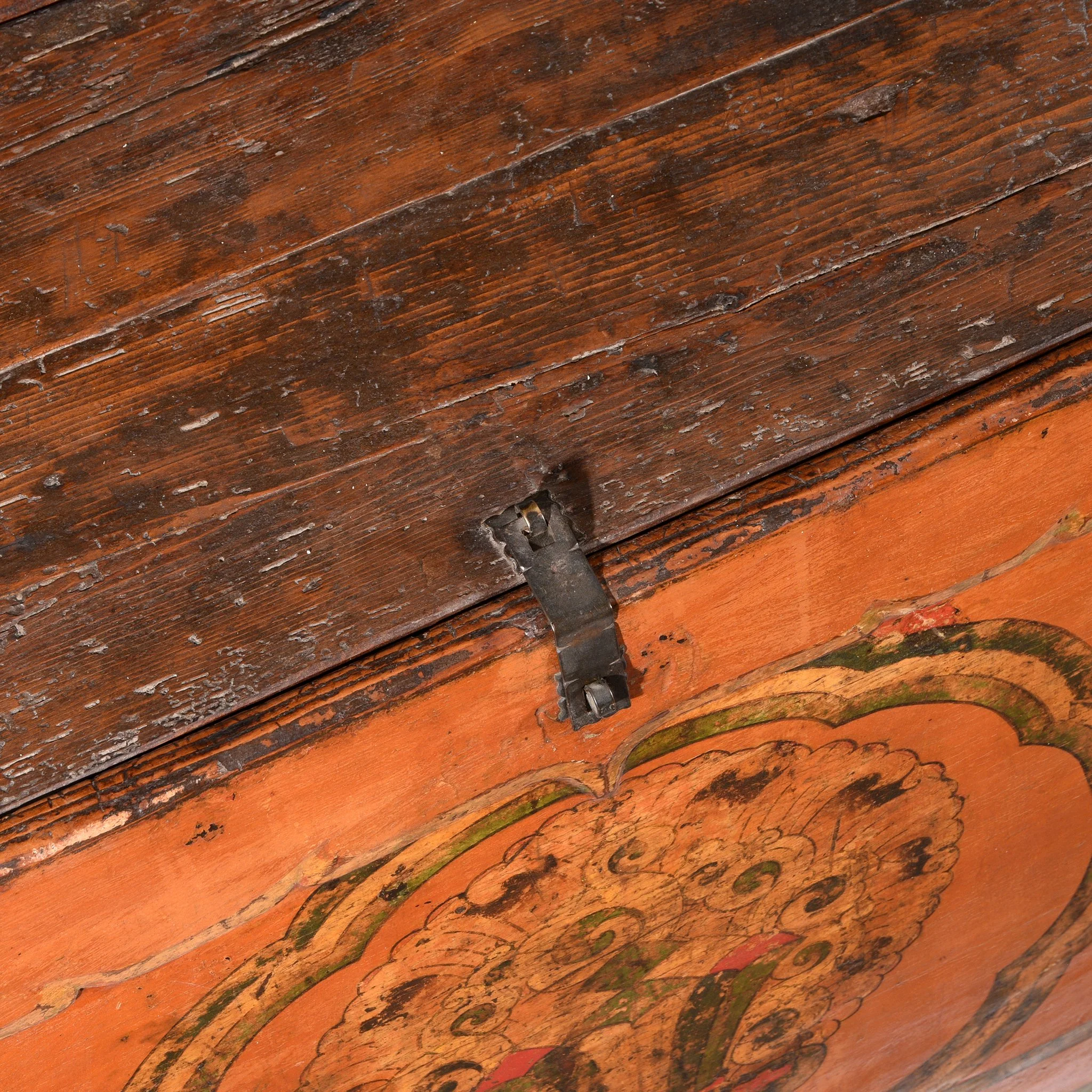
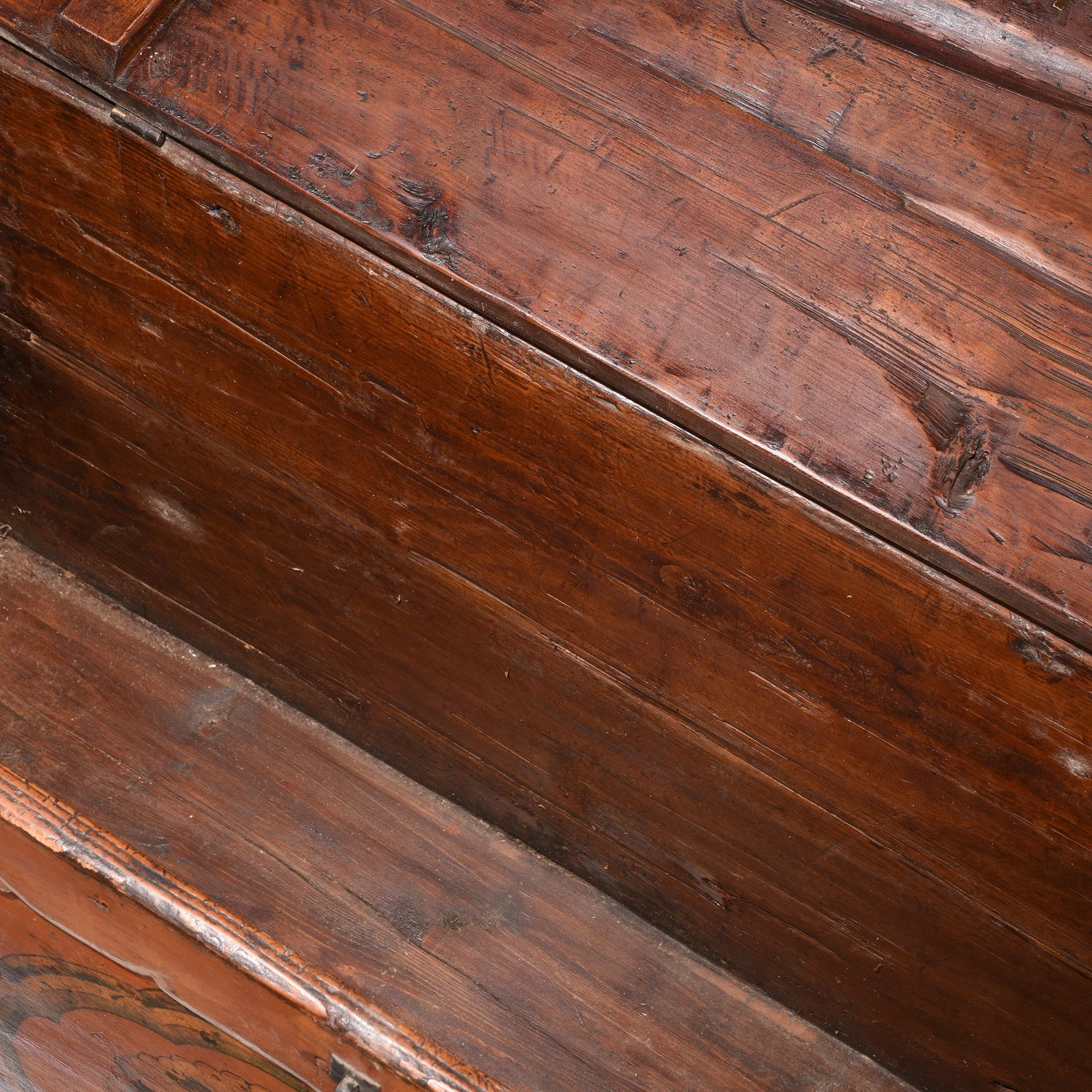
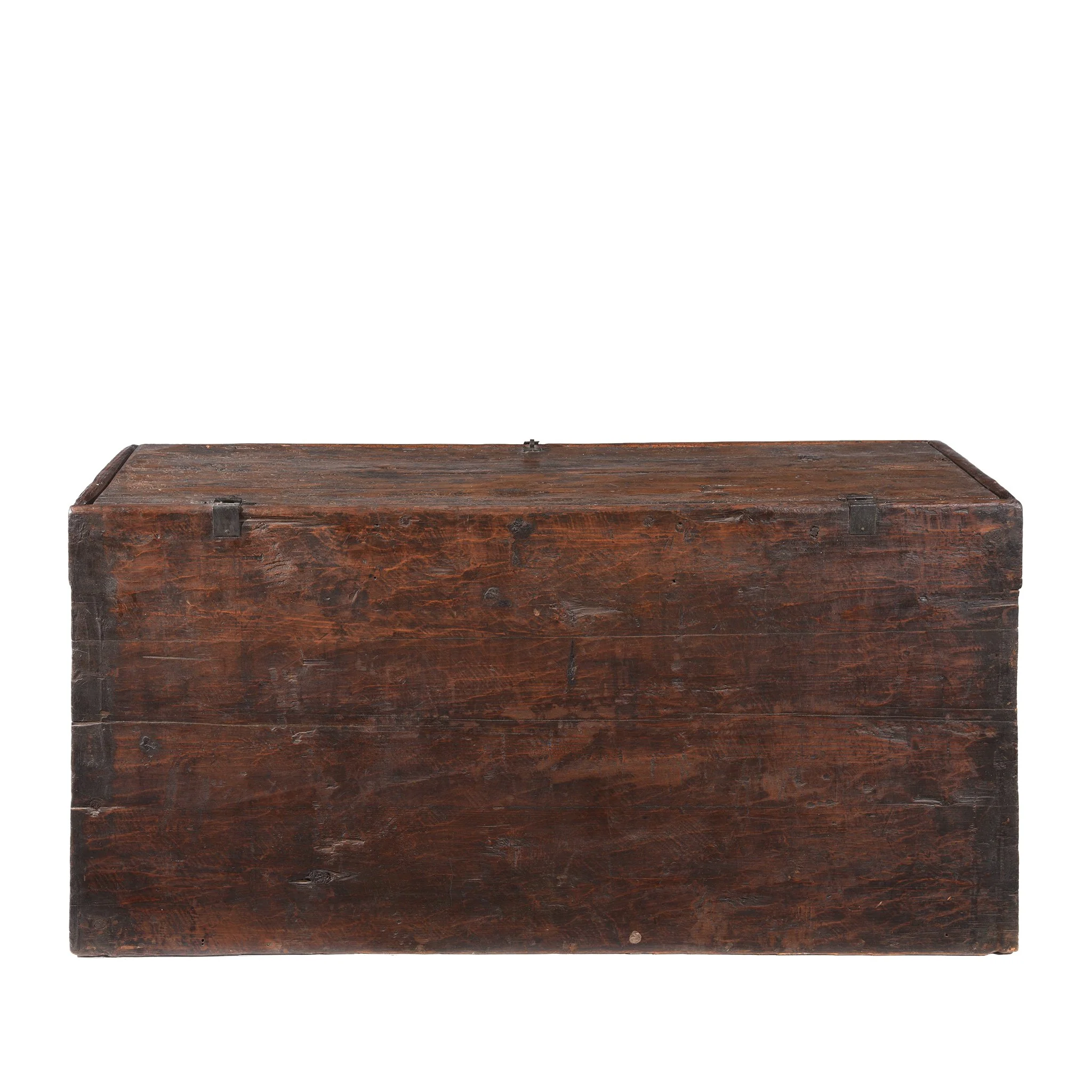
This beautiful Tibetan chest is an unusual orange ochre colour rarely found in Tibetan furniture. It would have been used for storing religious scrolls and precious possessions in a wealthy home or a Tibetan monastery. It dates to the early 18th century as is clear from its wear although it could well be older.
This style of trunk is defined by its soft tapering sides and carved false lid and is from Southern Tibet. It is known as a Lhoka box, referring to the Tibetan district of Lhoka, South of the Yarlung Tsangpo river which forms the Brahmaputra in India. Lhoka was the center of Kagyu Buddhism until the early 17th century when Lhasa became the capital and the Gelupa Buddhist school came to prominence. As wealth and power shifted away from Lhoka, the old furniture designs persisted with very little change.
The scalloped lid is likely influenced by leather boxes dating from the Mongol Yuan dynasty (1279 - 1368). The central theme is a stylised eight faceted jewel (chintamani) which has eight magical qualities, protecting the owners from untimely death, destructive weather, and healing all emotional wounds.
Similar examples can be found in Wooden Wonders: Tibetan Furniture in Secular and Religious Life by Kamansky (plate 89) and Auspicious by Design by Corona, (plate 20).
Antique Tibetan furniture is becoming increasingly rare and is often found covered in a sticky residue. This is due to the continual burning of yak butter lamps. Our expert team has sensitively restored this piece, cleaning the residue whilst retaining its age and patina.
Original: $5,082.32
-65%$5,082.32
$1,778.81More Images

Lhoka Trunk From Southern Tibet - 18th Century
This beautiful Tibetan chest is an unusual orange ochre colour rarely found in Tibetan furniture. It would have been used for storing religious scrolls and precious possessions in a wealthy home or a Tibetan monastery. It dates to the early 18th century as is clear from its wear although it could well be older.
This style of trunk is defined by its soft tapering sides and carved false lid and is from Southern Tibet. It is known as a Lhoka box, referring to the Tibetan district of Lhoka, South of the Yarlung Tsangpo river which forms the Brahmaputra in India. Lhoka was the center of Kagyu Buddhism until the early 17th century when Lhasa became the capital and the Gelupa Buddhist school came to prominence. As wealth and power shifted away from Lhoka, the old furniture designs persisted with very little change.
The scalloped lid is likely influenced by leather boxes dating from the Mongol Yuan dynasty (1279 - 1368). The central theme is a stylised eight faceted jewel (chintamani) which has eight magical qualities, protecting the owners from untimely death, destructive weather, and healing all emotional wounds.
Similar examples can be found in Wooden Wonders: Tibetan Furniture in Secular and Religious Life by Kamansky (plate 89) and Auspicious by Design by Corona, (plate 20).
Antique Tibetan furniture is becoming increasingly rare and is often found covered in a sticky residue. This is due to the continual burning of yak butter lamps. Our expert team has sensitively restored this piece, cleaning the residue whilst retaining its age and patina.
Product Information
Product Information
Shipping & Returns
Shipping & Returns
Description
This beautiful Tibetan chest is an unusual orange ochre colour rarely found in Tibetan furniture. It would have been used for storing religious scrolls and precious possessions in a wealthy home or a Tibetan monastery. It dates to the early 18th century as is clear from its wear although it could well be older.
This style of trunk is defined by its soft tapering sides and carved false lid and is from Southern Tibet. It is known as a Lhoka box, referring to the Tibetan district of Lhoka, South of the Yarlung Tsangpo river which forms the Brahmaputra in India. Lhoka was the center of Kagyu Buddhism until the early 17th century when Lhasa became the capital and the Gelupa Buddhist school came to prominence. As wealth and power shifted away from Lhoka, the old furniture designs persisted with very little change.
The scalloped lid is likely influenced by leather boxes dating from the Mongol Yuan dynasty (1279 - 1368). The central theme is a stylised eight faceted jewel (chintamani) which has eight magical qualities, protecting the owners from untimely death, destructive weather, and healing all emotional wounds.
Similar examples can be found in Wooden Wonders: Tibetan Furniture in Secular and Religious Life by Kamansky (plate 89) and Auspicious by Design by Corona, (plate 20).
Antique Tibetan furniture is becoming increasingly rare and is often found covered in a sticky residue. This is due to the continual burning of yak butter lamps. Our expert team has sensitively restored this piece, cleaning the residue whilst retaining its age and patina.