Bastar Tribal Iron Toran - Ca 1940s
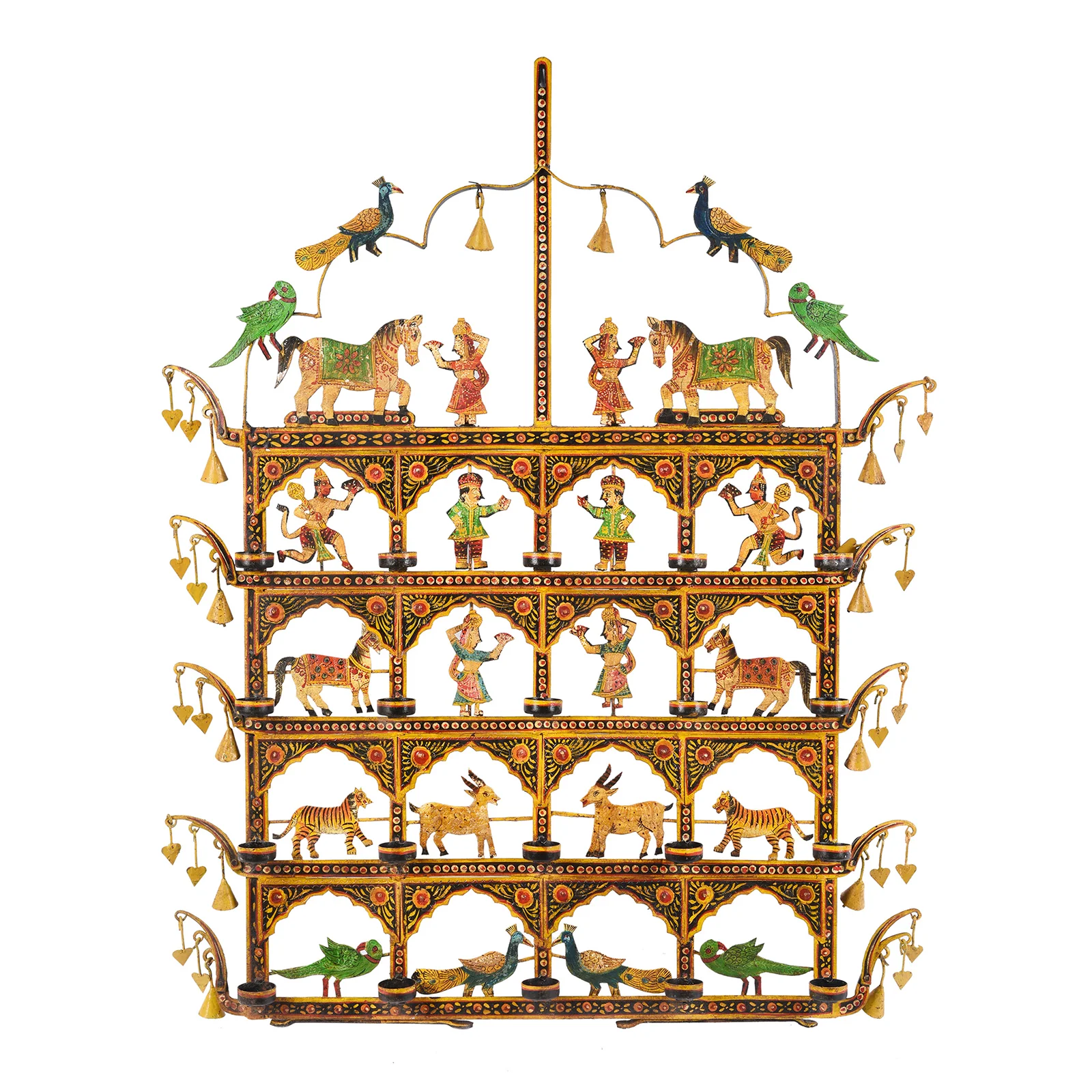
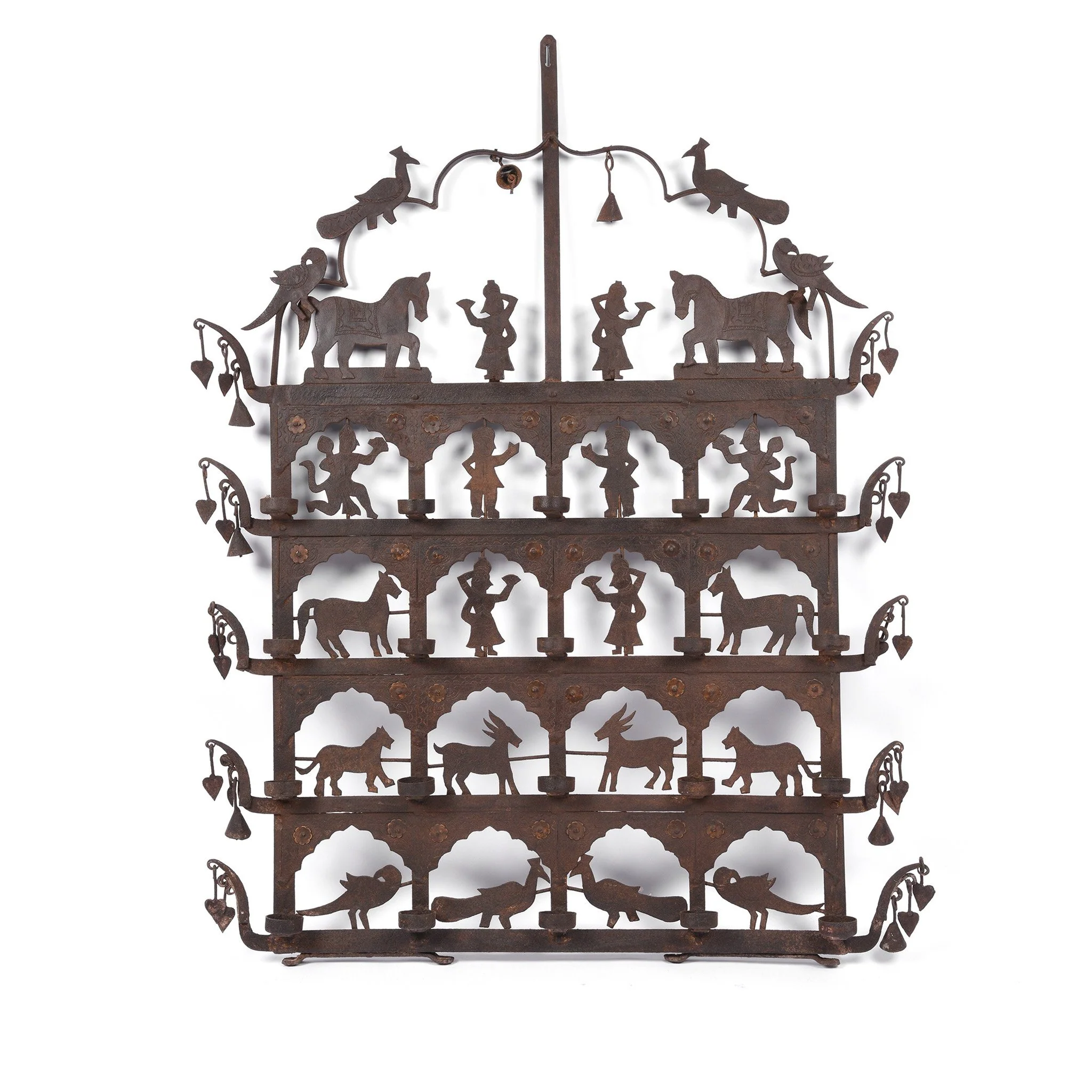
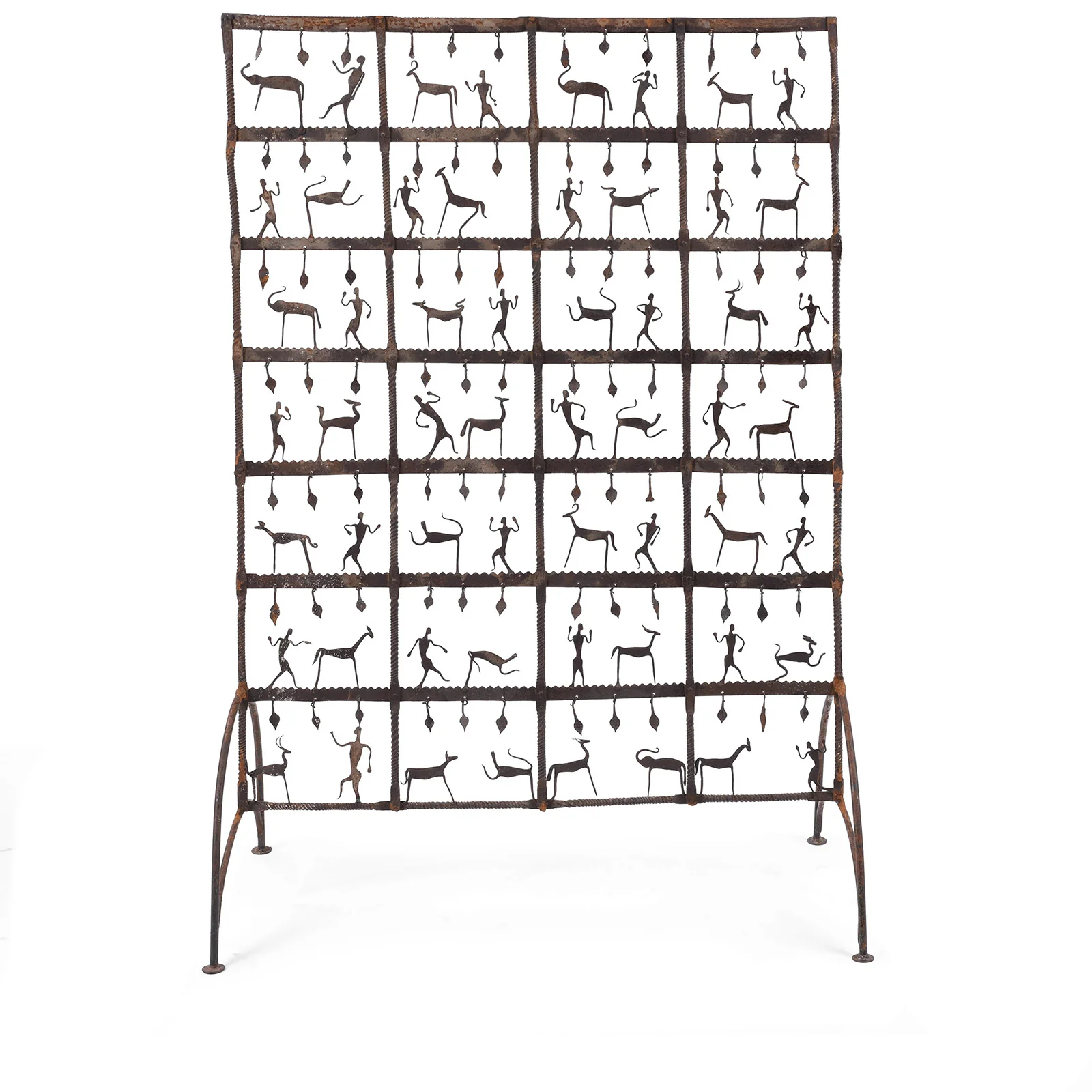
This mid-20th century Bastar toran from central India reads less as a single object and more as a series of unfolding scenes, captured in iron. Traditionally made as protective and auspicious hangings, torans were placed across entrances to mark a threshold, both decorative and symbolic. Here, that language has been extended into a freestanding form, allowing it to function as a sculptural screen.
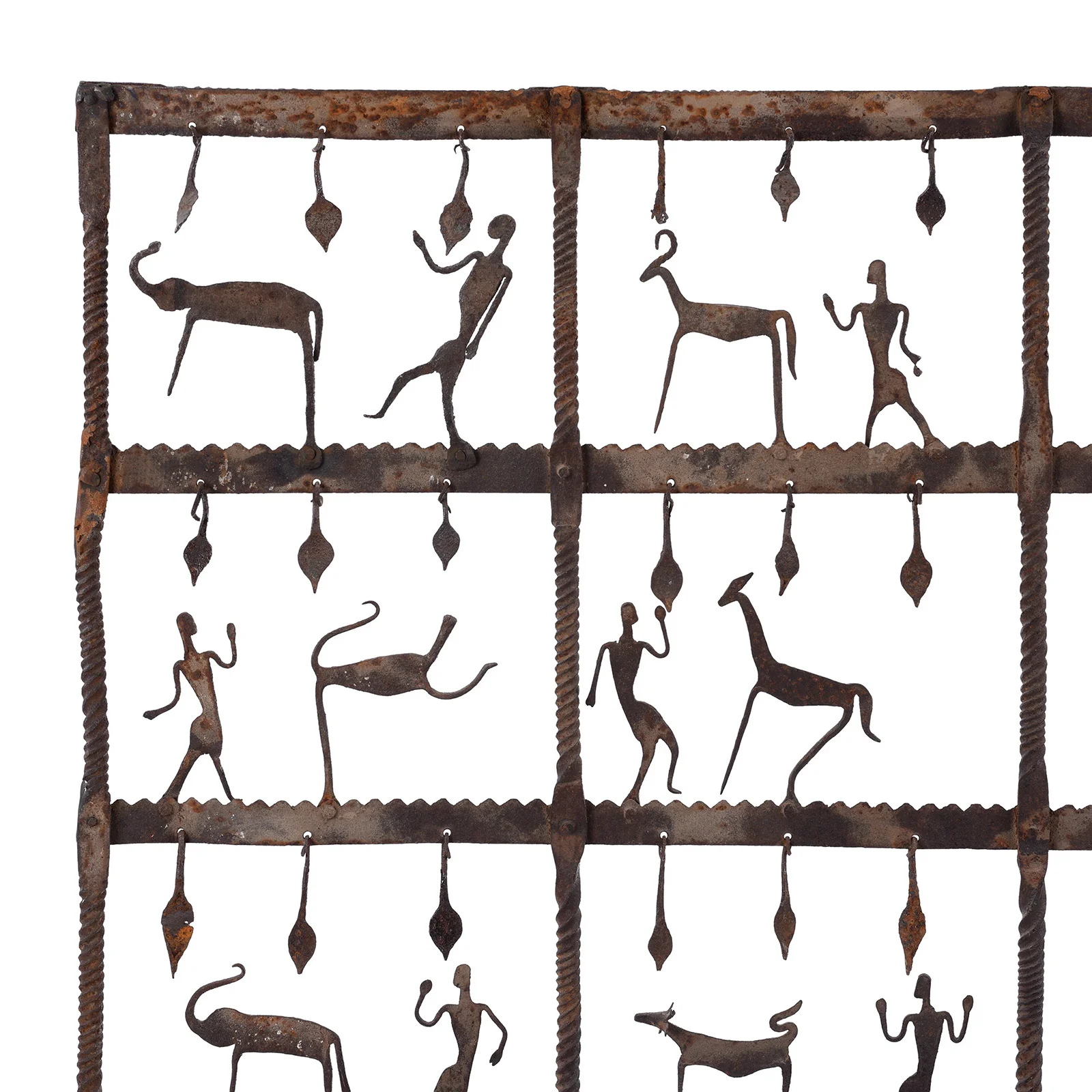
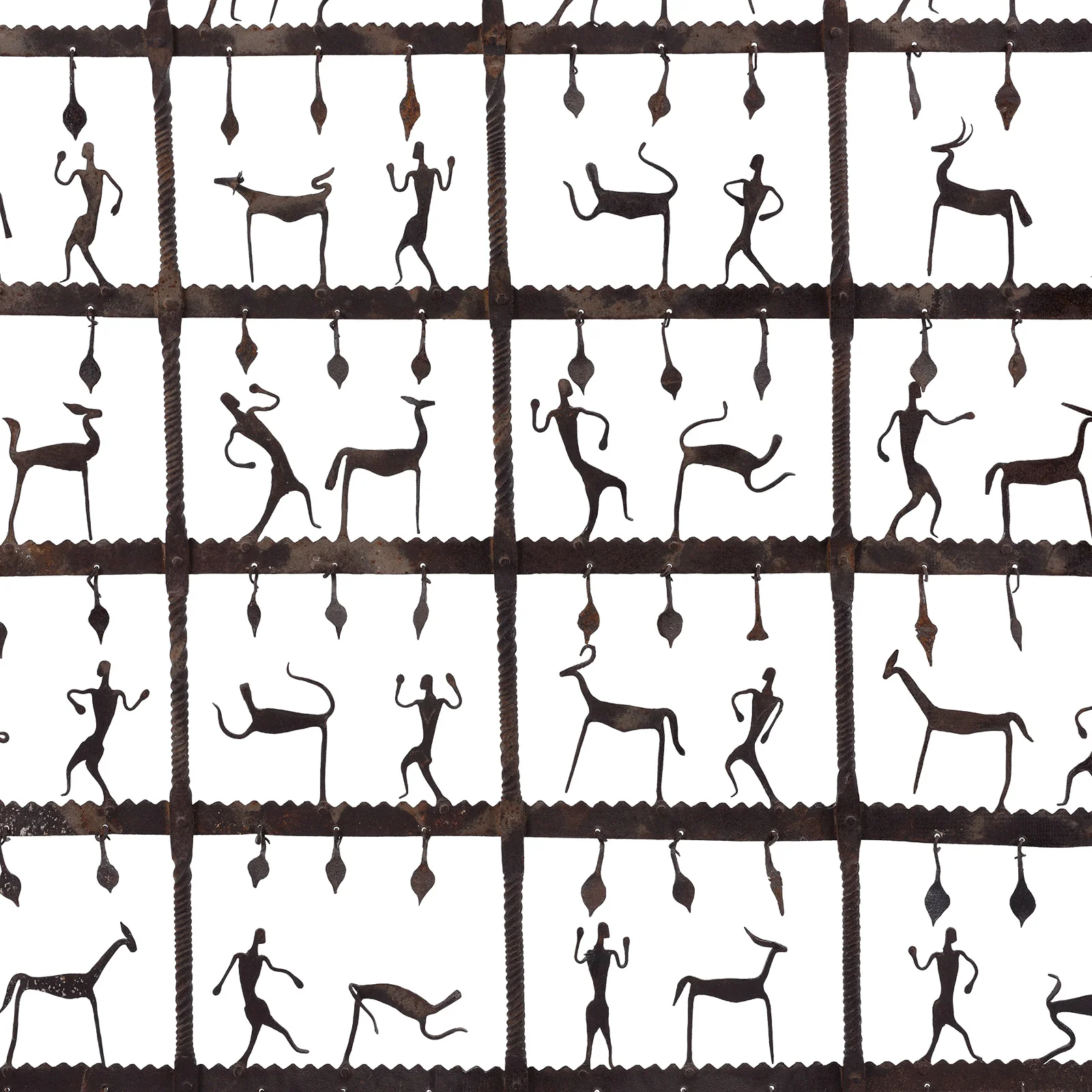
The surface is organised as a grid, each section populated with stylised human figures and animals, arranged in repeating sequences. Rather than strict repetition, the figures shift subtly in posture and gesture, creating a sense of movement and narrative. Some appear to dance, others to hunt or interact, while the animals move alongside them, forming a continuous rhythm across the piece. It reads almost like a visual record of daily life, distilled into simple, expressive forms.
This style of work is characteristic of the Bastar region, where ironworkers traditionally drew on local folklore, ritual, and the natural world, translating them into pared-back silhouettes. The result is not decorative in a conventional sense, but observational and symbolic, capturing activity, movement, and human presence in a direct way.
Suspended pendants run along each horizontal band, adding a secondary layer of detail. They introduce slight movement and occasional sound, reinforcing the idea of the piece as something animated rather than static.
Mounted on a custom iron stand, this example moves beyond its original architectural role and becomes a freestanding narrative panel, equally effective as a room divider or sculptural focal point.
- Origin: Bastar Region, Chhattisgarh, India
- Date: Circa 1940
- Materials: Hand-forged iron
- Features: Narrative grid of stylised human and animal figures, suspended pendants, mounted on freestanding iron stand
- Condition: Aged surface with patina and wear consistent with age
- Display: Freestanding
- Dimensions: Width 92 × Depth 48 × Height 138 cm
A highly expressive example of Bastar tribal ironwork, where pattern becomes narrative and decoration becomes storytelling.
Original: $617.77
-65%$617.77
$216.22More Images
Bastar Tribal Iron Toran - Ca 1940s
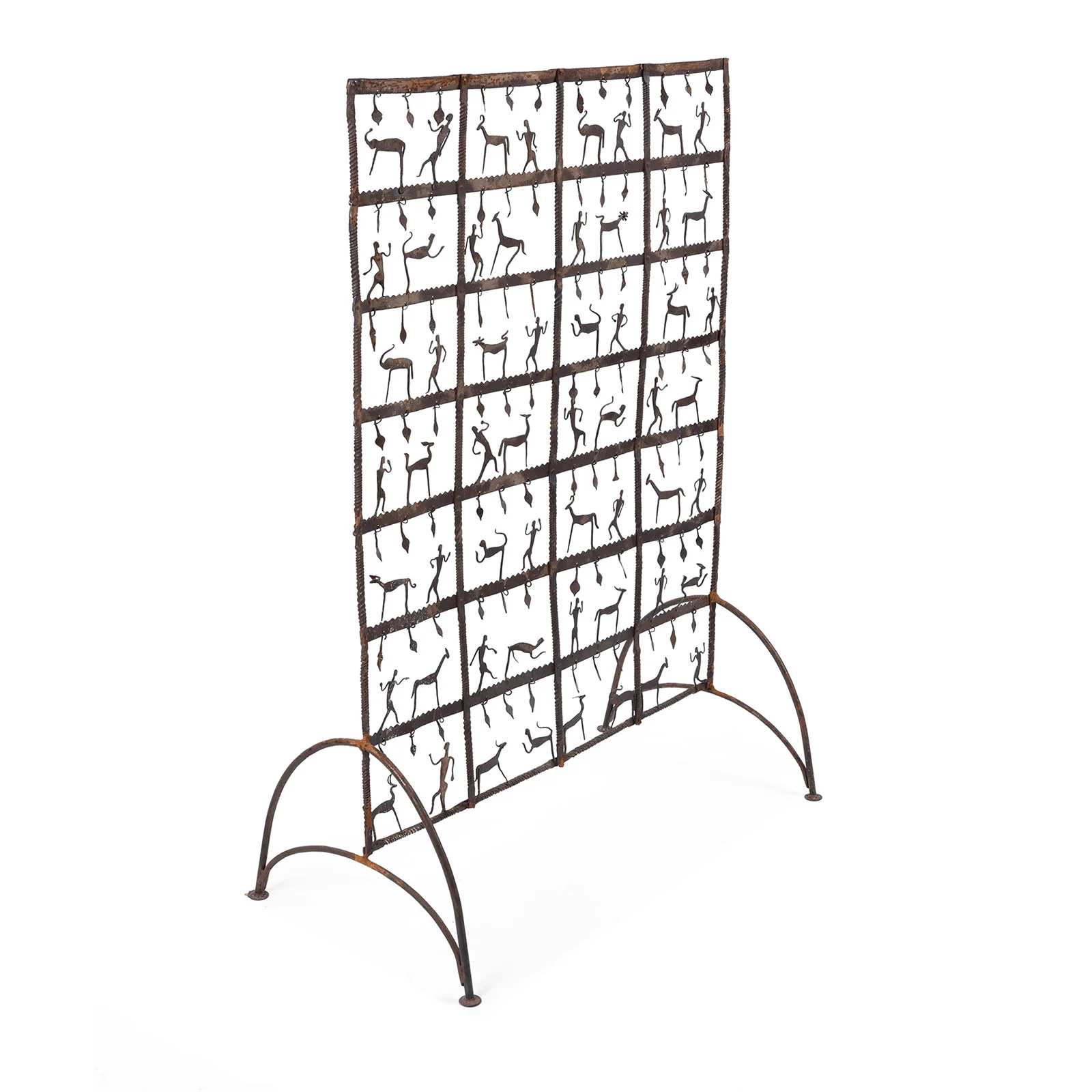
This mid-20th century Bastar toran from central India reads less as a single object and more as a series of unfolding scenes, captured in iron. Traditionally made as protective and auspicious hangings, torans were placed across entrances to mark a threshold, both decorative and symbolic. Here, that language has been extended into a freestanding form, allowing it to function as a sculptural screen.
The surface is organised as a grid, each section populated with stylised human figures and animals, arranged in repeating sequences. Rather than strict repetition, the figures shift subtly in posture and gesture, creating a sense of movement and narrative. Some appear to dance, others to hunt or interact, while the animals move alongside them, forming a continuous rhythm across the piece. It reads almost like a visual record of daily life, distilled into simple, expressive forms.
This style of work is characteristic of the Bastar region, where ironworkers traditionally drew on local folklore, ritual, and the natural world, translating them into pared-back silhouettes. The result is not decorative in a conventional sense, but observational and symbolic, capturing activity, movement, and human presence in a direct way.
Suspended pendants run along each horizontal band, adding a secondary layer of detail. They introduce slight movement and occasional sound, reinforcing the idea of the piece as something animated rather than static.
Mounted on a custom iron stand, this example moves beyond its original architectural role and becomes a freestanding narrative panel, equally effective as a room divider or sculptural focal point.
- Origin: Bastar Region, Chhattisgarh, India
- Date: Circa 1940
- Materials: Hand-forged iron
- Features: Narrative grid of stylised human and animal figures, suspended pendants, mounted on freestanding iron stand
- Condition: Aged surface with patina and wear consistent with age
- Display: Freestanding
- Dimensions: Width 92 × Depth 48 × Height 138 cm
A highly expressive example of Bastar tribal ironwork, where pattern becomes narrative and decoration becomes storytelling.
Product Information
Product Information
Shipping & Returns
Shipping & Returns
Description
This mid-20th century Bastar toran from central India reads less as a single object and more as a series of unfolding scenes, captured in iron. Traditionally made as protective and auspicious hangings, torans were placed across entrances to mark a threshold, both decorative and symbolic. Here, that language has been extended into a freestanding form, allowing it to function as a sculptural screen.
The surface is organised as a grid, each section populated with stylised human figures and animals, arranged in repeating sequences. Rather than strict repetition, the figures shift subtly in posture and gesture, creating a sense of movement and narrative. Some appear to dance, others to hunt or interact, while the animals move alongside them, forming a continuous rhythm across the piece. It reads almost like a visual record of daily life, distilled into simple, expressive forms.
This style of work is characteristic of the Bastar region, where ironworkers traditionally drew on local folklore, ritual, and the natural world, translating them into pared-back silhouettes. The result is not decorative in a conventional sense, but observational and symbolic, capturing activity, movement, and human presence in a direct way.
Suspended pendants run along each horizontal band, adding a secondary layer of detail. They introduce slight movement and occasional sound, reinforcing the idea of the piece as something animated rather than static.
Mounted on a custom iron stand, this example moves beyond its original architectural role and becomes a freestanding narrative panel, equally effective as a room divider or sculptural focal point.
- Origin: Bastar Region, Chhattisgarh, India
- Date: Circa 1940
- Materials: Hand-forged iron
- Features: Narrative grid of stylised human and animal figures, suspended pendants, mounted on freestanding iron stand
- Condition: Aged surface with patina and wear consistent with age
- Display: Freestanding
- Dimensions: Width 92 × Depth 48 × Height 138 cm
A highly expressive example of Bastar tribal ironwork, where pattern becomes narrative and decoration becomes storytelling.