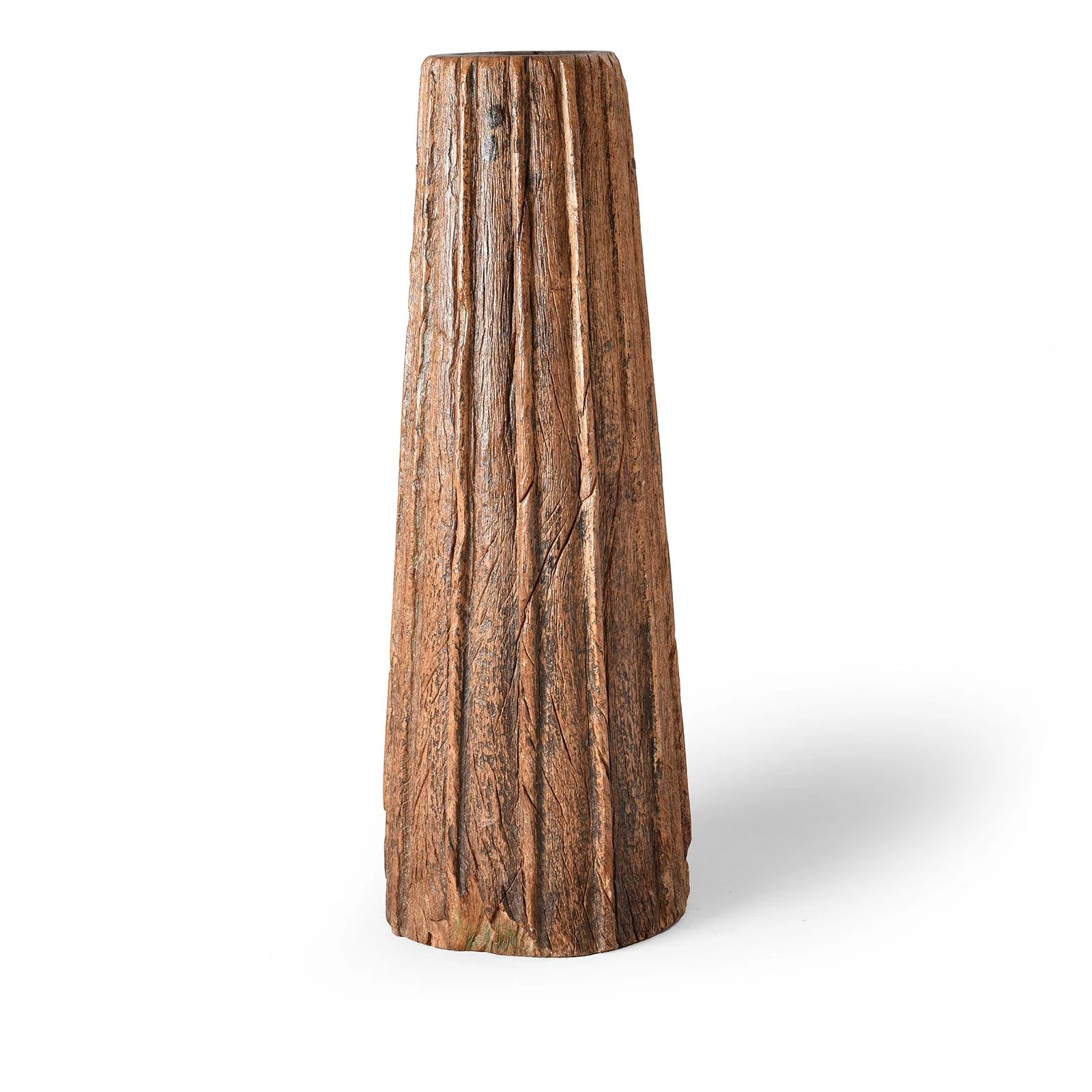
Teak Seed Drill From Madhya Pradesh - 19th Century
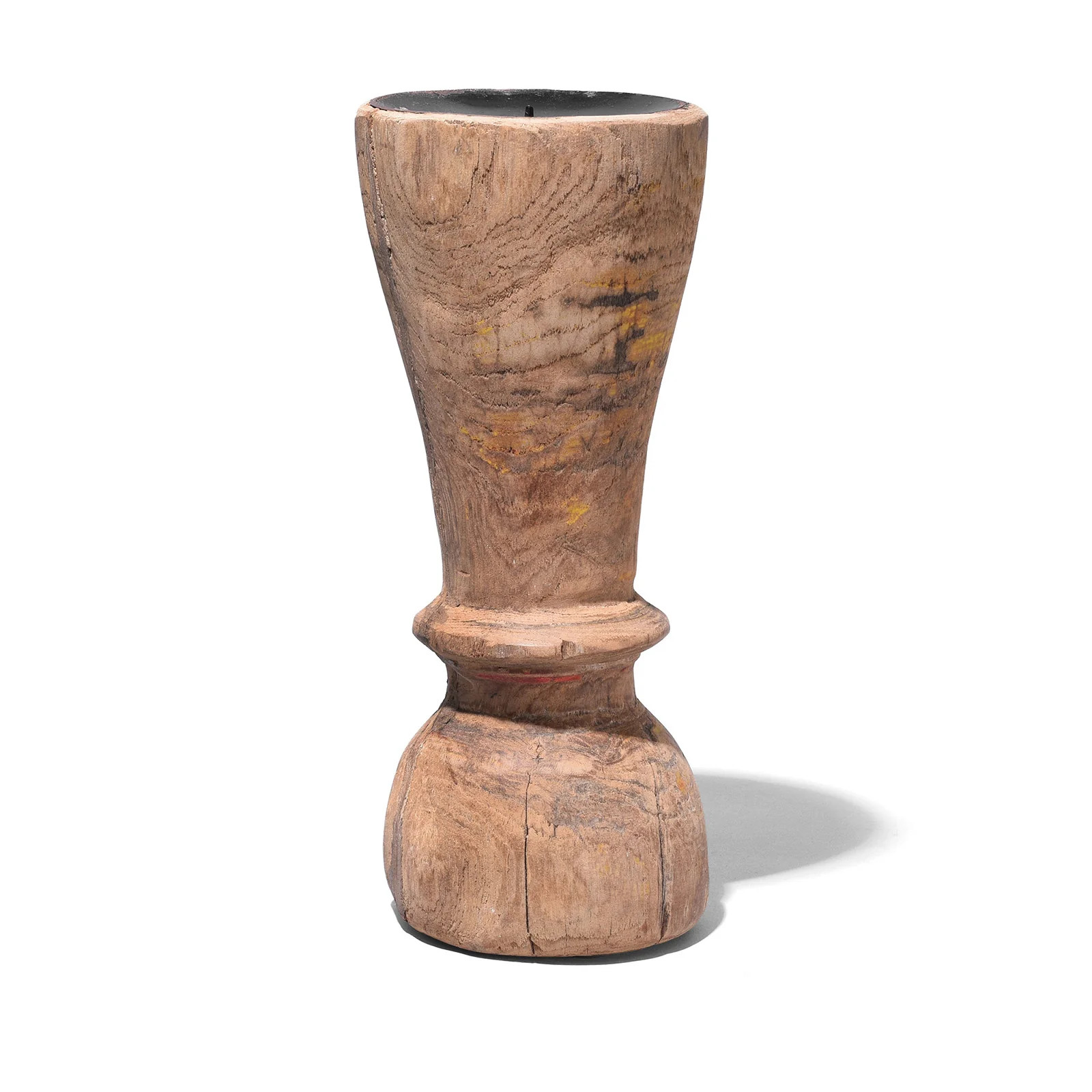
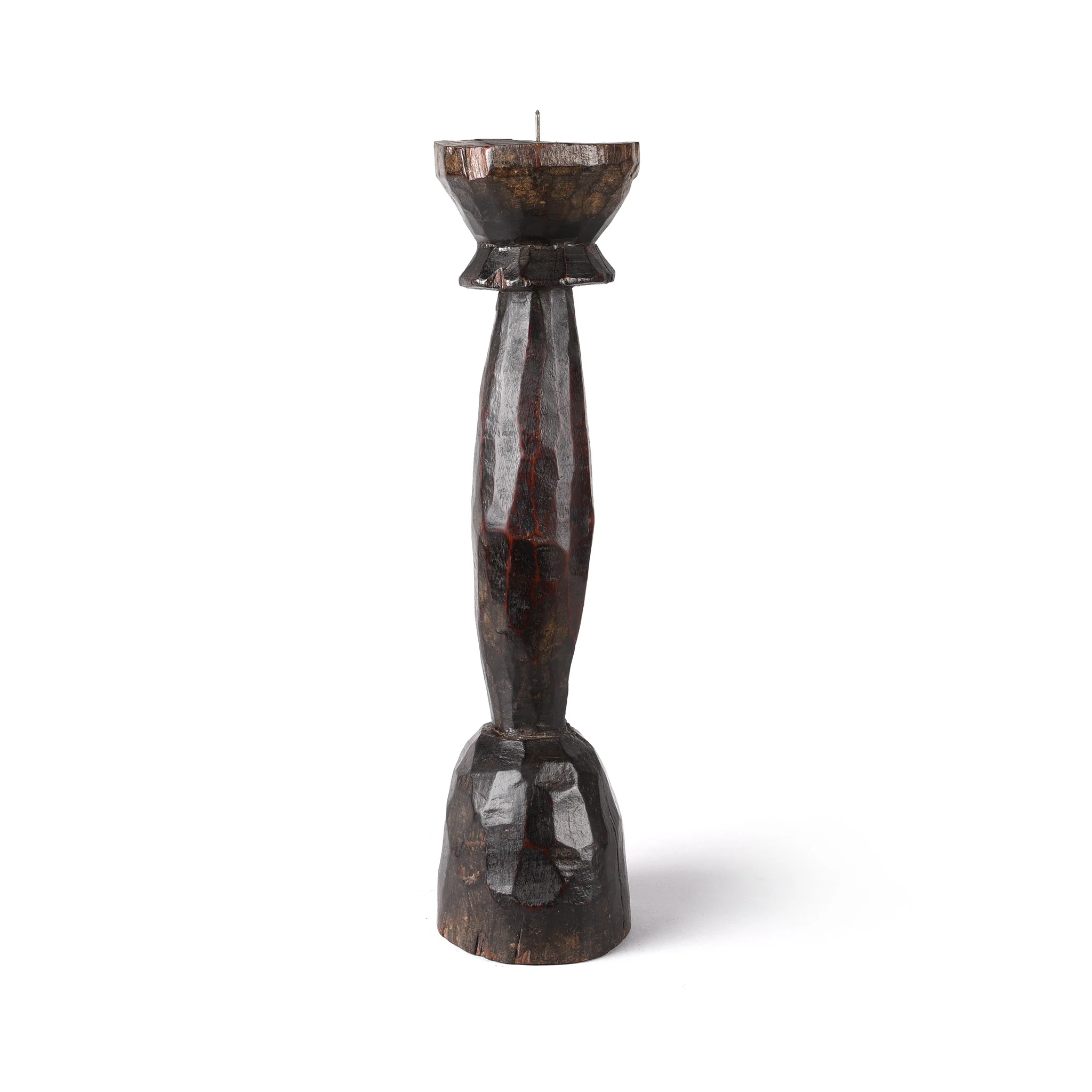
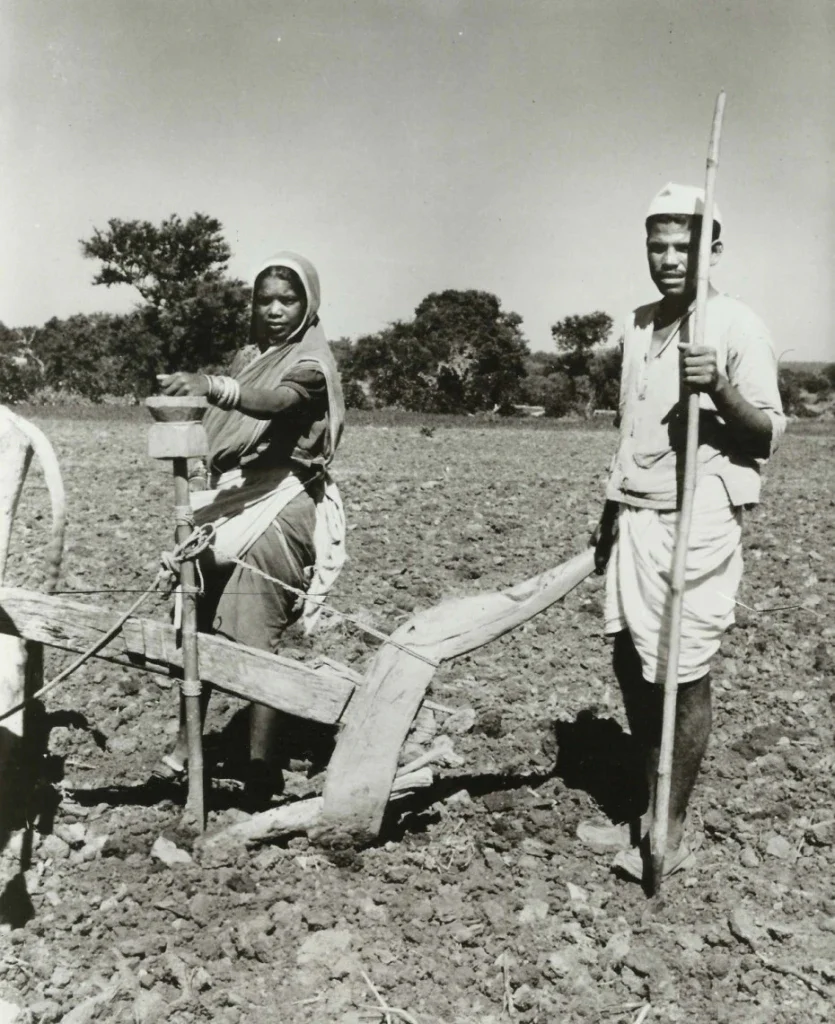
This beautifully carved antique Indian seed drill, known in Gujarat as an orani (ઓરણી), is a wonderful example of traditional agricultural craftsmanship elevated through decorative artistry. Dating to the 19th or early 20th century, it was originally used to sow seeds evenly into prepared soil, guided by a farmer as oxen drew it through the fields. Over more than a century of daily use, the hardwood has developed a deep, lustrous patina, its surfaces softened and enriched by handling and exposure.
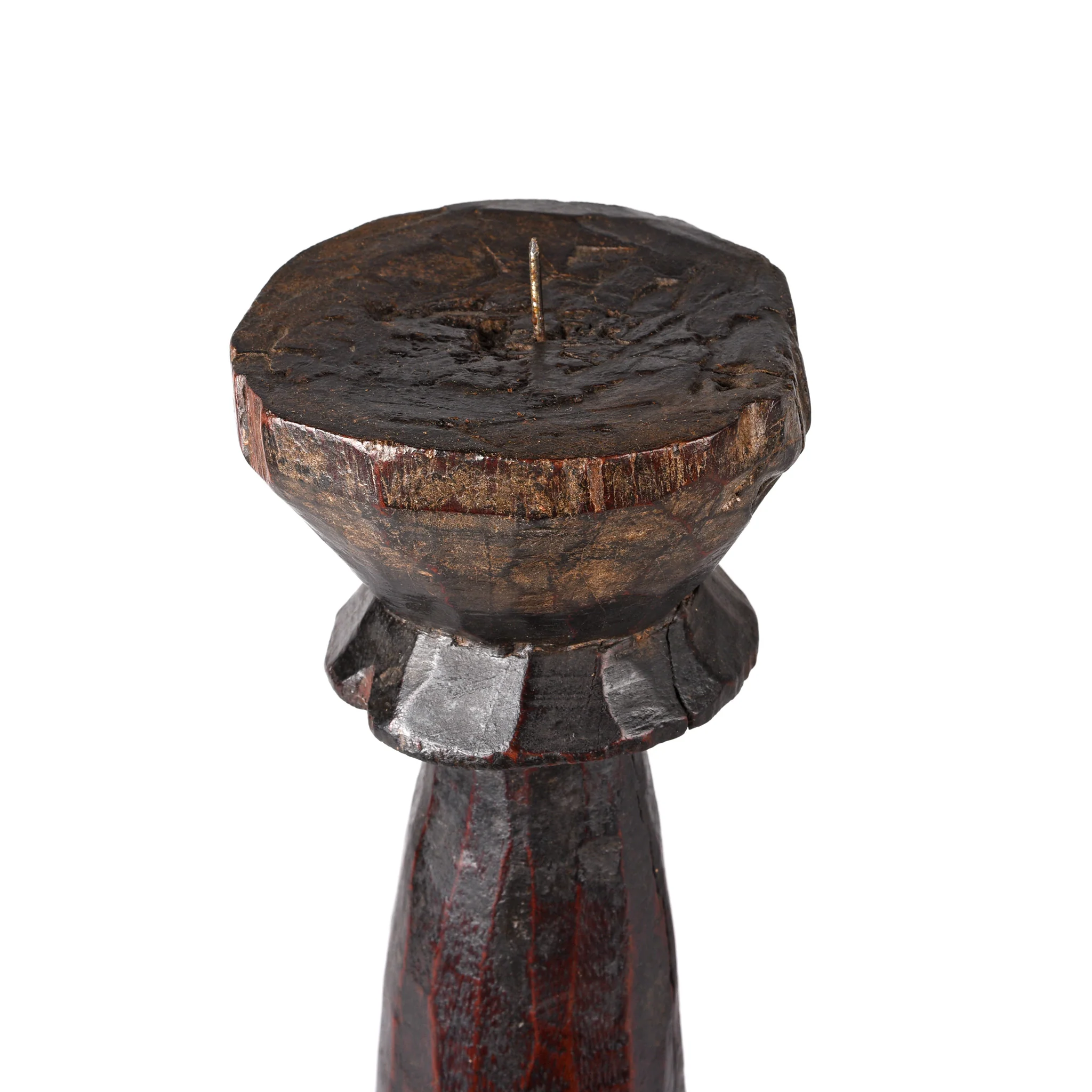
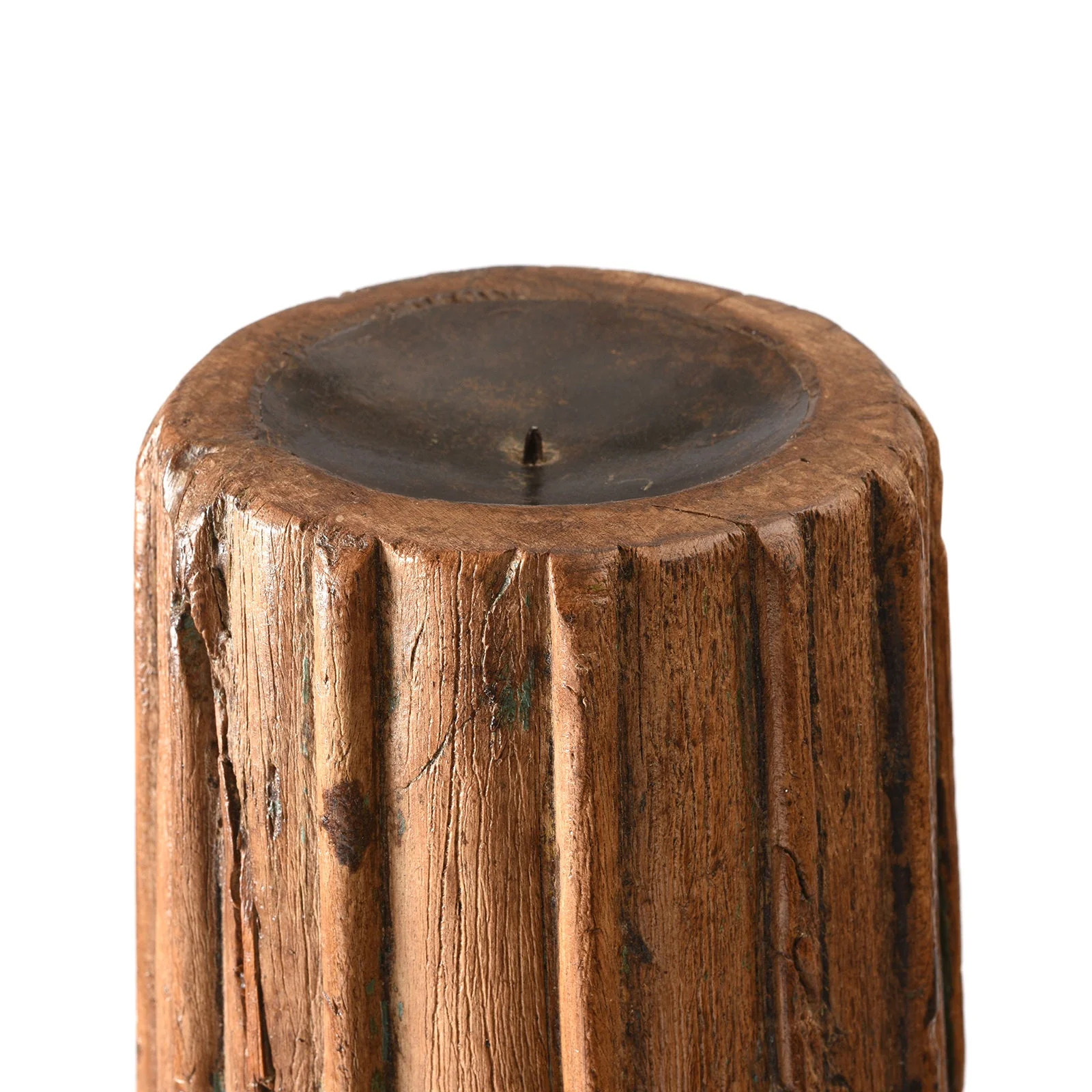
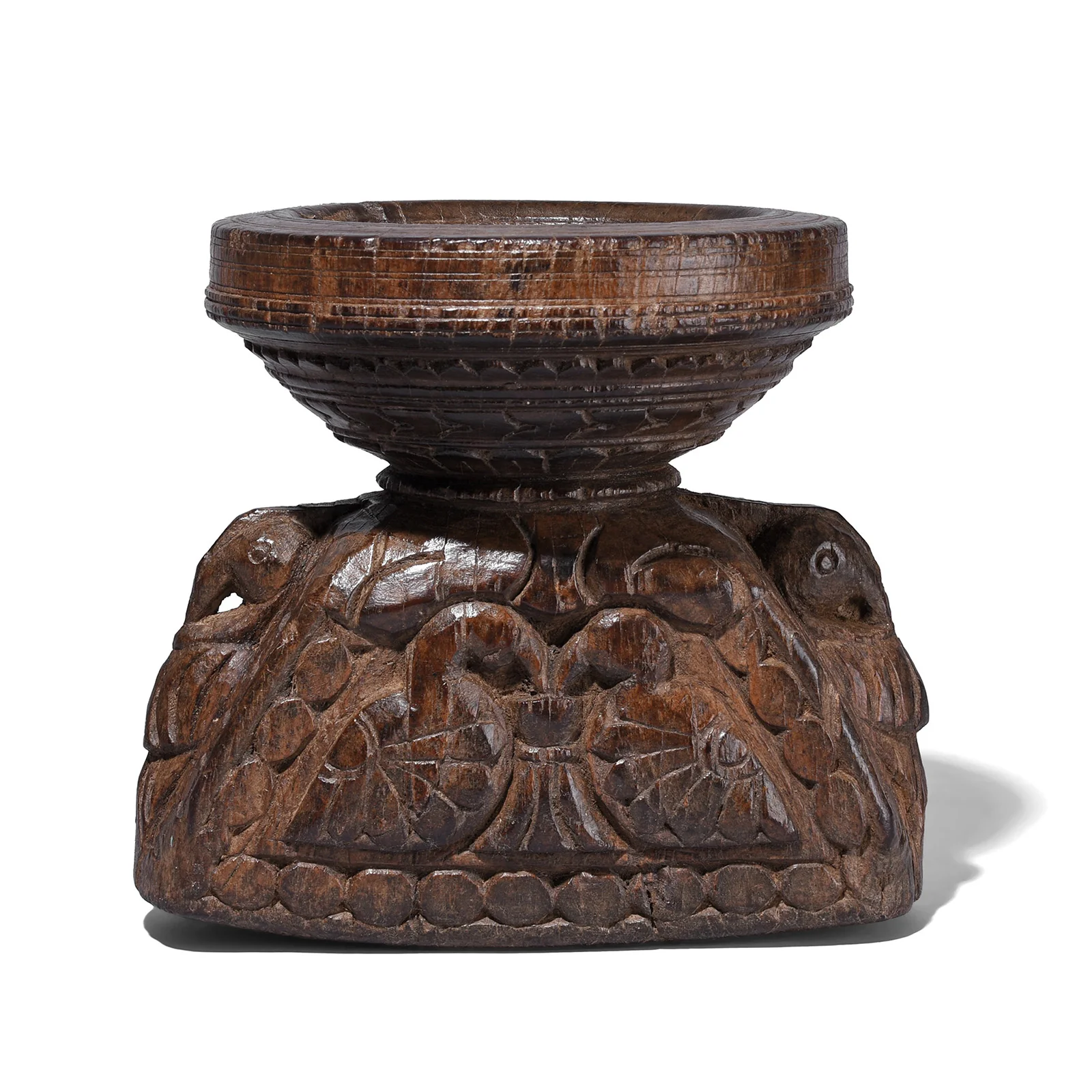
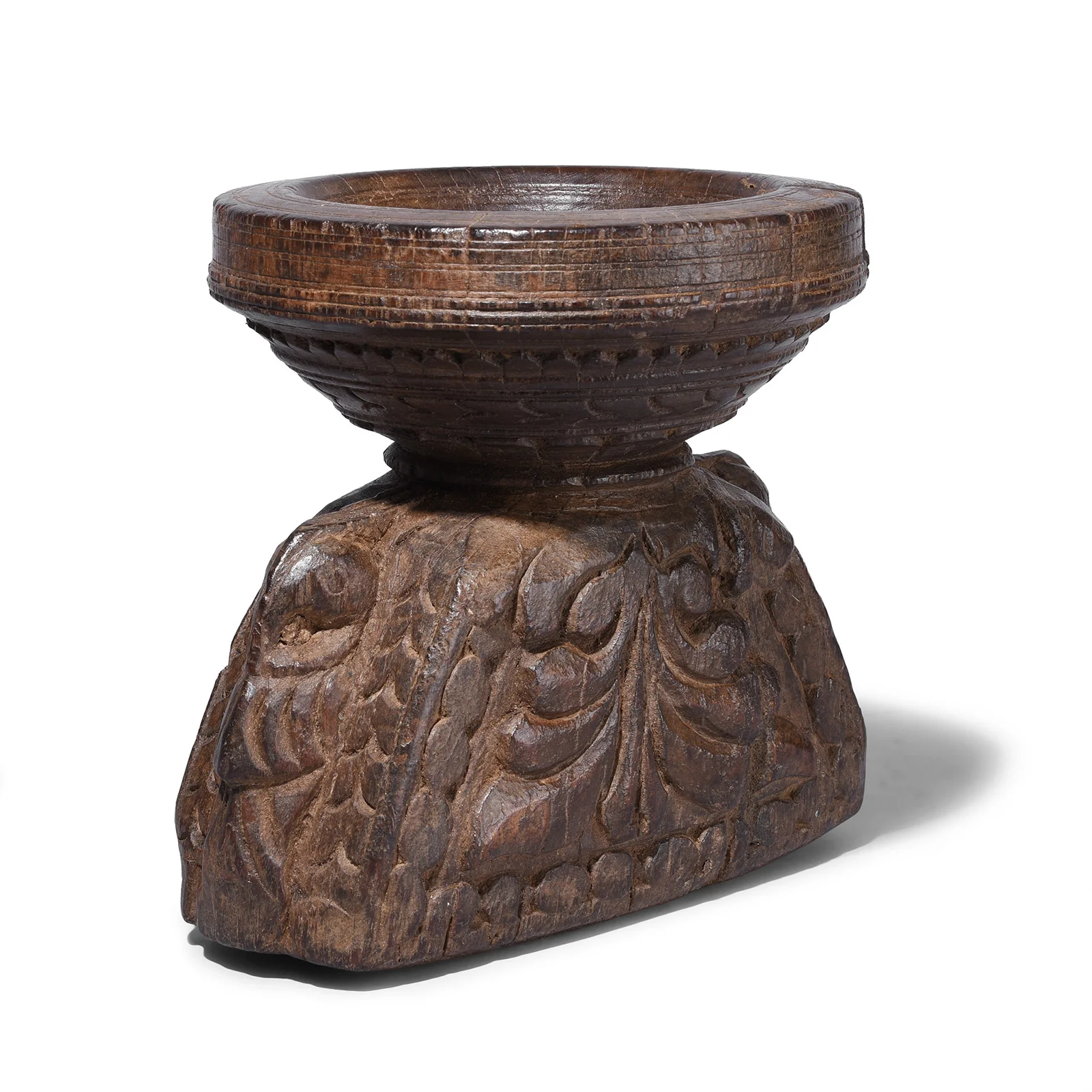
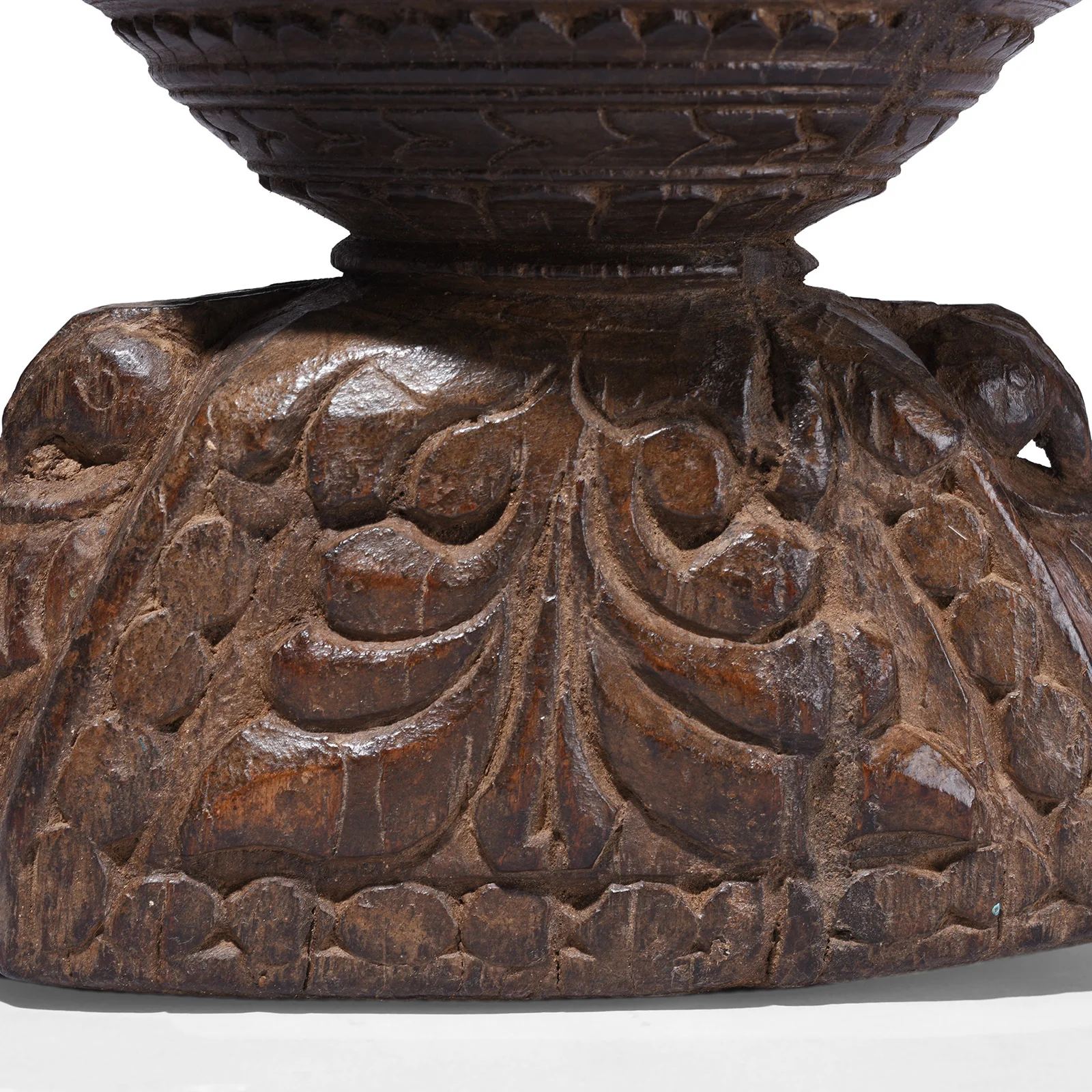
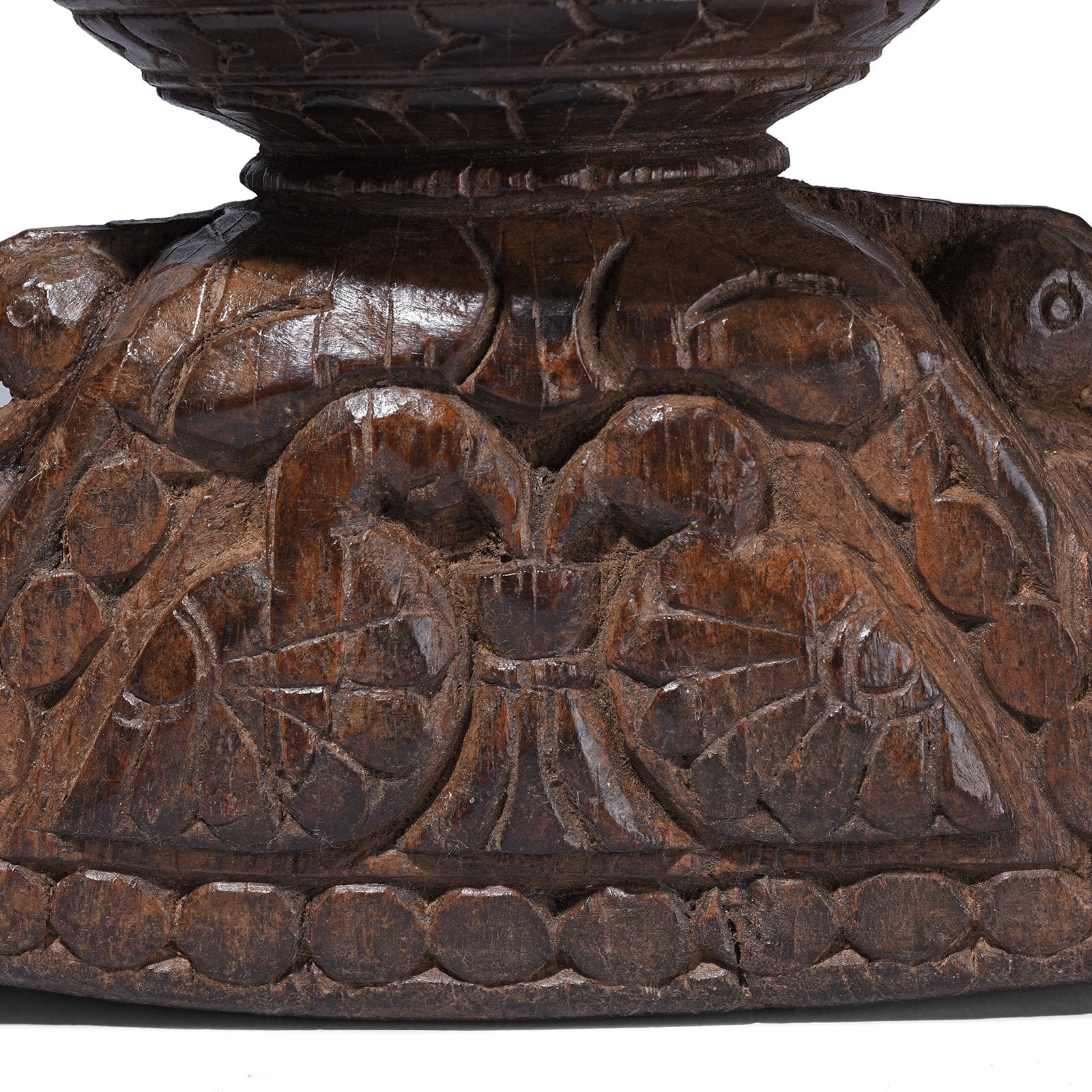
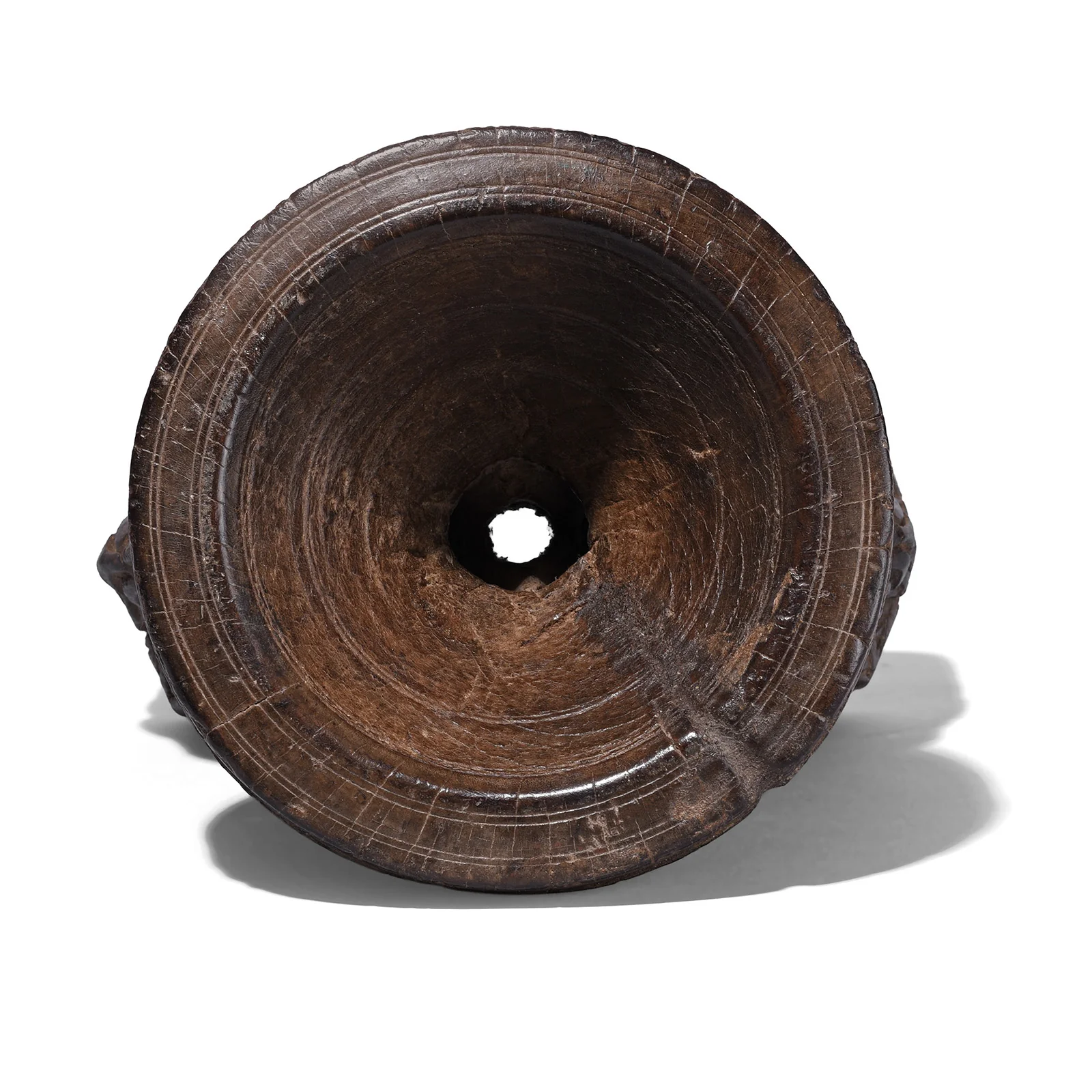
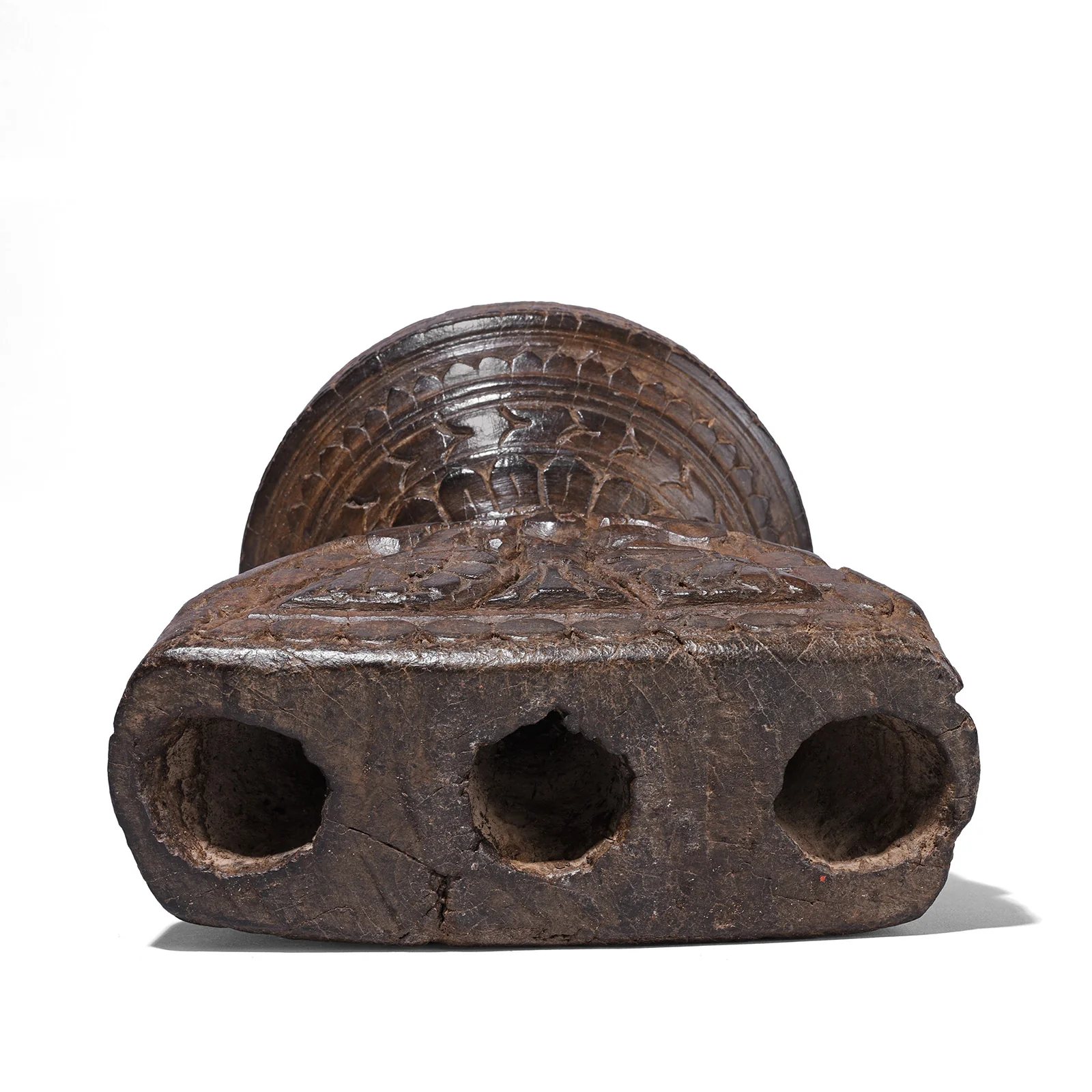
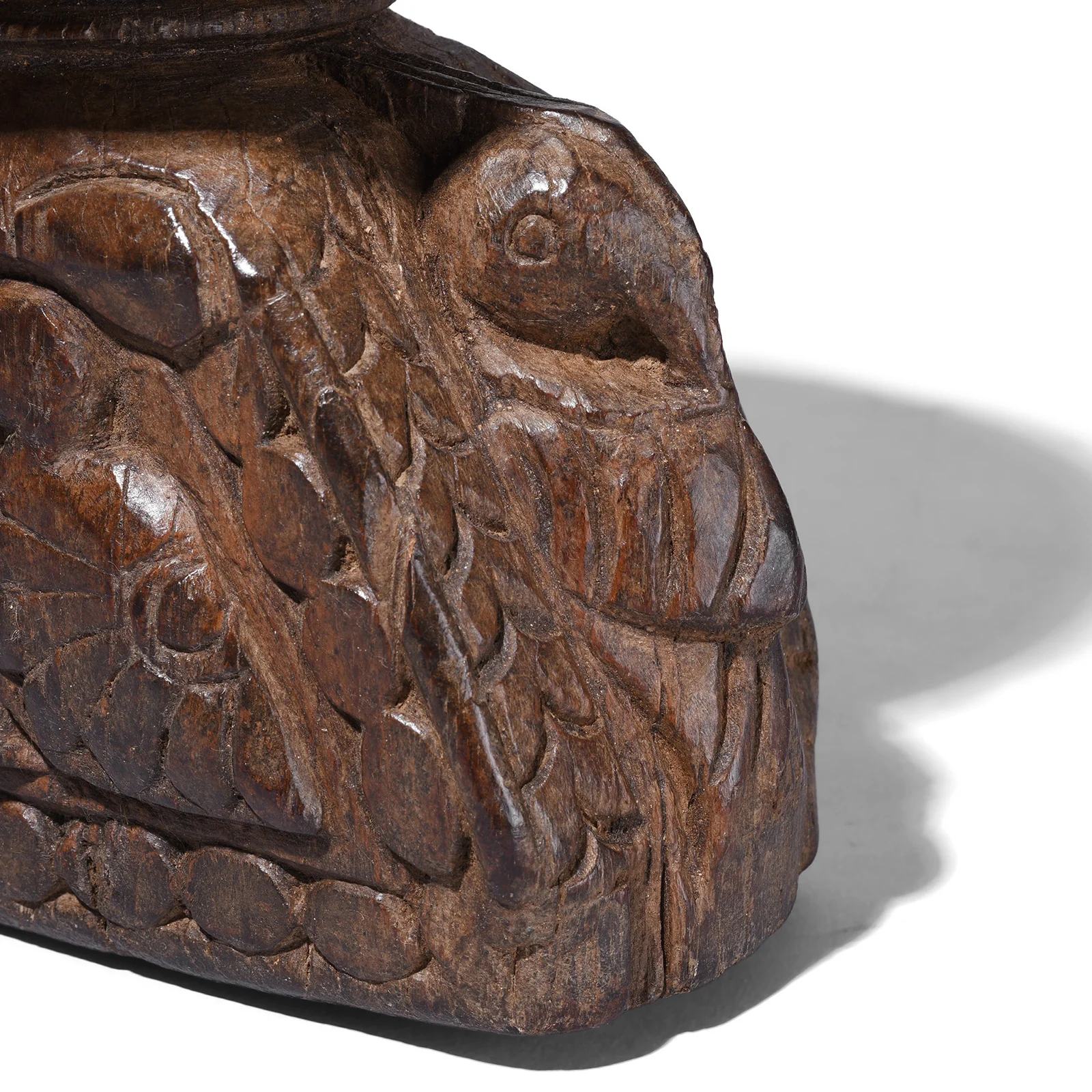
The body is carved with flowing floral motifs to one side and stylised parrots to the other — symbols often associated with fertility and abundance. The upper bowl retains its original turned detailing, while the base still shows the three seed channels through which grain would have been dispersed. This particular form was found across Gujarat and Maharashtra, especially among Mer communities, and reflects the skill of Marathi craftsmen who brought aesthetic refinement even to utilitarian objects.
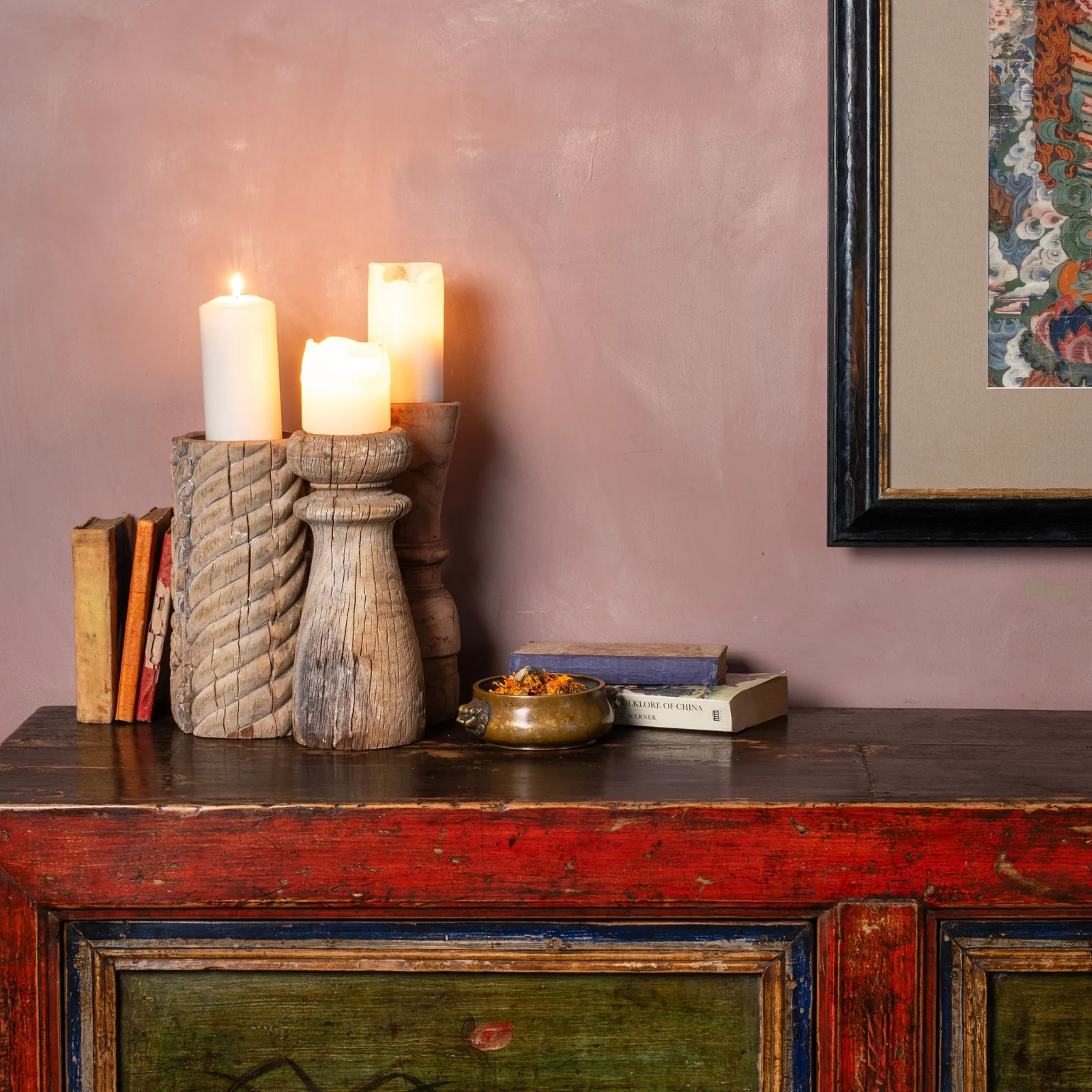
Today, these historic implements make striking decorative pieces — equally suited as sculptural objects, candlestands or conversation pieces that connect rural life with enduring craftsmanship.
- Origin: Gujarat / Maharashtra, India
- Date: 19th – Early 20th Century
- Materials: Hand-carved hardwood
- Features: Floral and parrot carvings, original seed channels to base, turned upper bowl, rich naturally developed patina
- Condition: Antique condition with age-related wear consistent with prolonged agricultural use; surface smoothing, minor losses and historic cracking commensurate with age
- Dimensions: W23 x D17 x H19 cm
Reference:
A closely related example is illustrated in Folk Art & Culture of Gujarat: A Guide to the Collection of the Shreyas Folk Museum of Gujarat by Jyotindra Jain, figure 197.
Original: $195.94
-65%$195.94
$68.58More Images
Teak Seed Drill From Madhya Pradesh - 19th Century
This beautifully carved antique Indian seed drill, known in Gujarat as an orani (ઓરણી), is a wonderful example of traditional agricultural craftsmanship elevated through decorative artistry. Dating to the 19th or early 20th century, it was originally used to sow seeds evenly into prepared soil, guided by a farmer as oxen drew it through the fields. Over more than a century of daily use, the hardwood has developed a deep, lustrous patina, its surfaces softened and enriched by handling and exposure.
The body is carved with flowing floral motifs to one side and stylised parrots to the other — symbols often associated with fertility and abundance. The upper bowl retains its original turned detailing, while the base still shows the three seed channels through which grain would have been dispersed. This particular form was found across Gujarat and Maharashtra, especially among Mer communities, and reflects the skill of Marathi craftsmen who brought aesthetic refinement even to utilitarian objects.
Today, these historic implements make striking decorative pieces — equally suited as sculptural objects, candlestands or conversation pieces that connect rural life with enduring craftsmanship.
- Origin: Gujarat / Maharashtra, India
- Date: 19th – Early 20th Century
- Materials: Hand-carved hardwood
- Features: Floral and parrot carvings, original seed channels to base, turned upper bowl, rich naturally developed patina
- Condition: Antique condition with age-related wear consistent with prolonged agricultural use; surface smoothing, minor losses and historic cracking commensurate with age
- Dimensions: W23 x D17 x H19 cm
Reference:
A closely related example is illustrated in Folk Art & Culture of Gujarat: A Guide to the Collection of the Shreyas Folk Museum of Gujarat by Jyotindra Jain, figure 197.
Product Information
Product Information
Shipping & Returns
Shipping & Returns
Description
This beautifully carved antique Indian seed drill, known in Gujarat as an orani (ઓરણી), is a wonderful example of traditional agricultural craftsmanship elevated through decorative artistry. Dating to the 19th or early 20th century, it was originally used to sow seeds evenly into prepared soil, guided by a farmer as oxen drew it through the fields. Over more than a century of daily use, the hardwood has developed a deep, lustrous patina, its surfaces softened and enriched by handling and exposure.
The body is carved with flowing floral motifs to one side and stylised parrots to the other — symbols often associated with fertility and abundance. The upper bowl retains its original turned detailing, while the base still shows the three seed channels through which grain would have been dispersed. This particular form was found across Gujarat and Maharashtra, especially among Mer communities, and reflects the skill of Marathi craftsmen who brought aesthetic refinement even to utilitarian objects.
Today, these historic implements make striking decorative pieces — equally suited as sculptural objects, candlestands or conversation pieces that connect rural life with enduring craftsmanship.
- Origin: Gujarat / Maharashtra, India
- Date: 19th – Early 20th Century
- Materials: Hand-carved hardwood
- Features: Floral and parrot carvings, original seed channels to base, turned upper bowl, rich naturally developed patina
- Condition: Antique condition with age-related wear consistent with prolonged agricultural use; surface smoothing, minor losses and historic cracking commensurate with age
- Dimensions: W23 x D17 x H19 cm
Reference:
A closely related example is illustrated in Folk Art & Culture of Gujarat: A Guide to the Collection of the Shreyas Folk Museum of Gujarat by Jyotindra Jain, figure 197.