Painted Sideboard From Qinghai - Ca 1916
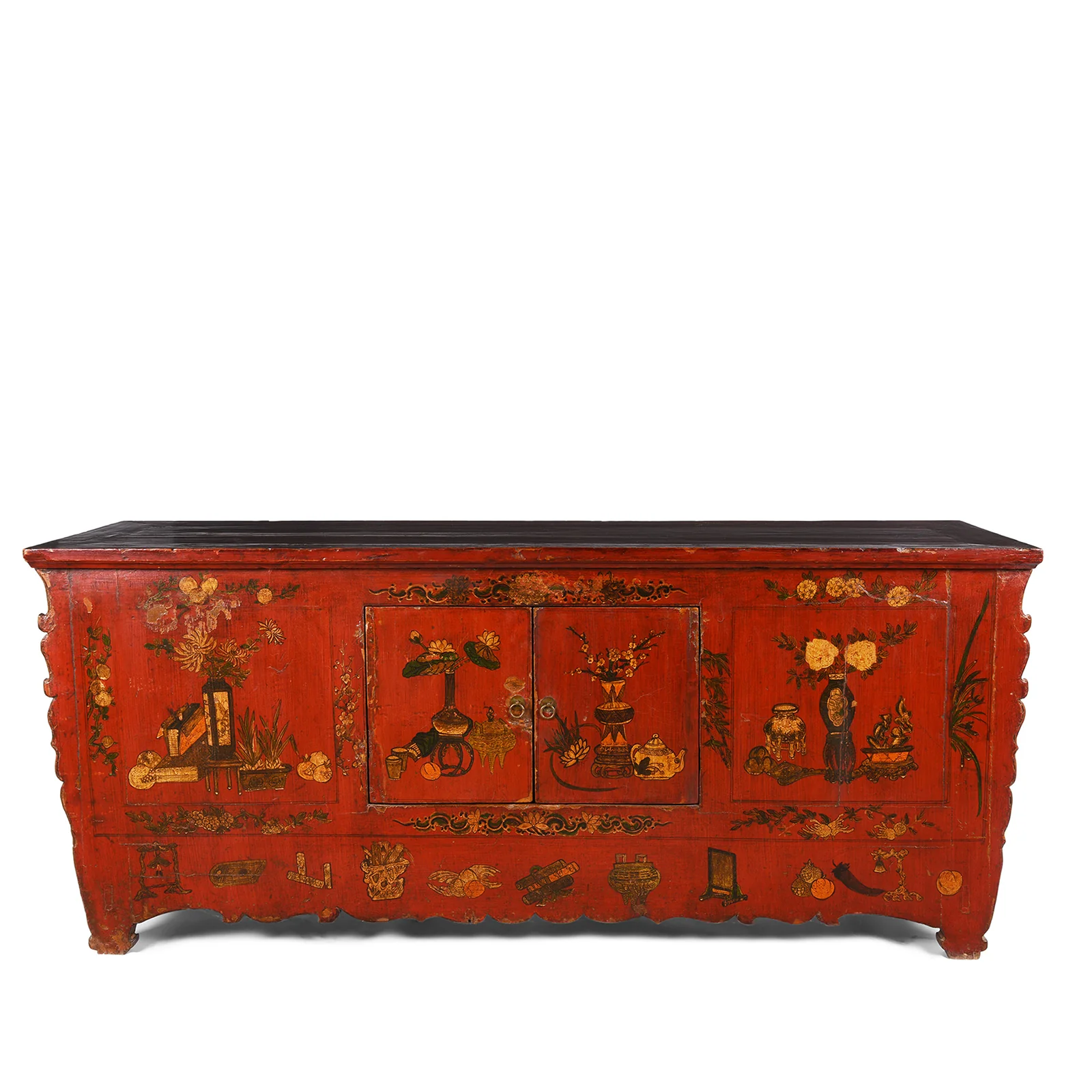
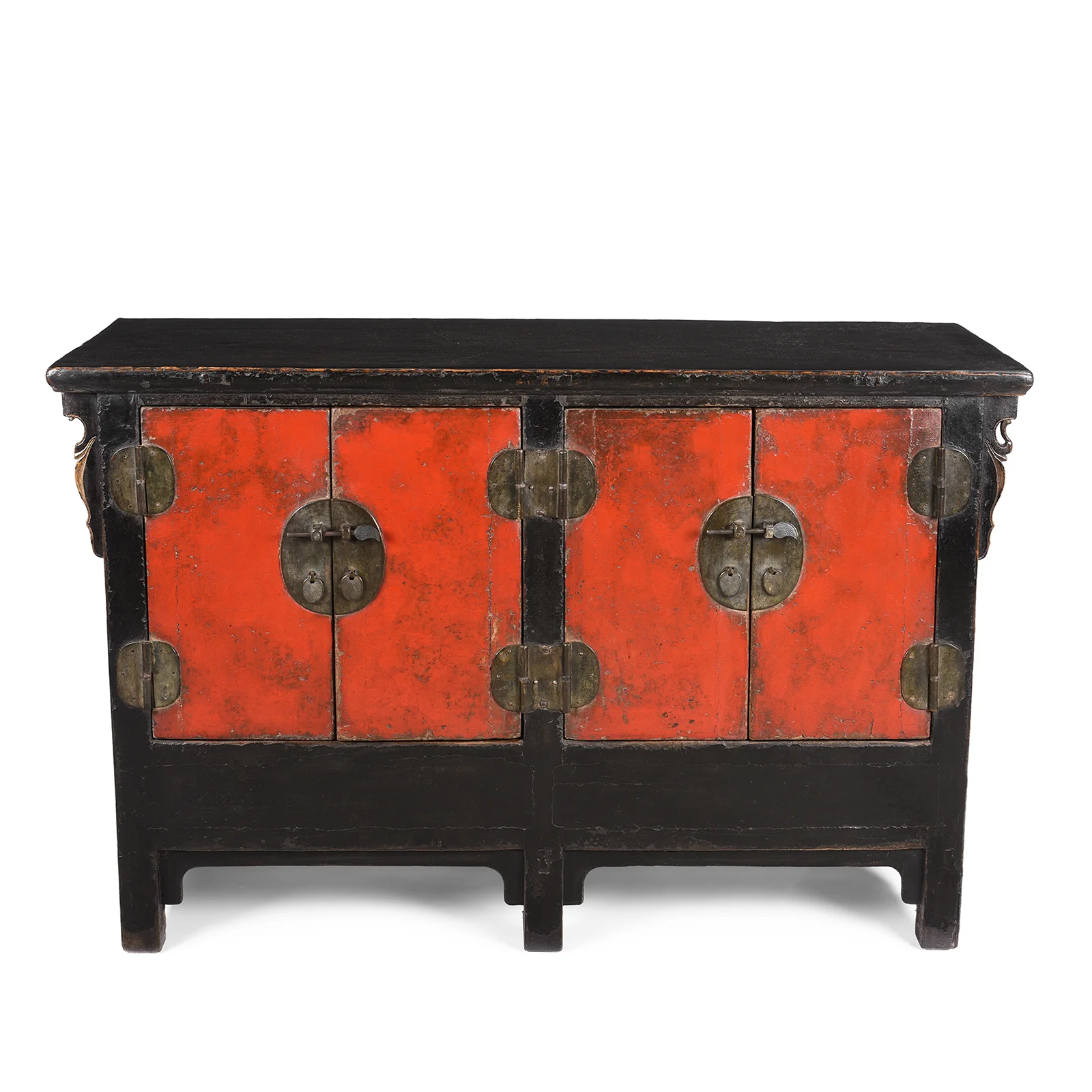
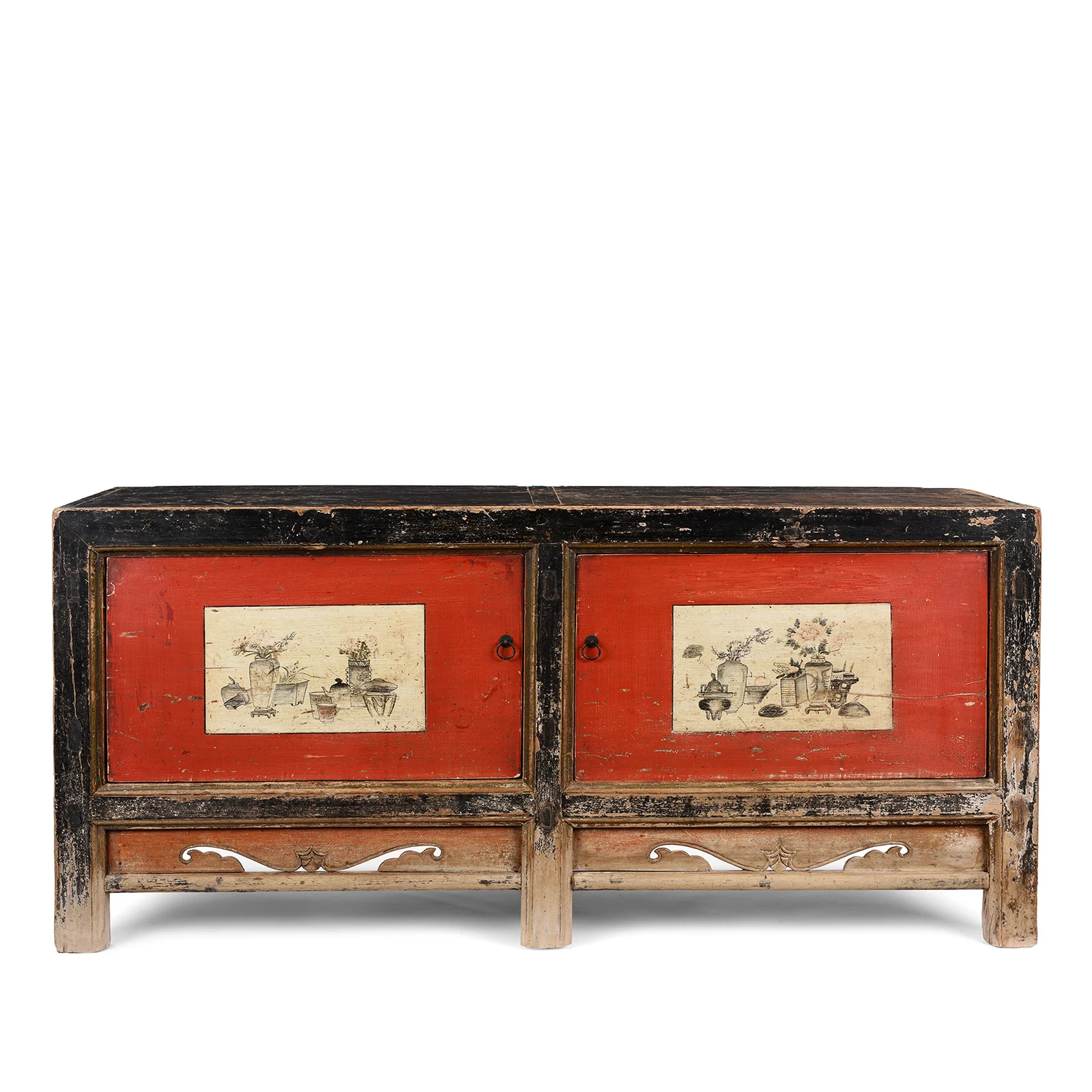
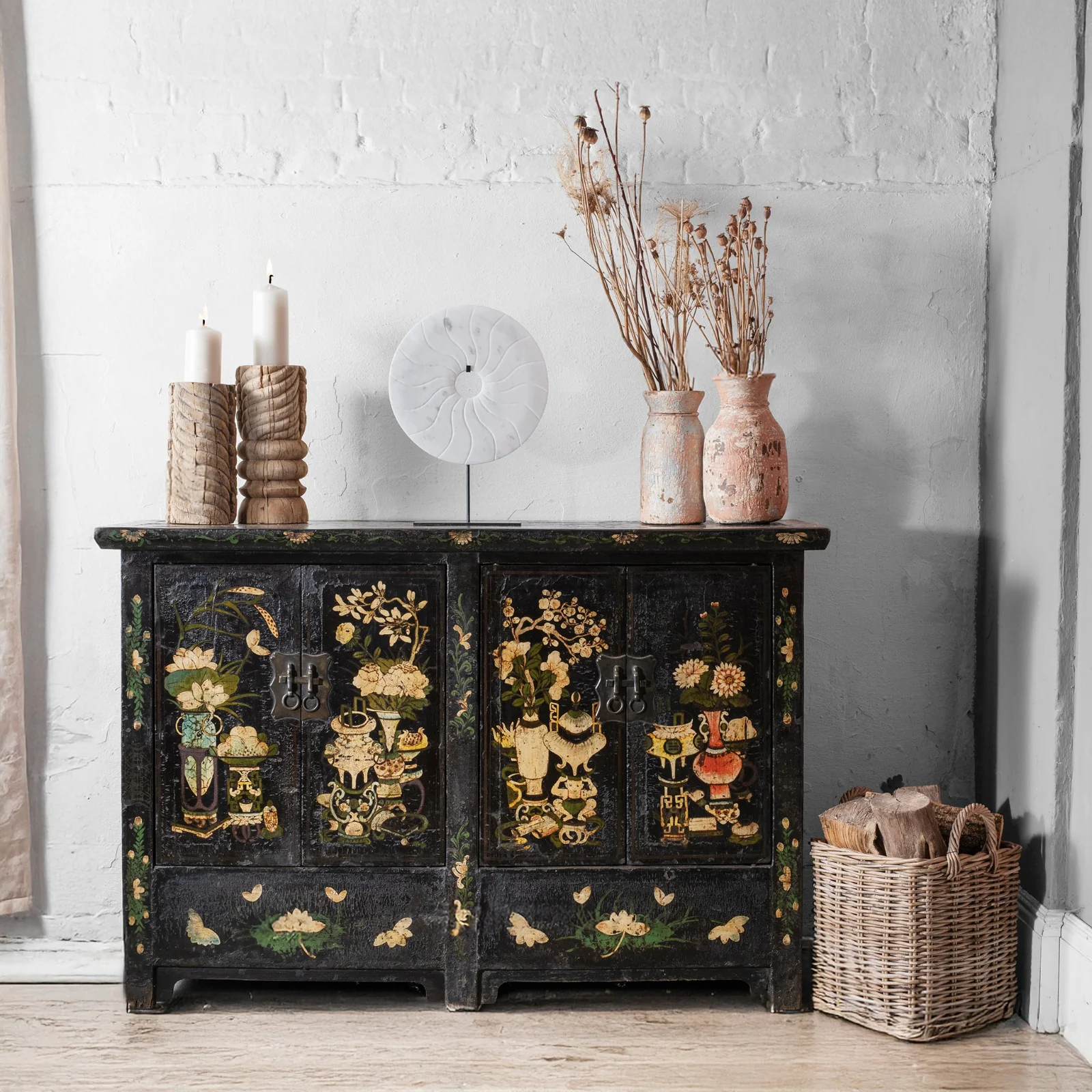
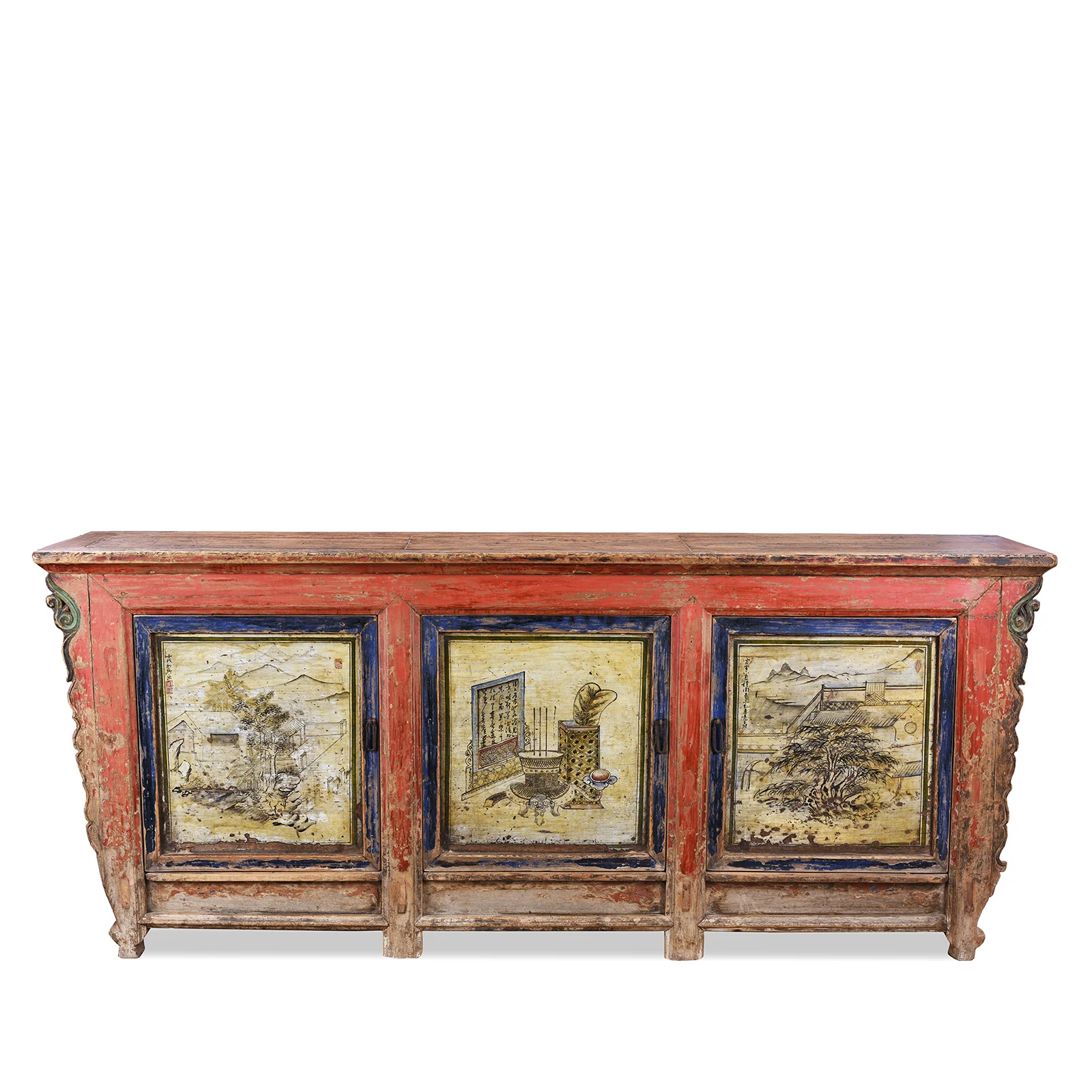
This striking painted antique Chinese sideboard originates from Qinghai province, near the Mongolian border, and features its original hand-painted panels. This piece is unusual in that it can be specifically dated to 1916. It reflects the cultural crossroads of the region - it has a clear influence of Mongolia, however the painting is more indicative of the Chinese style. The result is a unique blend of nomadic practicality and refined visual storytelling.
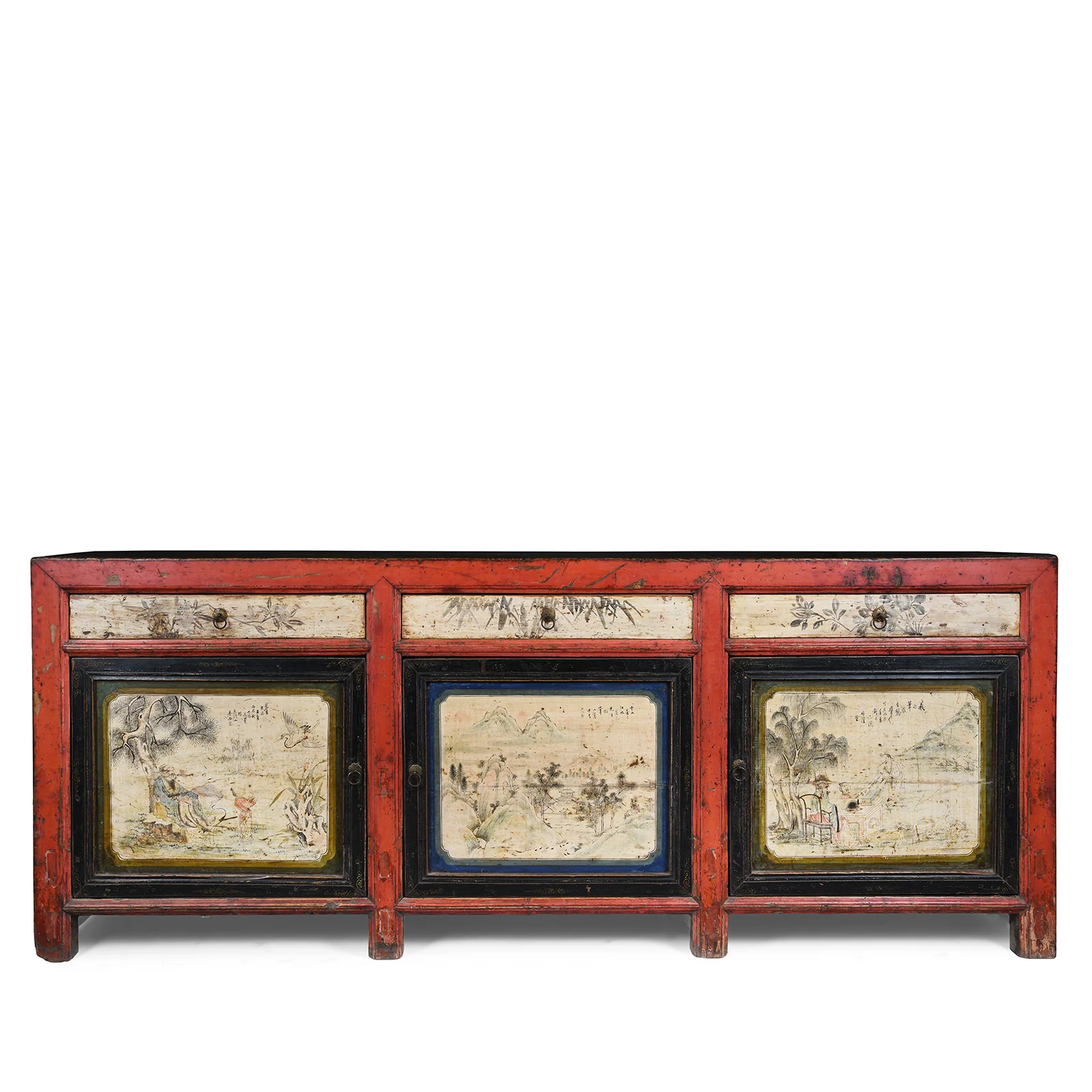
Each of the three painted door panels presents a literary or poetic scene, enriched with inscriptions referencing Confucian scholarship, Daoist ideals, and classical landscape painting. Dated to the 5th year of the Republic (1916), the panels are titled and signed in traditional literati fashion. From left to right:
- Left panel: Elder beneath a pine tree with a child and swooping crane: Includes the phrase "Treasure of the Brush" (筆寶), a poetic dedication from Autumn at Xiling (西陵秋), and the line 'from the heart, by the west window of the humble mountain retreat.' It is signed and dated: Republic Year 5 (1916).
- Centre panel: Snowy mountains and riverside pavilion: Features poetic landscape imagery: 'The snowy mountains are pale, the river waters clear' (雪山蒼,江水清), followed by the idiom 'Mountains high and waters long' (山高水長), a classical symbol of enduring virtue. Signed 'Painted by Master Biji.'
- Right panel: Scholar's studio scene with geese and scrolls: A dedication to Wang Xizhi (王羲之), China's most revered calligrapher, appears here: 'Following the method of Wang Xizhi,' along with a reference to Bamboo Shade Academy (竹陰書院) and a signature by the imitator Ye Yue (葉岳高仿).
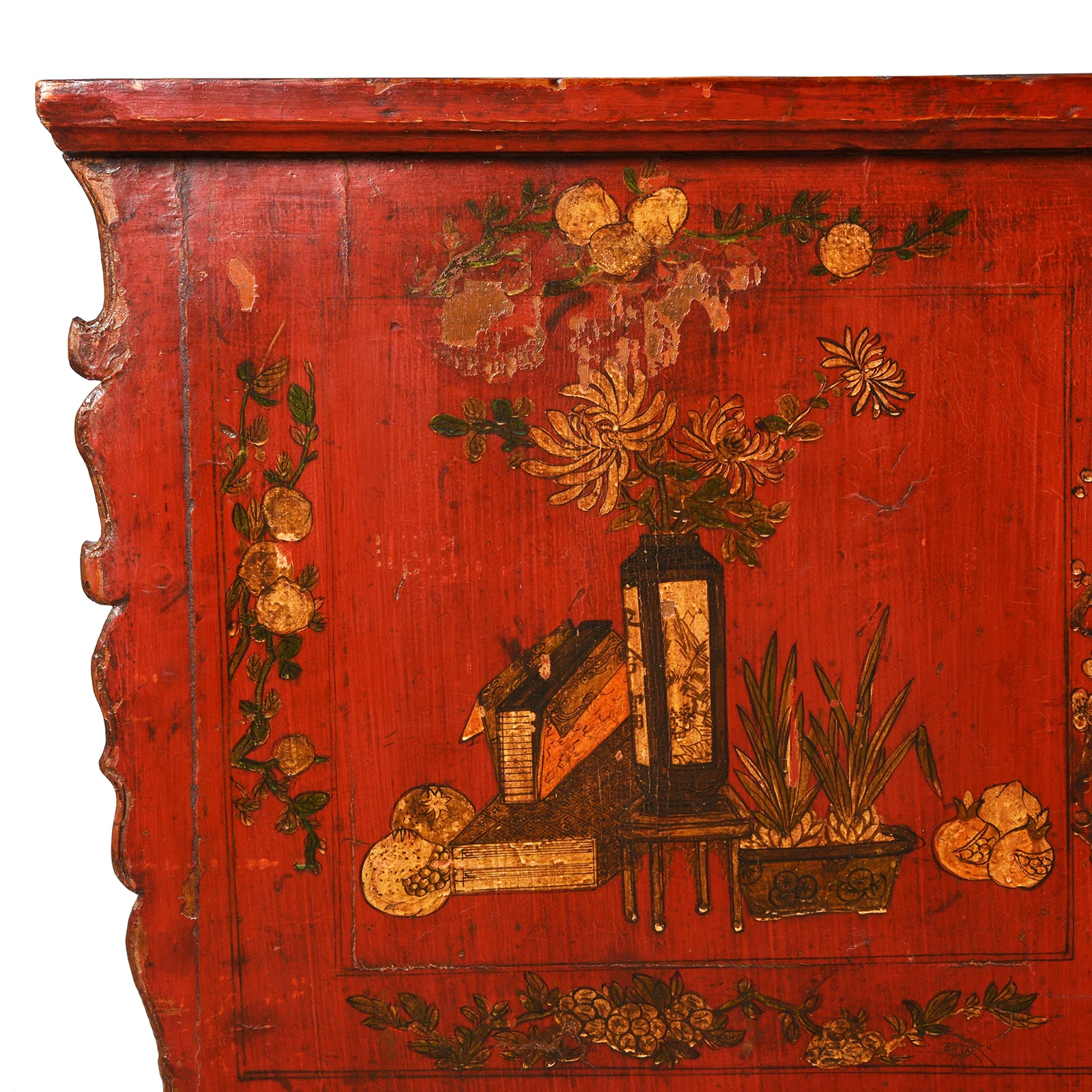
Crafted from locally sourced poplar and pine, sideboards like this served multiple functions in both nomadic and settled households - for storing clothing, bedding, and grain, or as altar cabinets for family ancestor worship. The vivid red lacquer frame, combined with the aged, crackled patina of the panels, gives this piece exceptional historical depth and poetic beauty.
- Origin: Qinghai Province, China
- Date: Ca. 1916 (5th Year of the Republic of China)
- Materials: Poplar & pine with original lacquer and mineral-based pigment paint
- Features: Original hand-painted panels with literary inscriptions and poetic landscape scenes; Mongolian and Han Chinese cultural blend
- Condition: Wear consistent with age; retains original patina and artwork
- Dimensions: Width 250 x Depth 45 x Height 99 cm
More Images



Painted Sideboard From Qinghai - Ca 1916
This striking painted antique Chinese sideboard originates from Qinghai province, near the Mongolian border, and features its original hand-painted panels. This piece is unusual in that it can be specifically dated to 1916. It reflects the cultural crossroads of the region - it has a clear influence of Mongolia, however the painting is more indicative of the Chinese style. The result is a unique blend of nomadic practicality and refined visual storytelling.
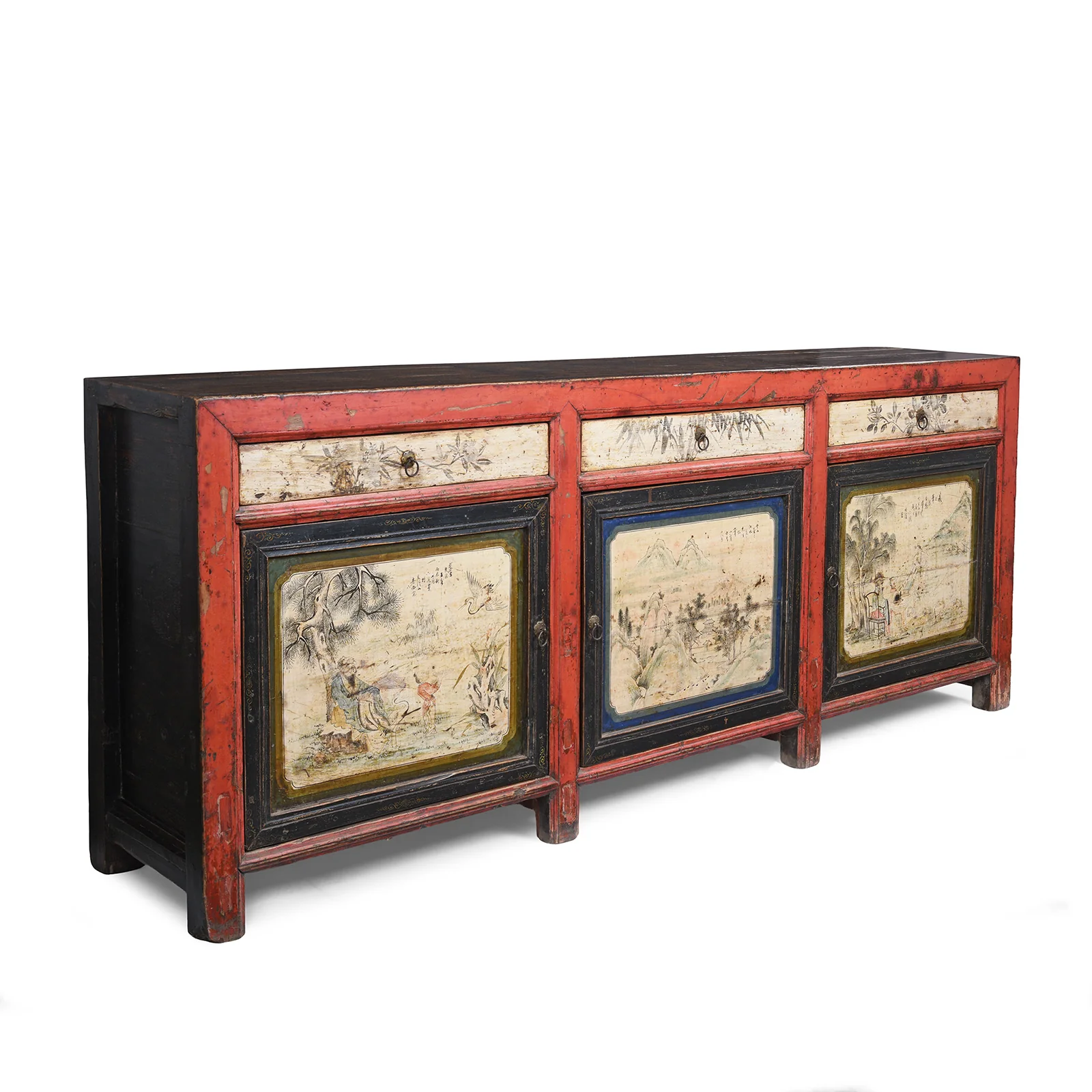
Each of the three painted door panels presents a literary or poetic scene, enriched with inscriptions referencing Confucian scholarship, Daoist ideals, and classical landscape painting. Dated to the 5th year of the Republic (1916), the panels are titled and signed in traditional literati fashion. From left to right:
- Left panel: Elder beneath a pine tree with a child and swooping crane: Includes the phrase "Treasure of the Brush" (筆寶), a poetic dedication from Autumn at Xiling (西陵秋), and the line 'from the heart, by the west window of the humble mountain retreat.' It is signed and dated: Republic Year 5 (1916).
- Centre panel: Snowy mountains and riverside pavilion: Features poetic landscape imagery: 'The snowy mountains are pale, the river waters clear' (雪山蒼,江水清), followed by the idiom 'Mountains high and waters long' (山高水長), a classical symbol of enduring virtue. Signed 'Painted by Master Biji.'
- Right panel: Scholar's studio scene with geese and scrolls: A dedication to Wang Xizhi (王羲之), China's most revered calligrapher, appears here: 'Following the method of Wang Xizhi,' along with a reference to Bamboo Shade Academy (竹陰書院) and a signature by the imitator Ye Yue (葉岳高仿).
Crafted from locally sourced poplar and pine, sideboards like this served multiple functions in both nomadic and settled households - for storing clothing, bedding, and grain, or as altar cabinets for family ancestor worship. The vivid red lacquer frame, combined with the aged, crackled patina of the panels, gives this piece exceptional historical depth and poetic beauty.
- Origin: Qinghai Province, China
- Date: Ca. 1916 (5th Year of the Republic of China)
- Materials: Poplar & pine with original lacquer and mineral-based pigment paint
- Features: Original hand-painted panels with literary inscriptions and poetic landscape scenes; Mongolian and Han Chinese cultural blend
- Condition: Wear consistent with age; retains original patina and artwork
- Dimensions: Width 250 x Depth 45 x Height 99 cm
Product Information
Product Information
Shipping & Returns
Shipping & Returns
Description
This striking painted antique Chinese sideboard originates from Qinghai province, near the Mongolian border, and features its original hand-painted panels. This piece is unusual in that it can be specifically dated to 1916. It reflects the cultural crossroads of the region - it has a clear influence of Mongolia, however the painting is more indicative of the Chinese style. The result is a unique blend of nomadic practicality and refined visual storytelling.
Each of the three painted door panels presents a literary or poetic scene, enriched with inscriptions referencing Confucian scholarship, Daoist ideals, and classical landscape painting. Dated to the 5th year of the Republic (1916), the panels are titled and signed in traditional literati fashion. From left to right:
- Left panel: Elder beneath a pine tree with a child and swooping crane: Includes the phrase "Treasure of the Brush" (筆寶), a poetic dedication from Autumn at Xiling (西陵秋), and the line 'from the heart, by the west window of the humble mountain retreat.' It is signed and dated: Republic Year 5 (1916).
- Centre panel: Snowy mountains and riverside pavilion: Features poetic landscape imagery: 'The snowy mountains are pale, the river waters clear' (雪山蒼,江水清), followed by the idiom 'Mountains high and waters long' (山高水長), a classical symbol of enduring virtue. Signed 'Painted by Master Biji.'
- Right panel: Scholar's studio scene with geese and scrolls: A dedication to Wang Xizhi (王羲之), China's most revered calligrapher, appears here: 'Following the method of Wang Xizhi,' along with a reference to Bamboo Shade Academy (竹陰書院) and a signature by the imitator Ye Yue (葉岳高仿).
Crafted from locally sourced poplar and pine, sideboards like this served multiple functions in both nomadic and settled households - for storing clothing, bedding, and grain, or as altar cabinets for family ancestor worship. The vivid red lacquer frame, combined with the aged, crackled patina of the panels, gives this piece exceptional historical depth and poetic beauty.
- Origin: Qinghai Province, China
- Date: Ca. 1916 (5th Year of the Republic of China)
- Materials: Poplar & pine with original lacquer and mineral-based pigment paint
- Features: Original hand-painted panels with literary inscriptions and poetic landscape scenes; Mongolian and Han Chinese cultural blend
- Condition: Wear consistent with age; retains original patina and artwork
- Dimensions: Width 250 x Depth 45 x Height 99 cm