Black Lacquer Kang Table From Shanxi - 19th Century
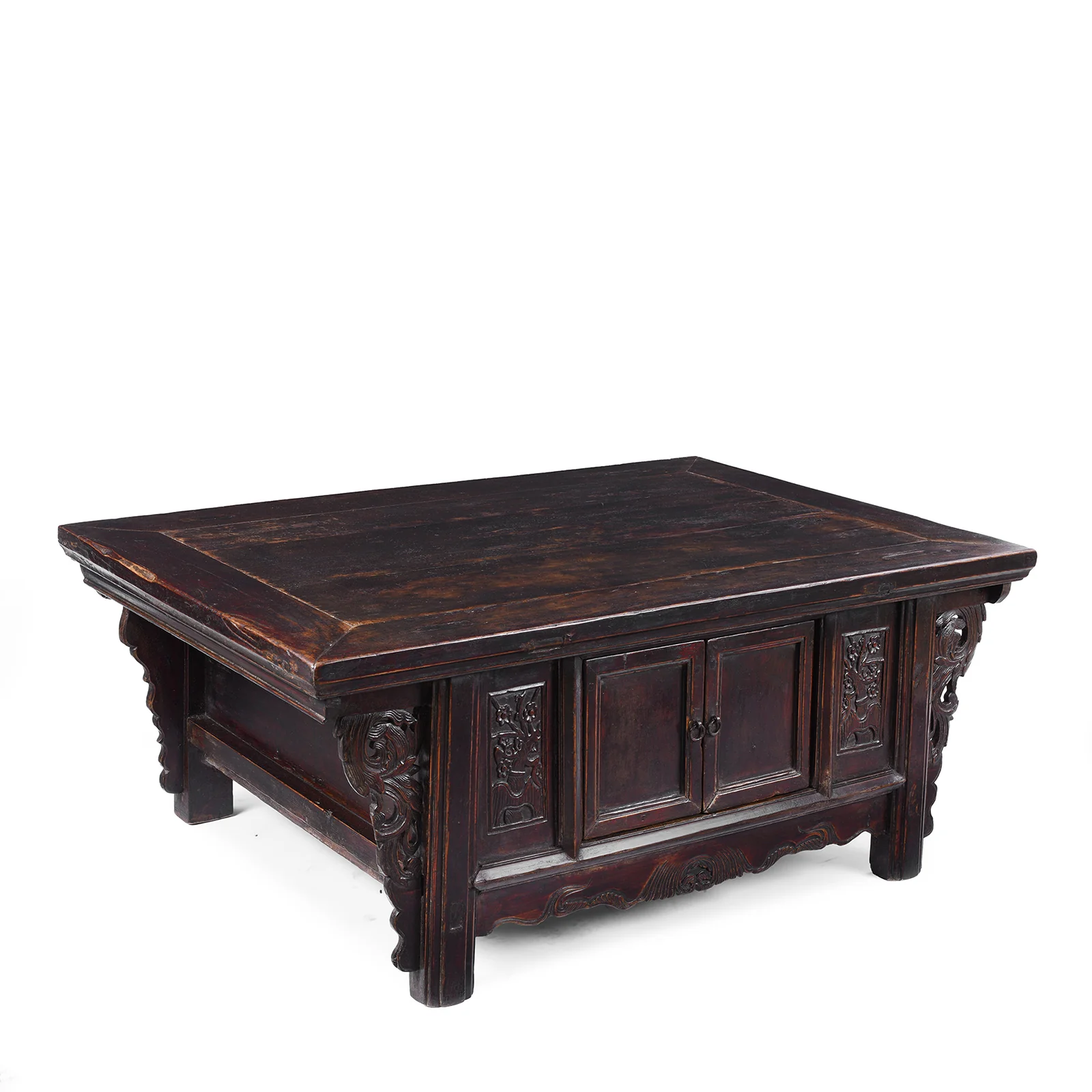
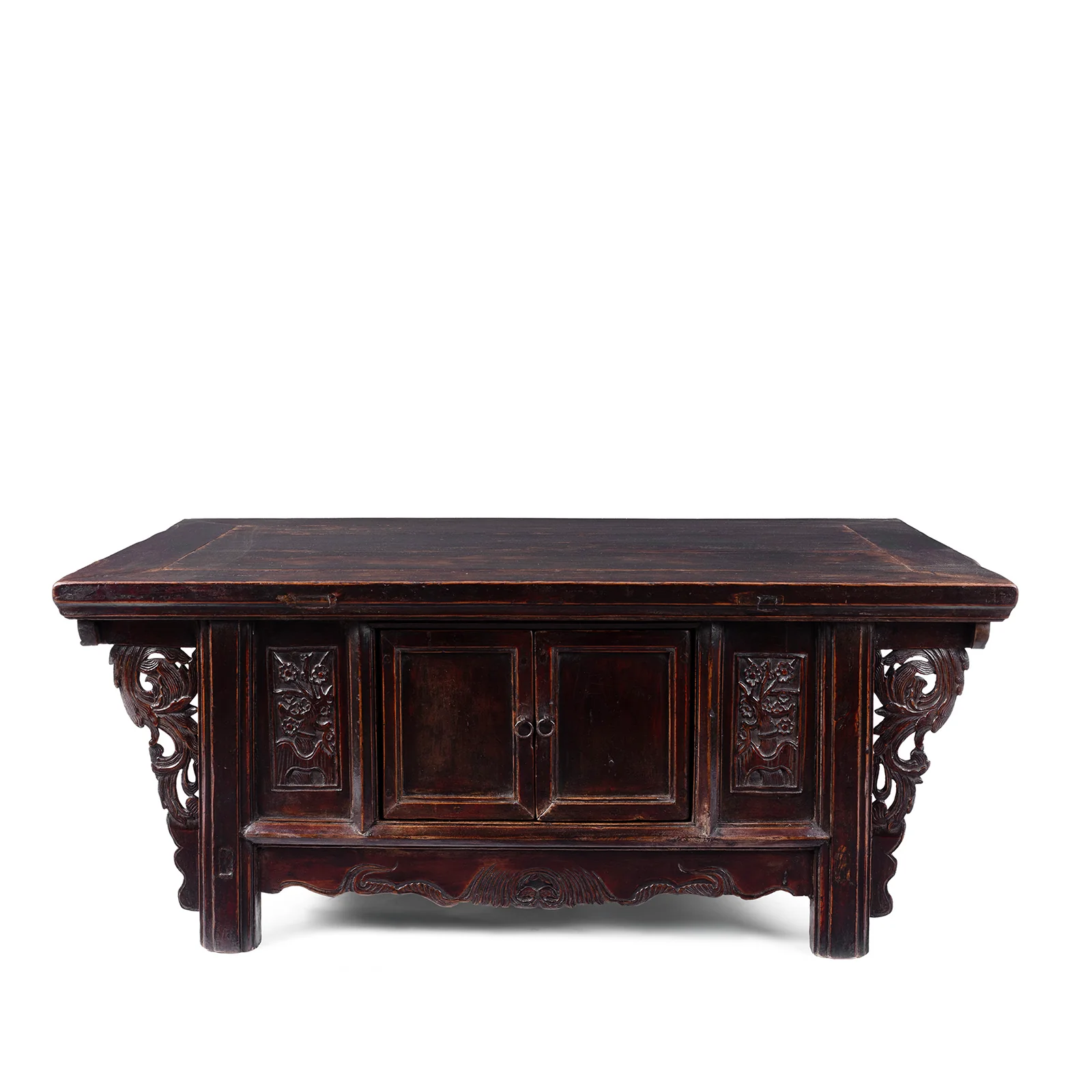
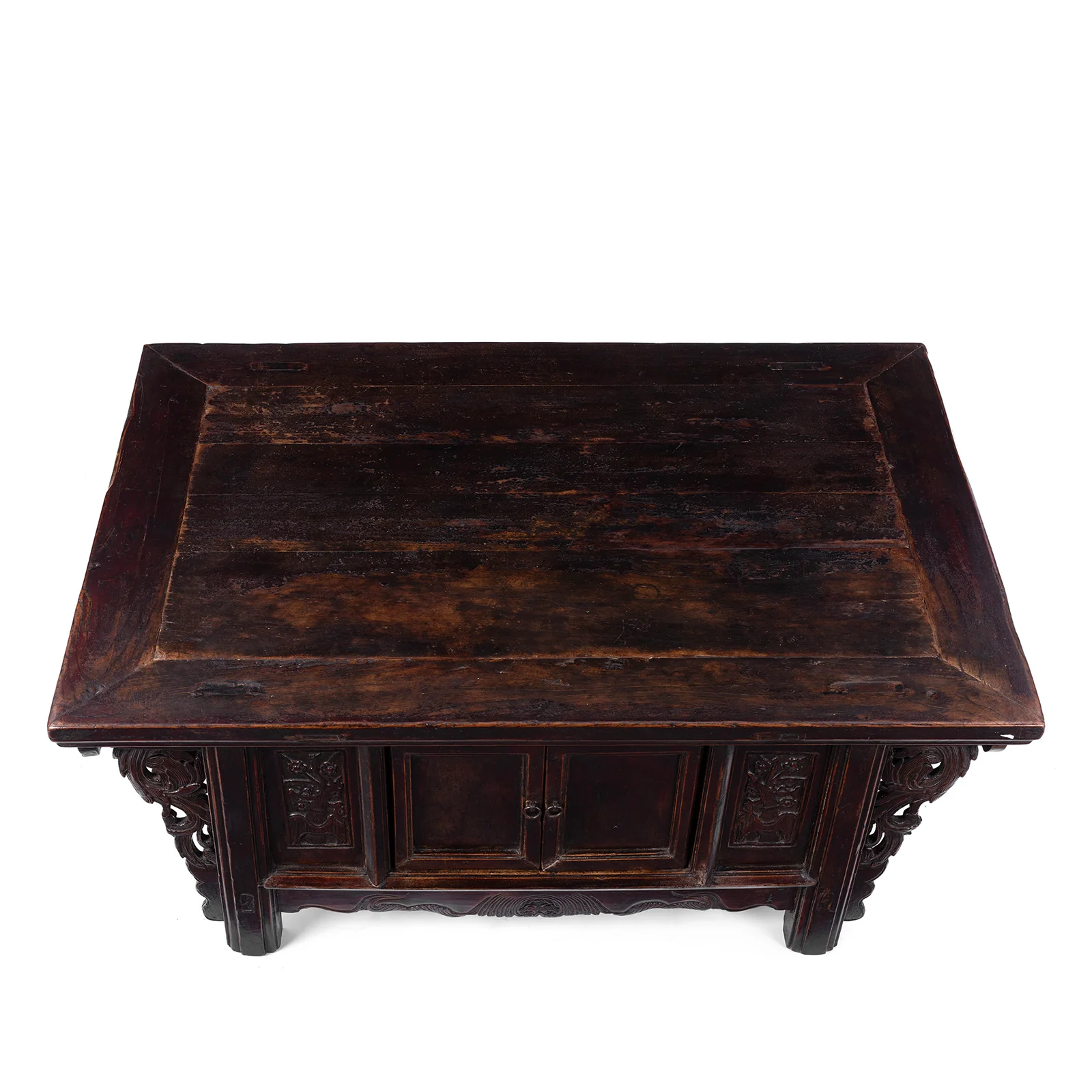
This finely carved kang table originates from Shanxi province in Northern China and dates from the mid 19th century. Built from northern elm (yumu 榆木) and finished in black lacquer, it would have been placed on or beside the kang, the raised brick platform that formed the centre of domestic life in northern homes. Families used low tables like this for tea, reading, writing and displaying valued objects. The substantial form and detailed carving relate closely to the Shanxi examples discussed in Karen Mazurkewich’s Chinese Furniture: A Guide to Collecting Antiques, where regional pieces are noted for their sculptural aprons, bold profiles and decorative front panels.
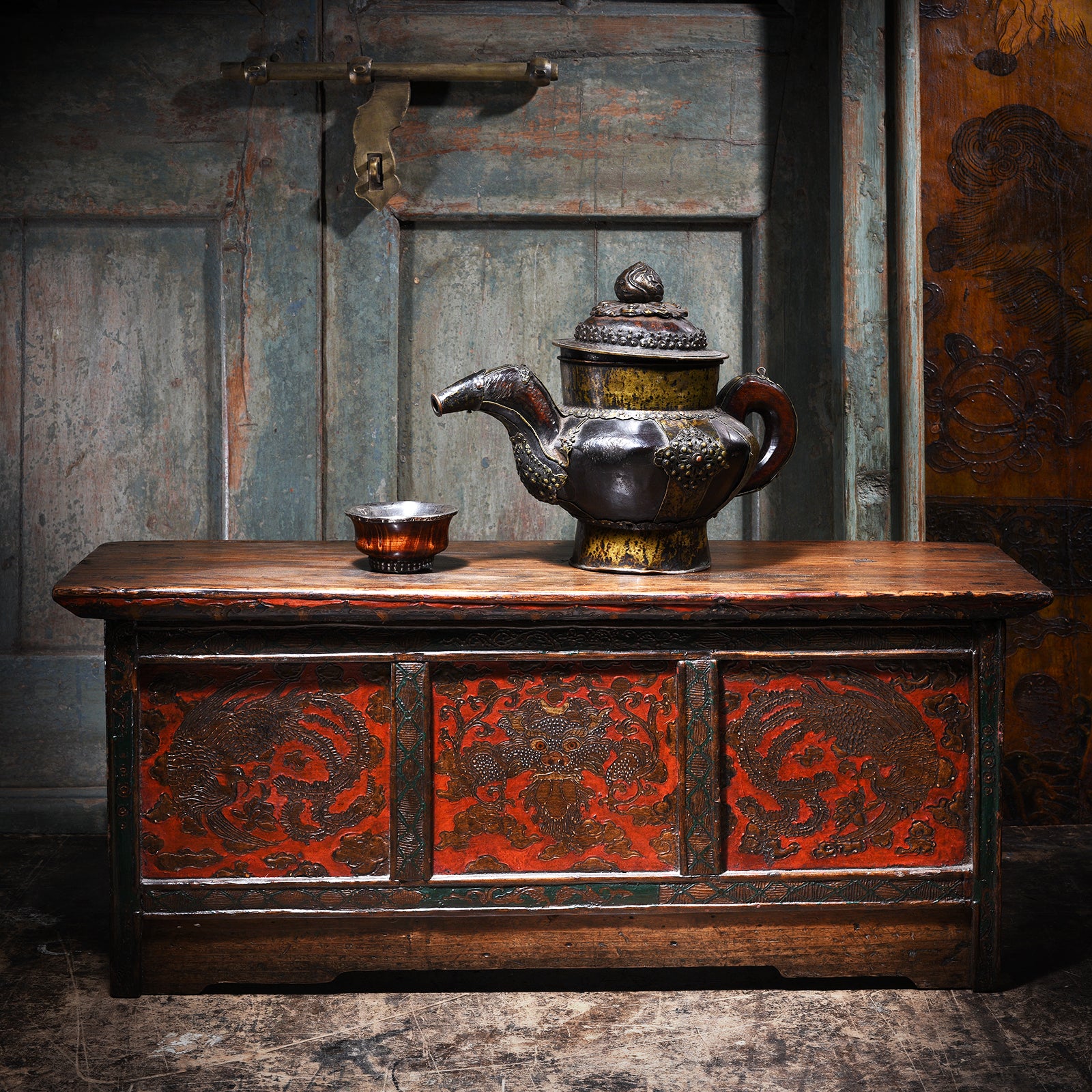
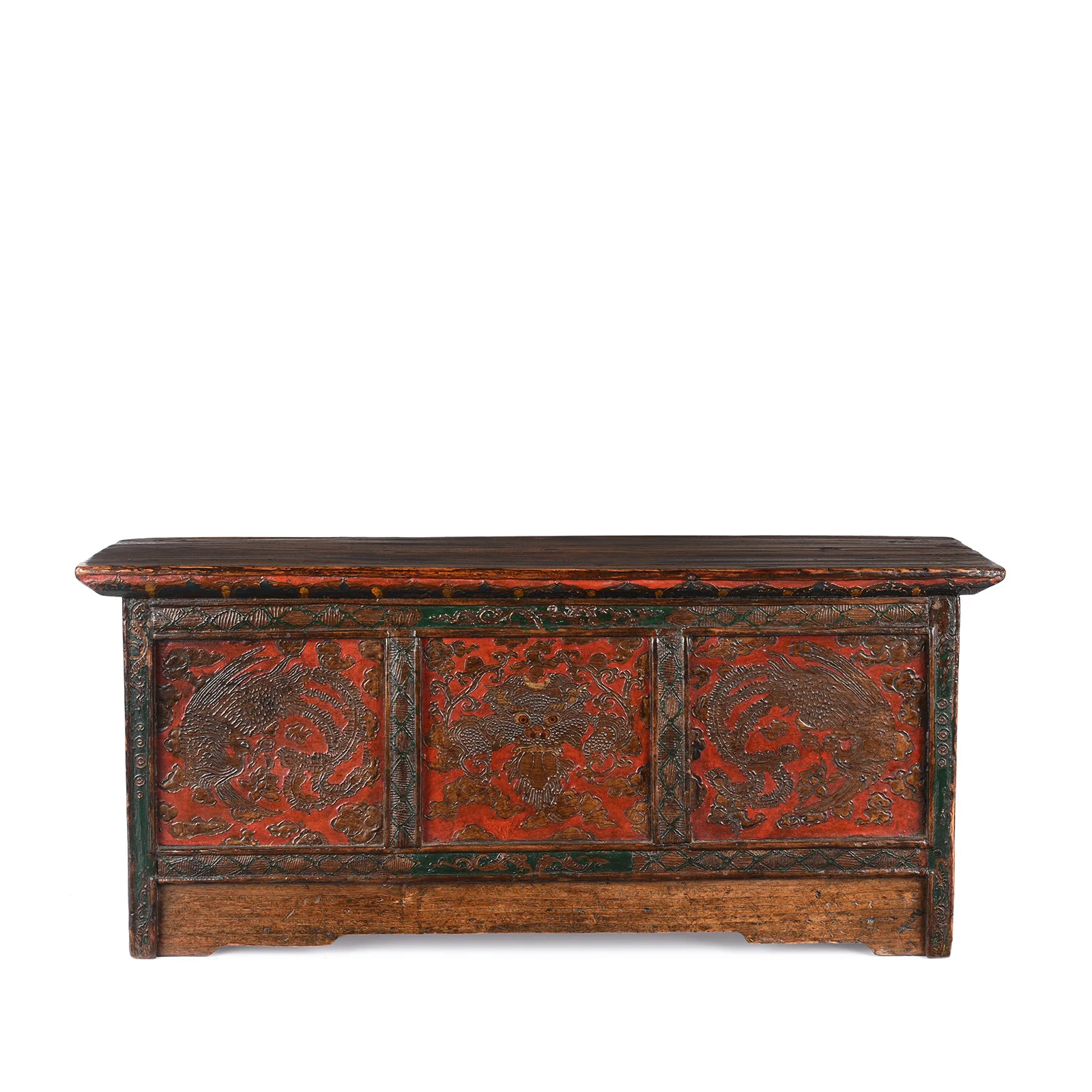
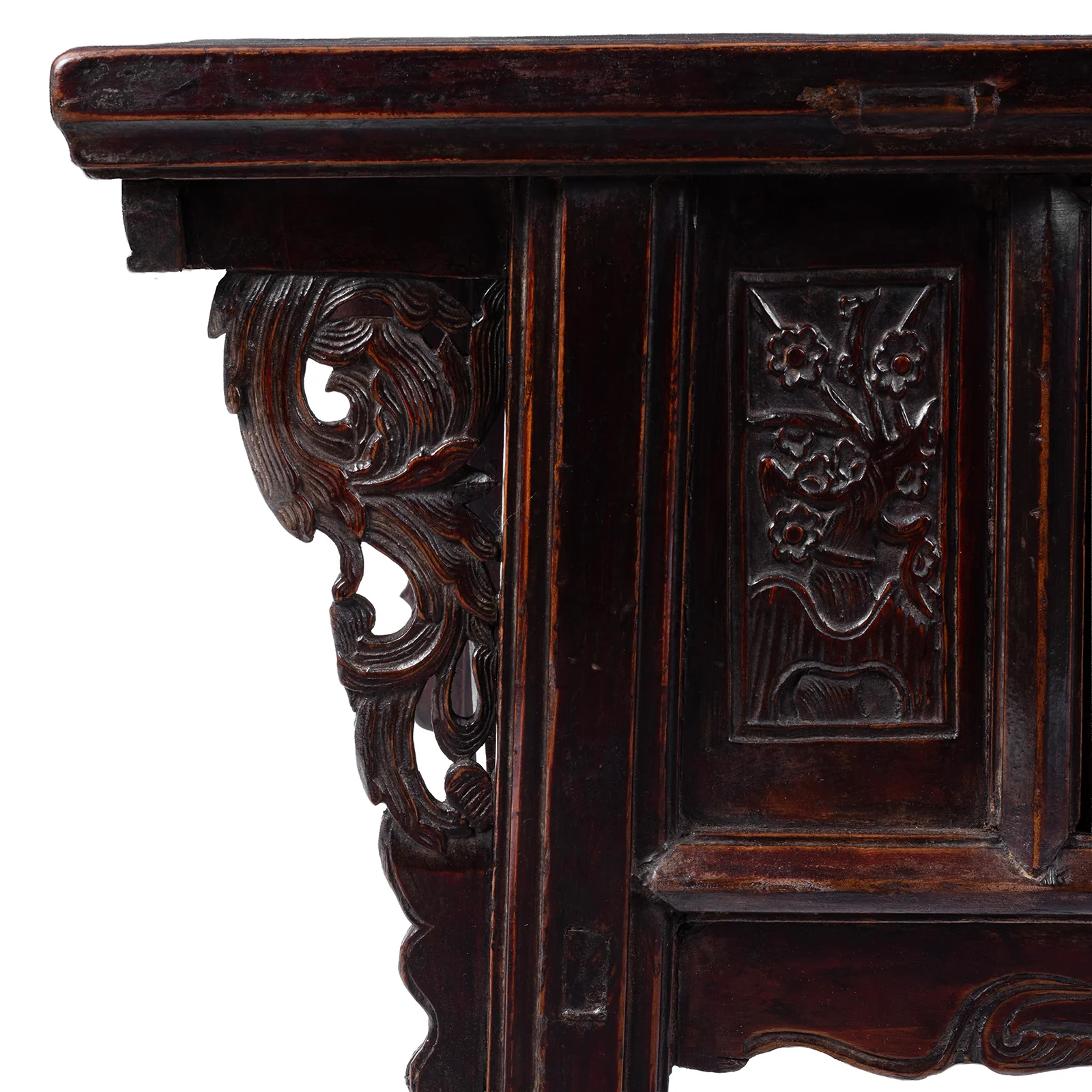
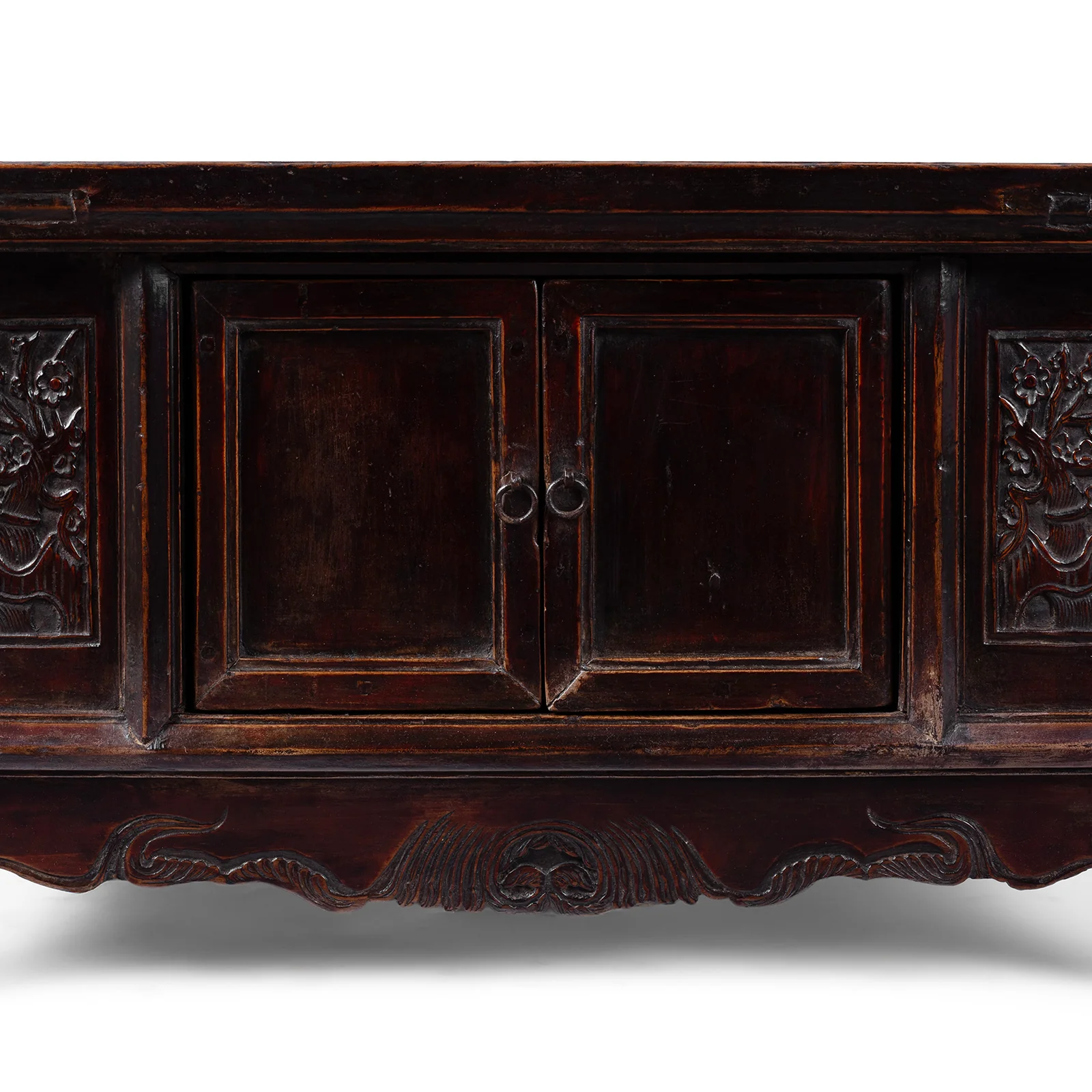
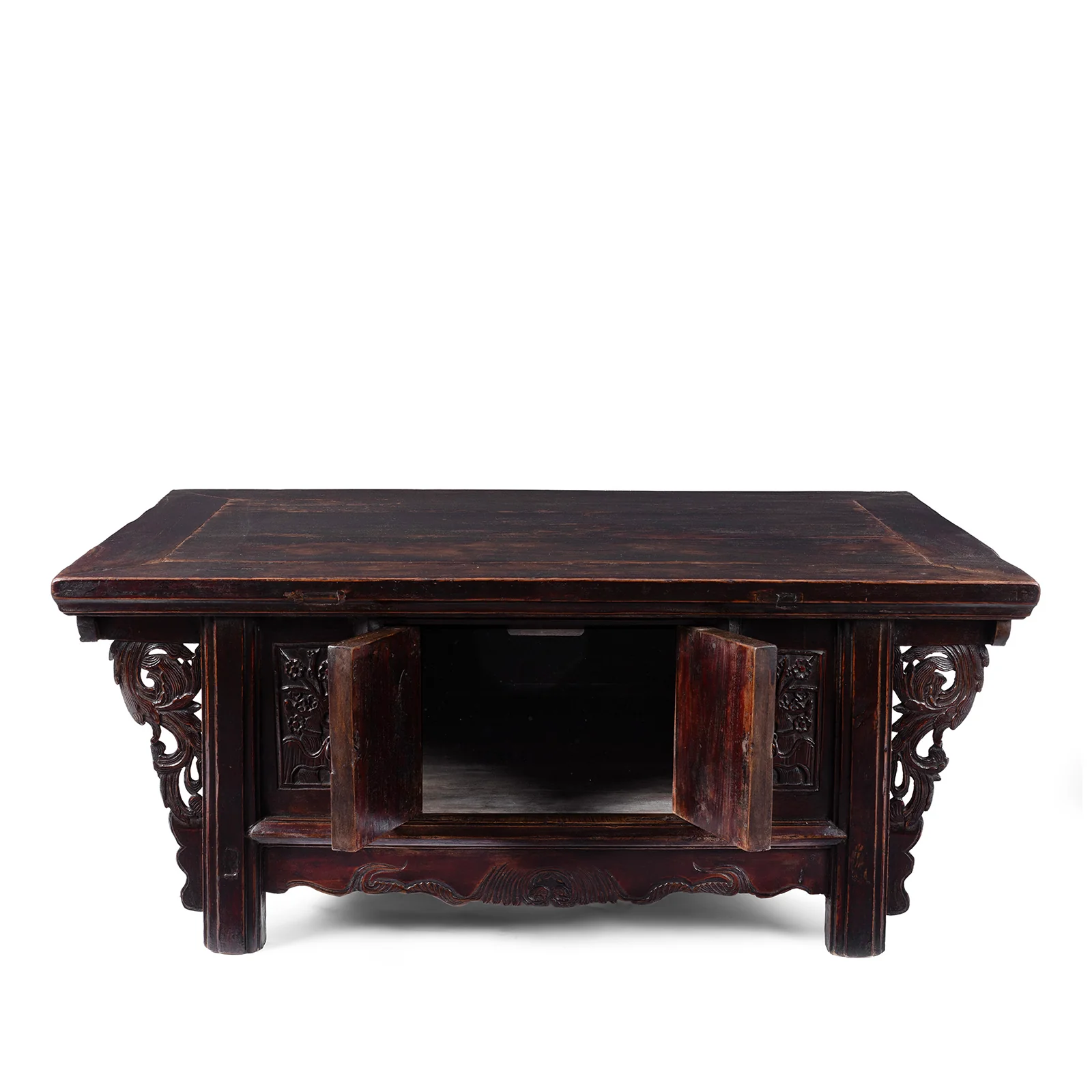
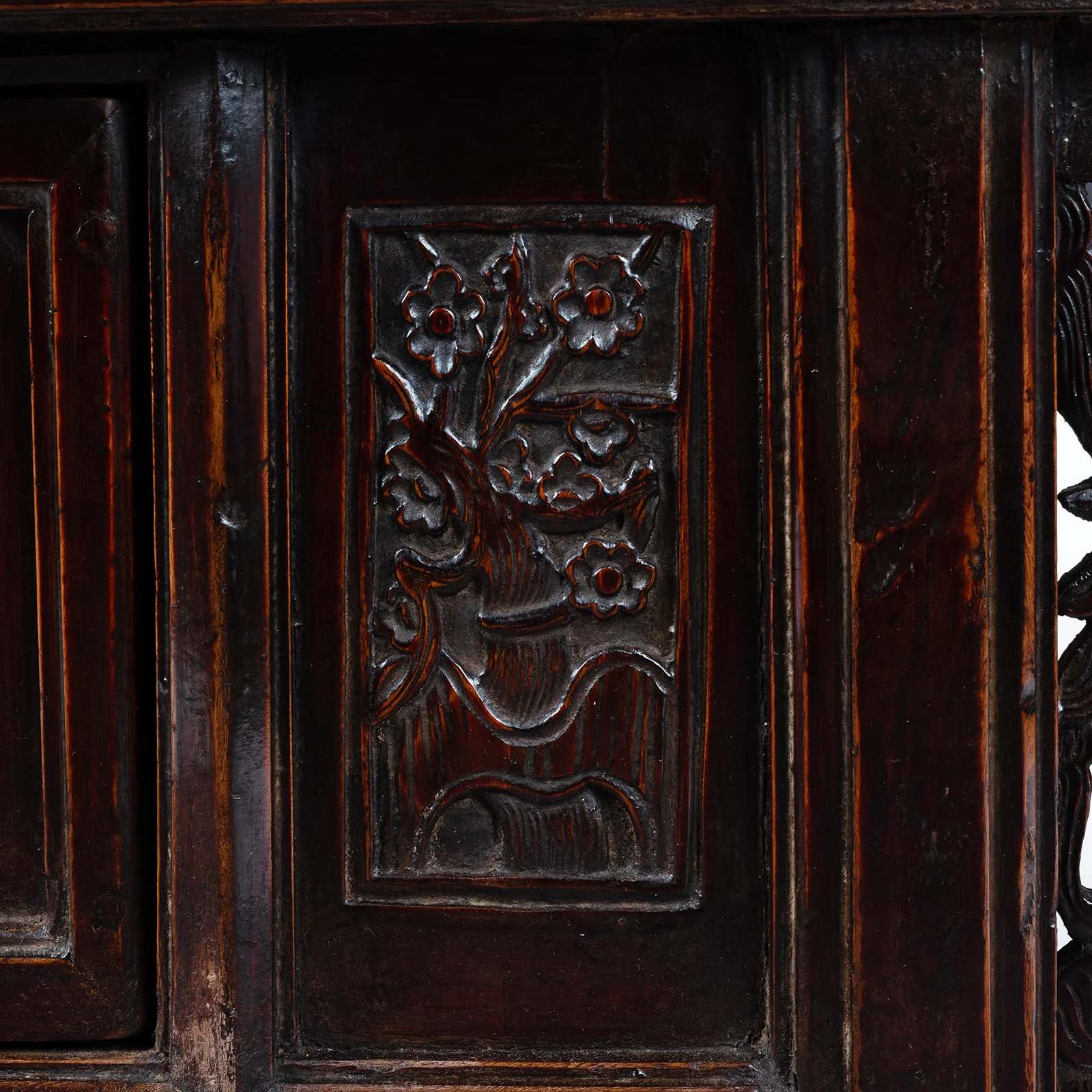
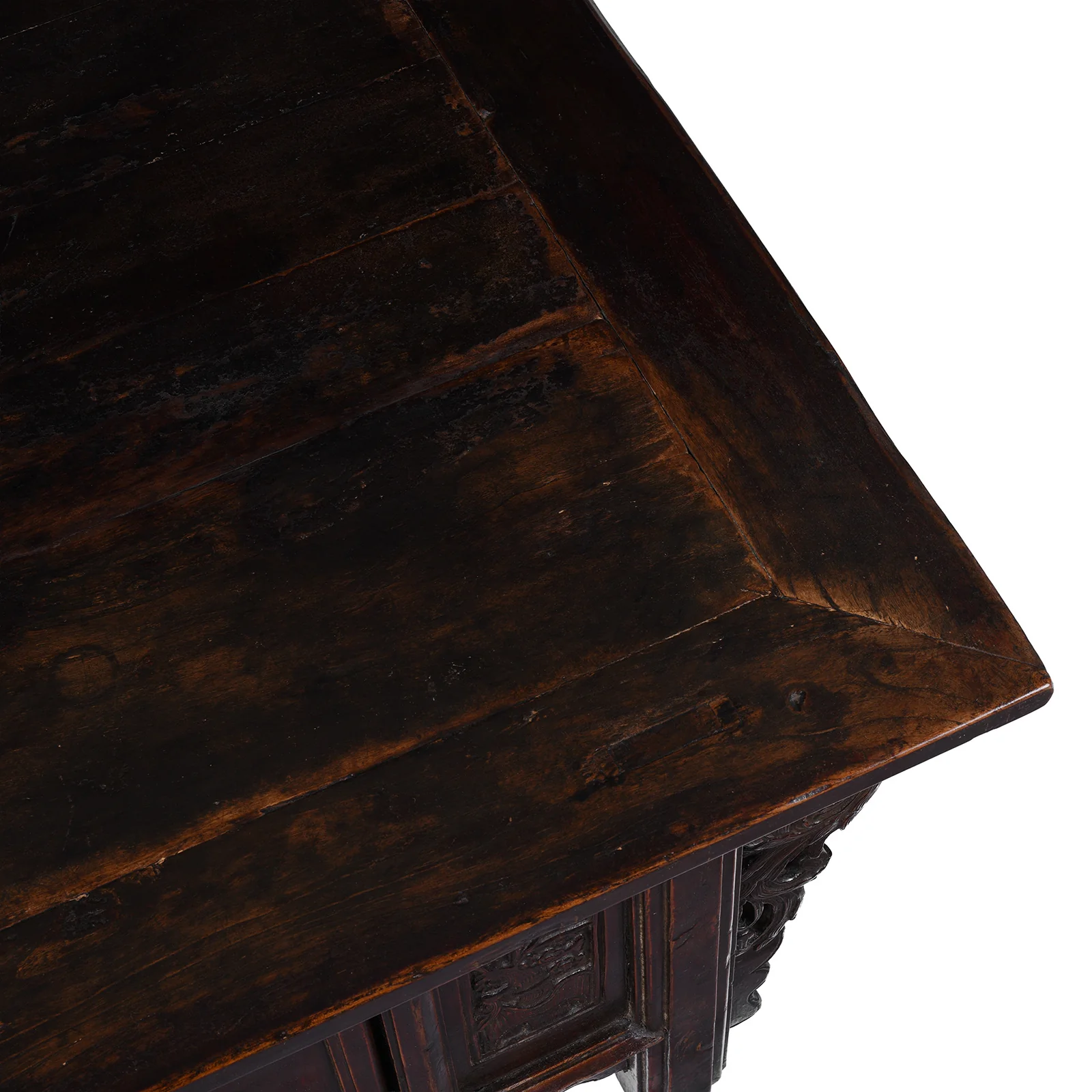
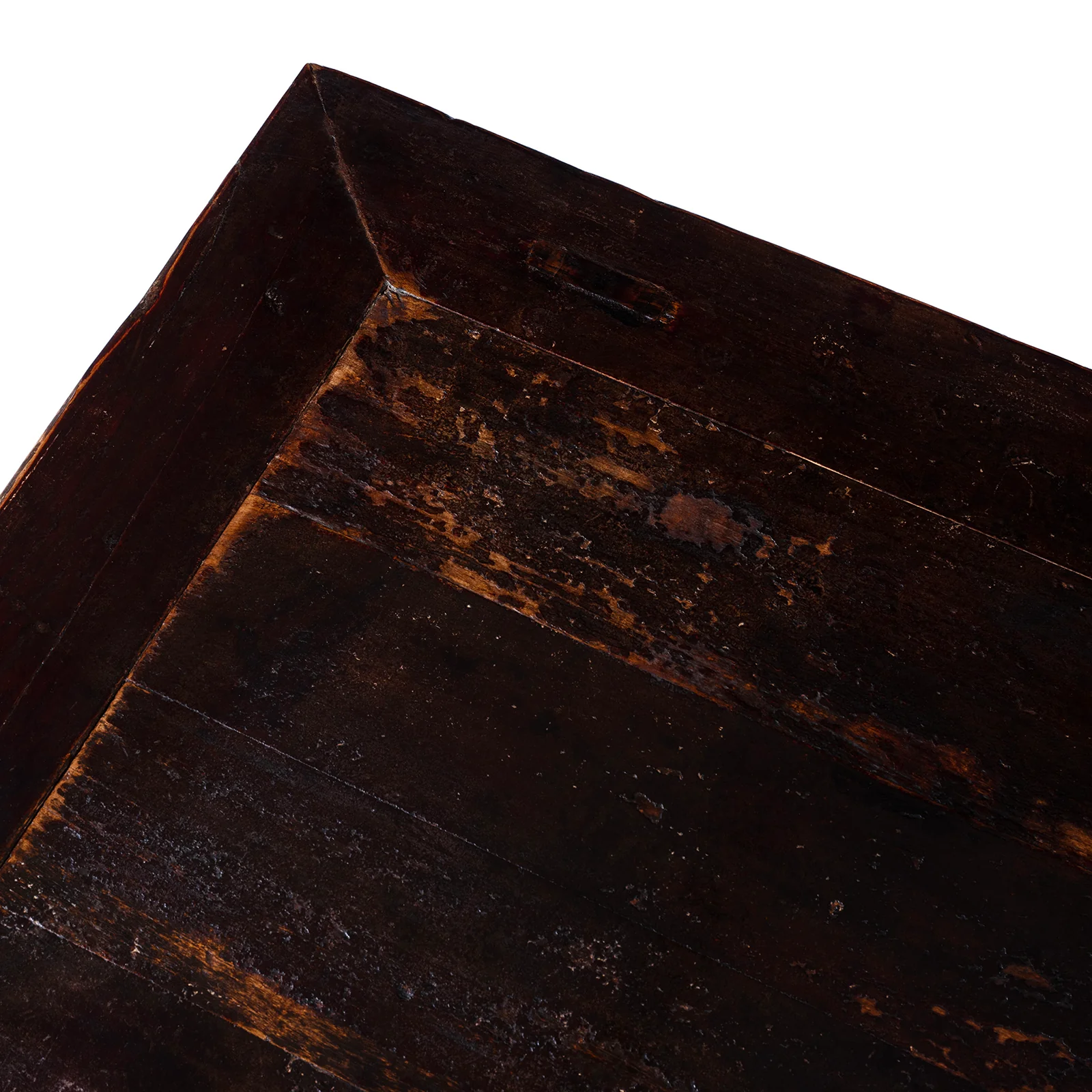
Time has softened the lacquer to reveal a warm, naturally developed patina that enhances the clarity of the carving and the deep tone of the elm. The front and side panels show scrolling floral motifs carved with confidence, while the pair of cupboard doors beneath offer discreet storage, a feature commonly found on functional Shanxi kang furniture. This combination of practical design and refined craftsmanship gives the table a strong presence that works beautifully as a coffee table or as a statement piece at the end of a bed.
- Origin: Shanxi Province, Northern China
- Date: Mid 19th Century
- Materials: Northern elm (yumu 榆木) with black lacquer
- Features: Carved floral panels, original lacquer surface, two cupboard doors
- Condition: Beautiful aged patina with surface wear consistent with age
- Reference: Comparable examples illustrated in Karen Mazurkewich’s Chinese Furniture: A Guide to Collecting Antiques, particularly Shanxi kang tables with carved fronts
A richly carved Shanxi kang table with warm lacquered patina and useful storage that brings depth and character to any interior.
More Images
Black Lacquer Kang Table From Shanxi - 19th Century
This finely carved kang table originates from Shanxi province in Northern China and dates from the mid 19th century. Built from northern elm (yumu 榆木) and finished in black lacquer, it would have been placed on or beside the kang, the raised brick platform that formed the centre of domestic life in northern homes. Families used low tables like this for tea, reading, writing and displaying valued objects. The substantial form and detailed carving relate closely to the Shanxi examples discussed in Karen Mazurkewich’s Chinese Furniture: A Guide to Collecting Antiques, where regional pieces are noted for their sculptural aprons, bold profiles and decorative front panels.
Time has softened the lacquer to reveal a warm, naturally developed patina that enhances the clarity of the carving and the deep tone of the elm. The front and side panels show scrolling floral motifs carved with confidence, while the pair of cupboard doors beneath offer discreet storage, a feature commonly found on functional Shanxi kang furniture. This combination of practical design and refined craftsmanship gives the table a strong presence that works beautifully as a coffee table or as a statement piece at the end of a bed.
- Origin: Shanxi Province, Northern China
- Date: Mid 19th Century
- Materials: Northern elm (yumu 榆木) with black lacquer
- Features: Carved floral panels, original lacquer surface, two cupboard doors
- Condition: Beautiful aged patina with surface wear consistent with age
- Reference: Comparable examples illustrated in Karen Mazurkewich’s Chinese Furniture: A Guide to Collecting Antiques, particularly Shanxi kang tables with carved fronts
A richly carved Shanxi kang table with warm lacquered patina and useful storage that brings depth and character to any interior.
Product Information
Product Information
Shipping & Returns
Shipping & Returns
Description
This finely carved kang table originates from Shanxi province in Northern China and dates from the mid 19th century. Built from northern elm (yumu 榆木) and finished in black lacquer, it would have been placed on or beside the kang, the raised brick platform that formed the centre of domestic life in northern homes. Families used low tables like this for tea, reading, writing and displaying valued objects. The substantial form and detailed carving relate closely to the Shanxi examples discussed in Karen Mazurkewich’s Chinese Furniture: A Guide to Collecting Antiques, where regional pieces are noted for their sculptural aprons, bold profiles and decorative front panels.
Time has softened the lacquer to reveal a warm, naturally developed patina that enhances the clarity of the carving and the deep tone of the elm. The front and side panels show scrolling floral motifs carved with confidence, while the pair of cupboard doors beneath offer discreet storage, a feature commonly found on functional Shanxi kang furniture. This combination of practical design and refined craftsmanship gives the table a strong presence that works beautifully as a coffee table or as a statement piece at the end of a bed.
- Origin: Shanxi Province, Northern China
- Date: Mid 19th Century
- Materials: Northern elm (yumu 榆木) with black lacquer
- Features: Carved floral panels, original lacquer surface, two cupboard doors
- Condition: Beautiful aged patina with surface wear consistent with age
- Reference: Comparable examples illustrated in Karen Mazurkewich’s Chinese Furniture: A Guide to Collecting Antiques, particularly Shanxi kang tables with carved fronts
A richly carved Shanxi kang table with warm lacquered patina and useful storage that brings depth and character to any interior.