Painted Choksar Prayer Table from Tibet - 19th Century
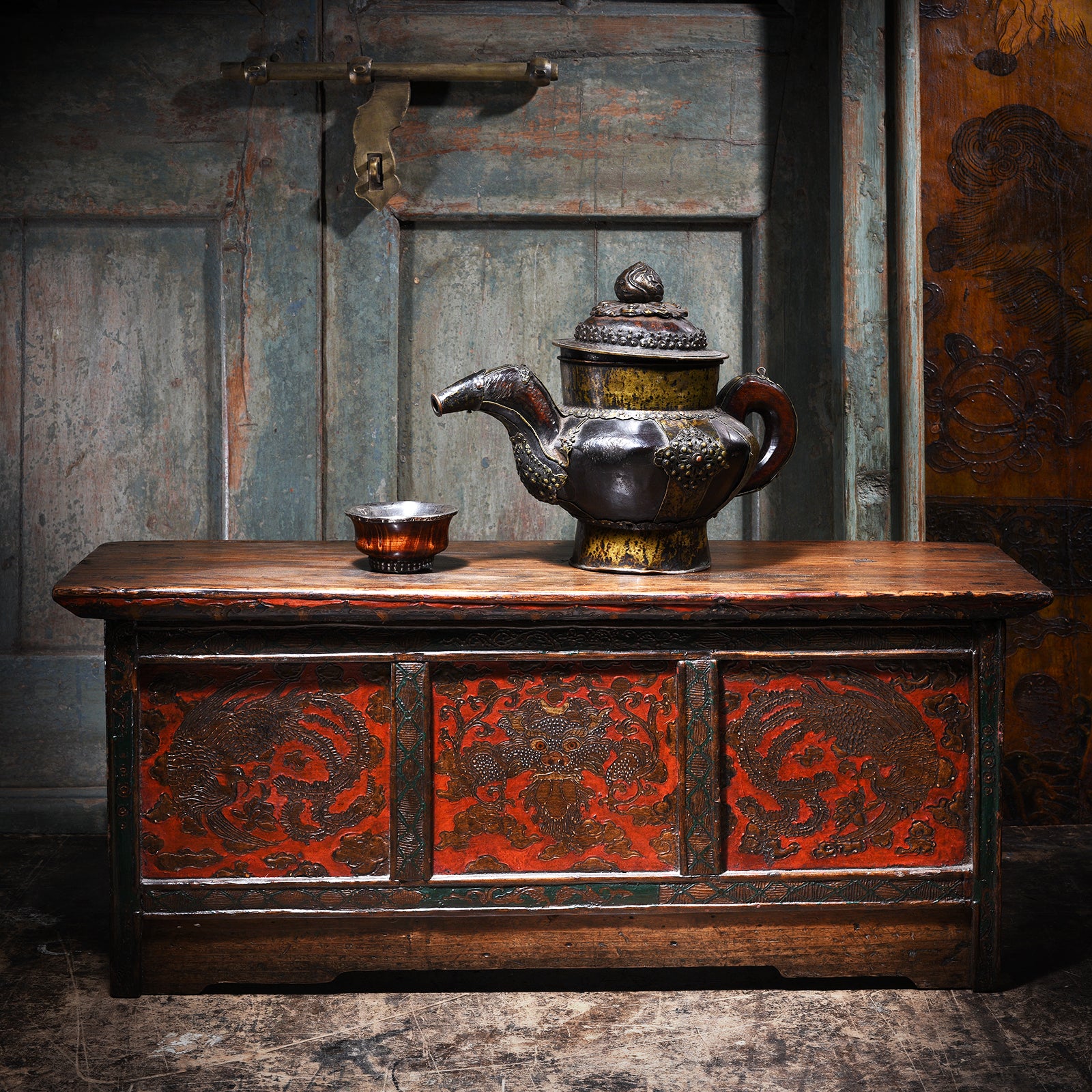
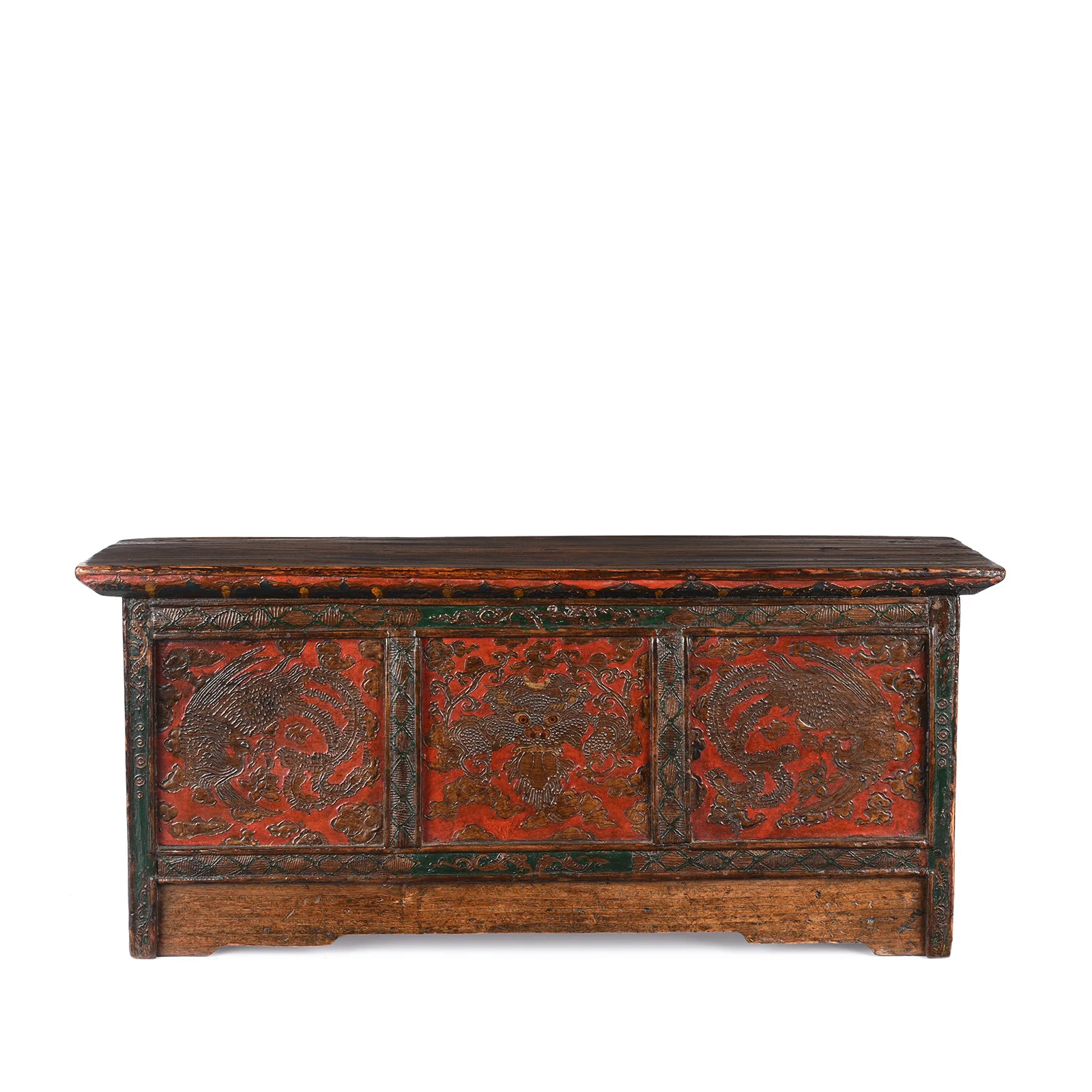
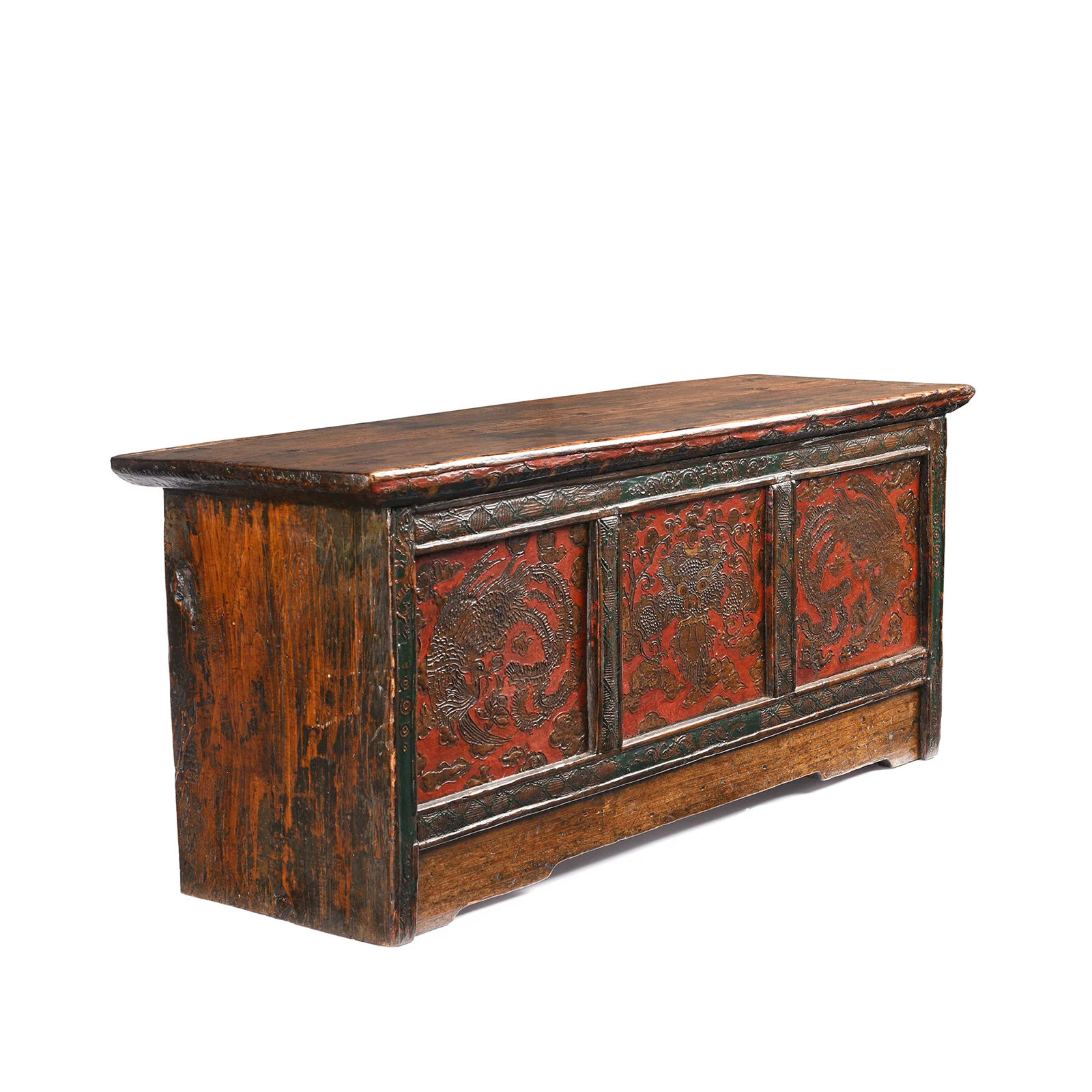
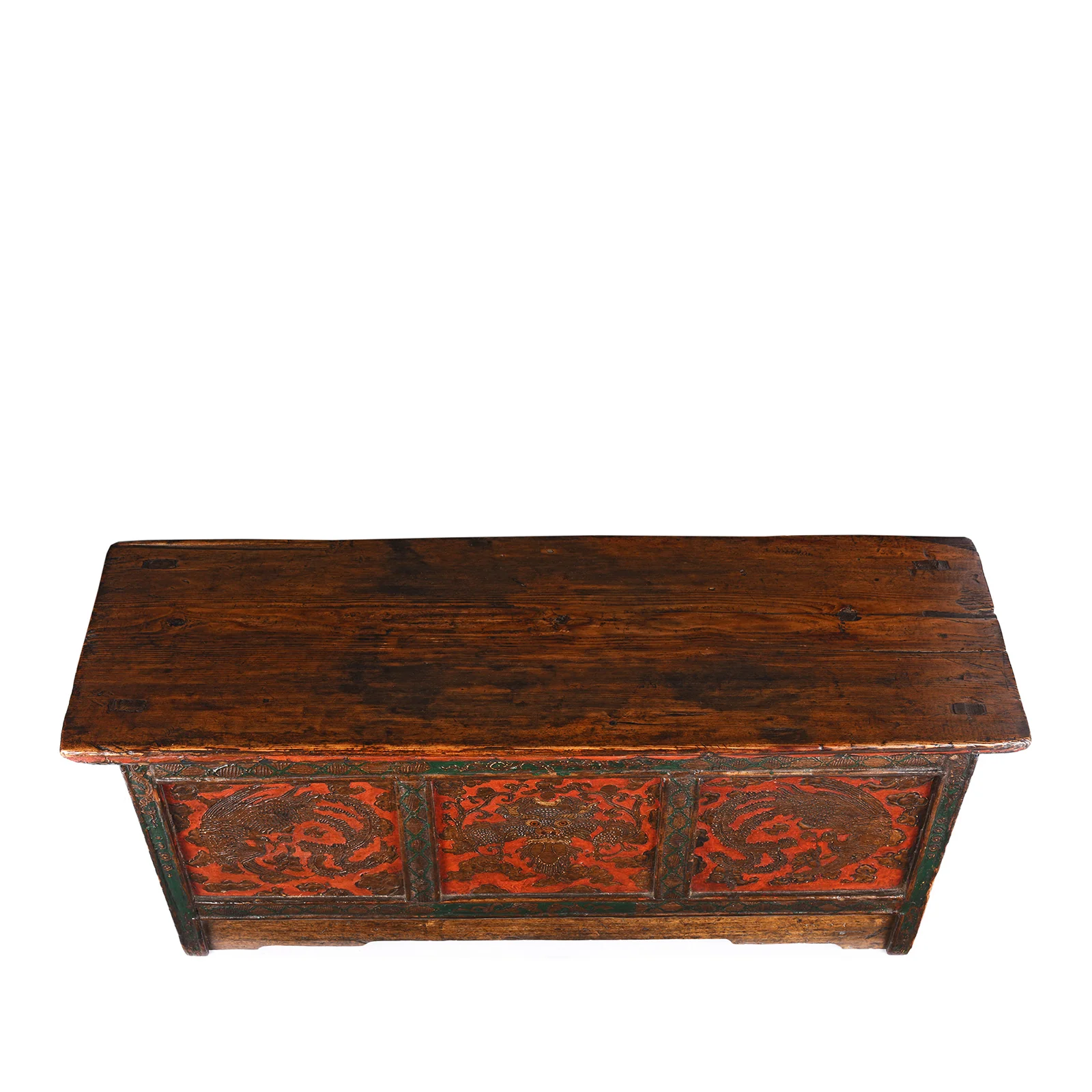
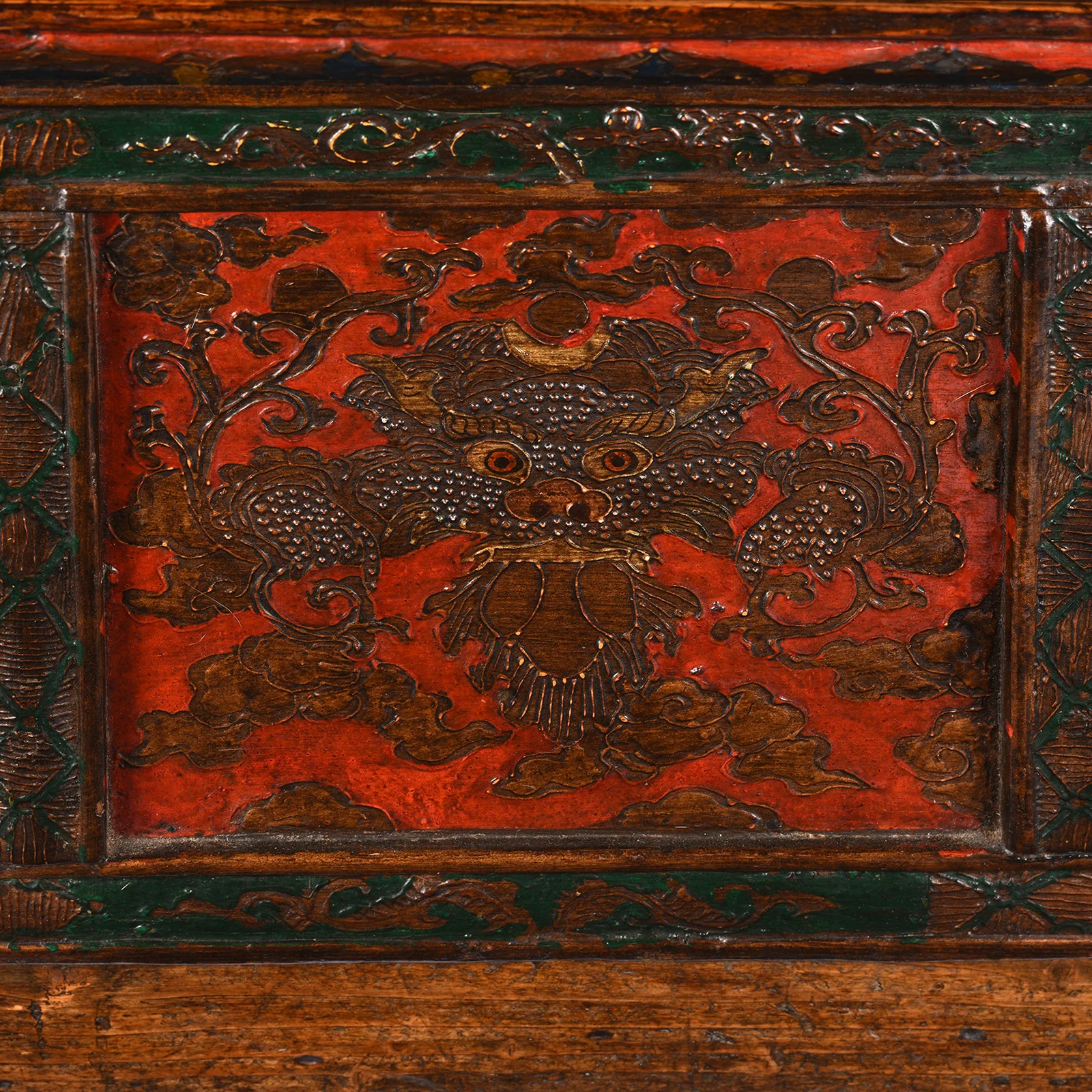
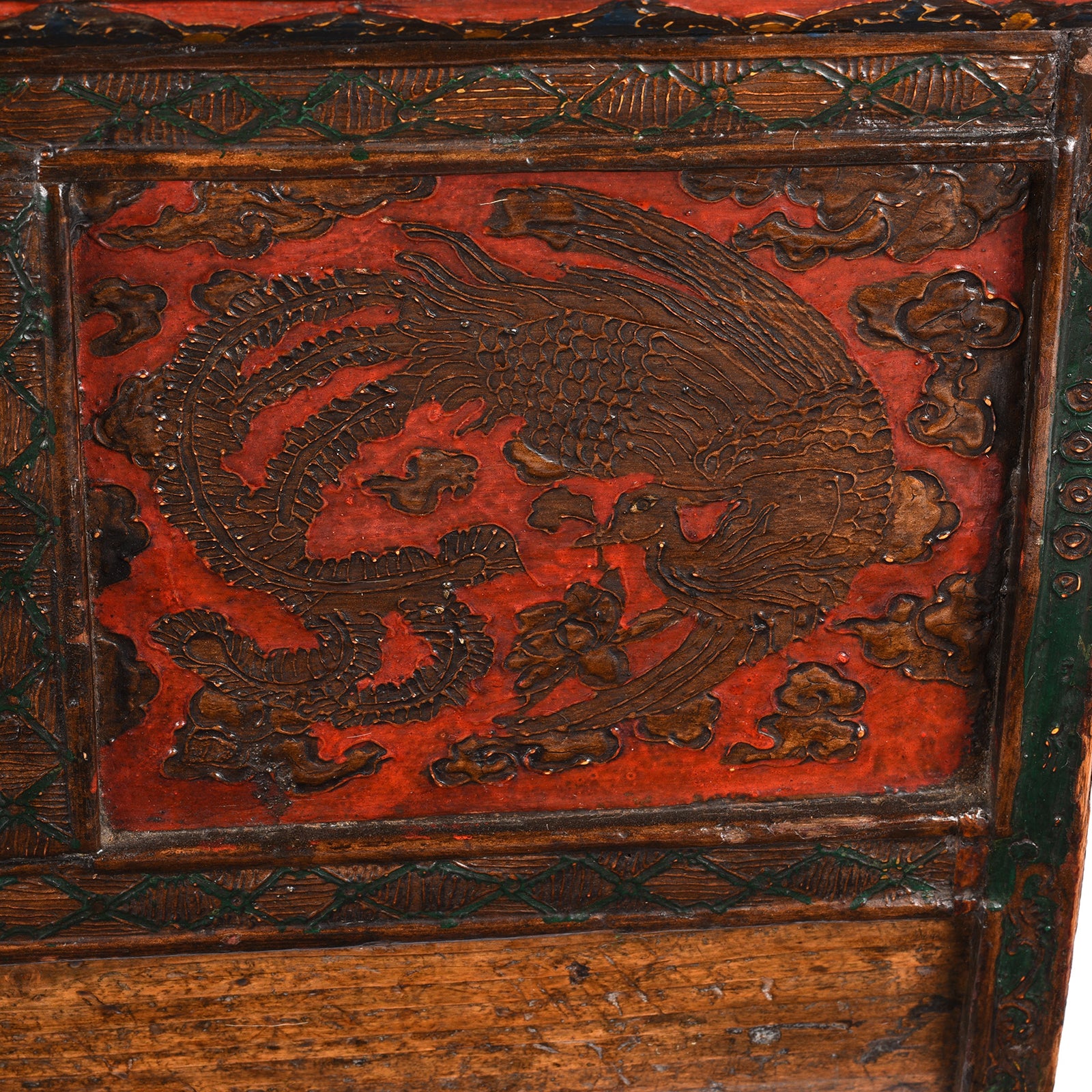
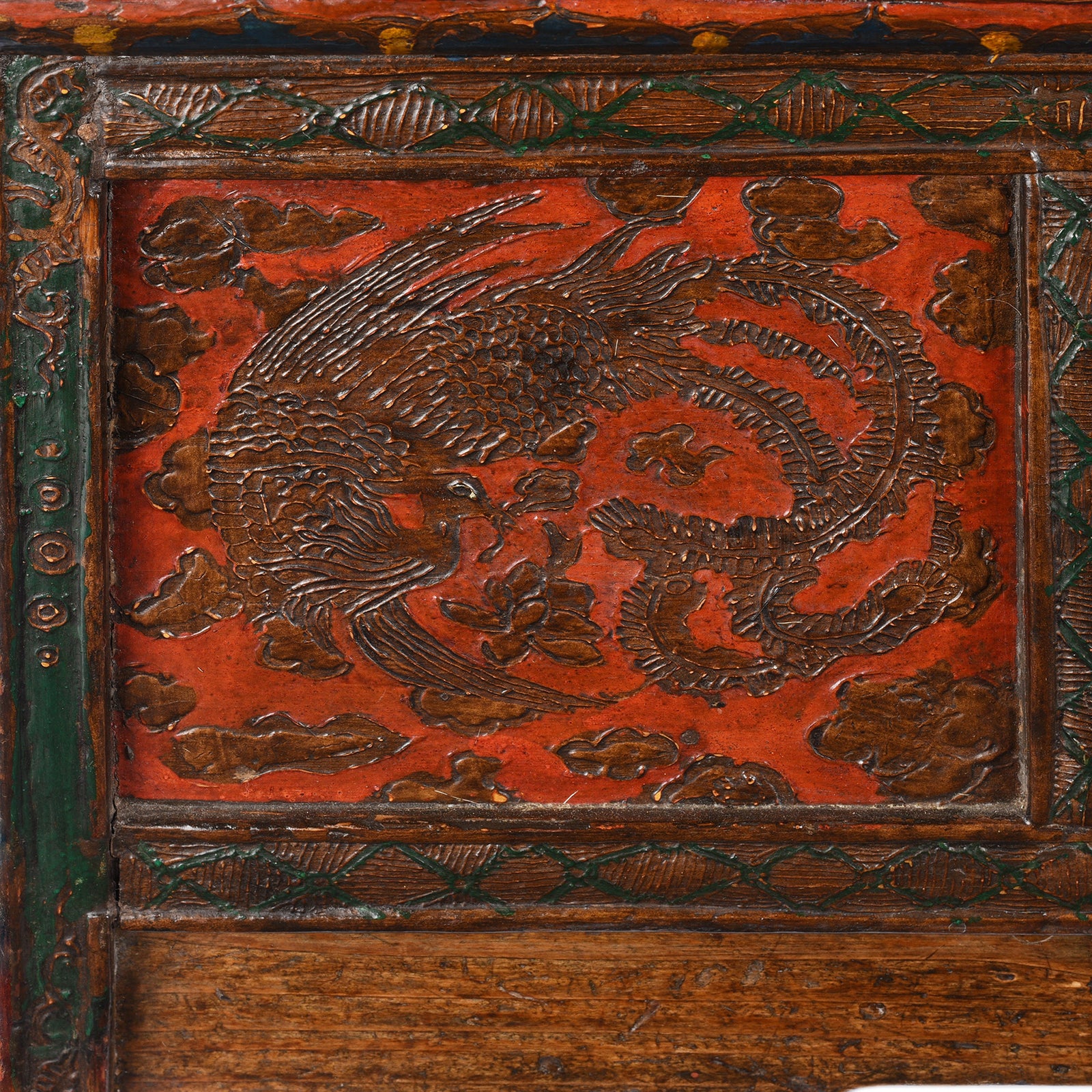
This antique painted Tibetan choksar prayer table dates to the late 19th century (circa 1890). It features the central figure of Kirtimukha with the right and left panels featuring phoenixes. The raised gesso work is traditionally known as kyungbur.
Kirtimukha (meaning face of majesty) (also named Zeeba / Ziba / Zipak) is a monstrous creature whose symbol is frequently found across China, Tibet & India. Also known as the 'Monster of Greed' (T'ao t'ieh in Chinese), 'Creature Without a Name' or 'Face of Glory'. The story of Skhanda Purana states that the Kirtimukha was a demon born from the blaze of Shiva's third eye. When his prey, Rahu repented and was forgiven for his sins, Zeeba was ravenous and devoured its own body leaving just the head and hands remaining. Shiva henceforth requested he remains as a guardian to his doors for all eternity.
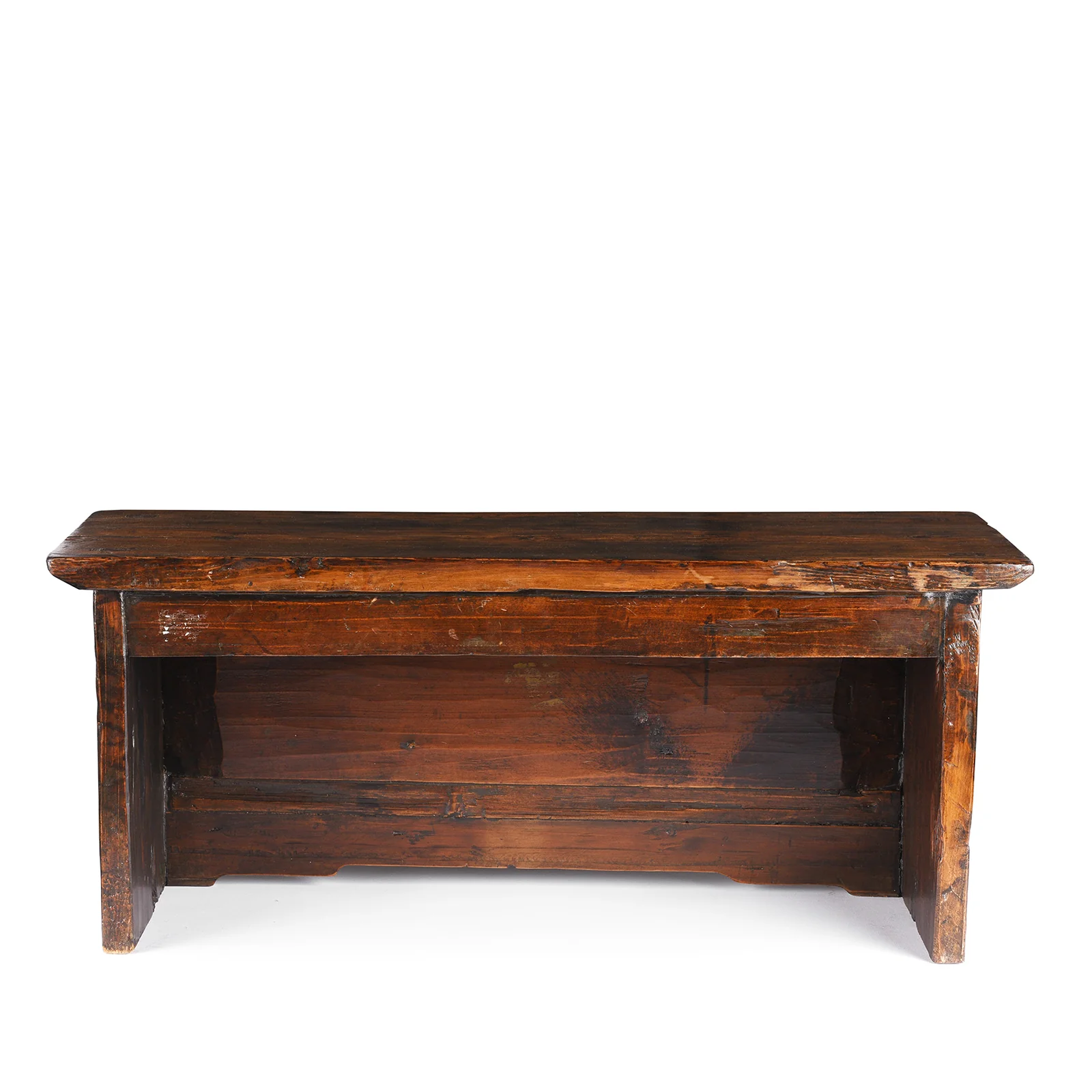
Choksars (as with antique Tibetan furniture in general) are becoming increasingly rare. Choksars were used as prayer tables by monks for reading scrolls and books. A yak butter lamp would be burnt regularly which is why so much Tibetan furniture is covered in a sticky residue. Our expert team has sensitively restored this piece, cleaning the residue whilst retaining its age and patina.
Original: $2,268.34
-65%$2,268.34
$793.92More Images
Painted Choksar Prayer Table from Tibet - 19th Century
This antique painted Tibetan choksar prayer table dates to the late 19th century (circa 1890). It features the central figure of Kirtimukha with the right and left panels featuring phoenixes. The raised gesso work is traditionally known as kyungbur.
Kirtimukha (meaning face of majesty) (also named Zeeba / Ziba / Zipak) is a monstrous creature whose symbol is frequently found across China, Tibet & India. Also known as the 'Monster of Greed' (T'ao t'ieh in Chinese), 'Creature Without a Name' or 'Face of Glory'. The story of Skhanda Purana states that the Kirtimukha was a demon born from the blaze of Shiva's third eye. When his prey, Rahu repented and was forgiven for his sins, Zeeba was ravenous and devoured its own body leaving just the head and hands remaining. Shiva henceforth requested he remains as a guardian to his doors for all eternity.
Choksars (as with antique Tibetan furniture in general) are becoming increasingly rare. Choksars were used as prayer tables by monks for reading scrolls and books. A yak butter lamp would be burnt regularly which is why so much Tibetan furniture is covered in a sticky residue. Our expert team has sensitively restored this piece, cleaning the residue whilst retaining its age and patina.
Product Information
Product Information
Shipping & Returns
Shipping & Returns
Description
This antique painted Tibetan choksar prayer table dates to the late 19th century (circa 1890). It features the central figure of Kirtimukha with the right and left panels featuring phoenixes. The raised gesso work is traditionally known as kyungbur.
Kirtimukha (meaning face of majesty) (also named Zeeba / Ziba / Zipak) is a monstrous creature whose symbol is frequently found across China, Tibet & India. Also known as the 'Monster of Greed' (T'ao t'ieh in Chinese), 'Creature Without a Name' or 'Face of Glory'. The story of Skhanda Purana states that the Kirtimukha was a demon born from the blaze of Shiva's third eye. When his prey, Rahu repented and was forgiven for his sins, Zeeba was ravenous and devoured its own body leaving just the head and hands remaining. Shiva henceforth requested he remains as a guardian to his doors for all eternity.
Choksars (as with antique Tibetan furniture in general) are becoming increasingly rare. Choksars were used as prayer tables by monks for reading scrolls and books. A yak butter lamp would be burnt regularly which is why so much Tibetan furniture is covered in a sticky residue. Our expert team has sensitively restored this piece, cleaning the residue whilst retaining its age and patina.