
Copper Paan Box From Kashmir - Late 19th Century
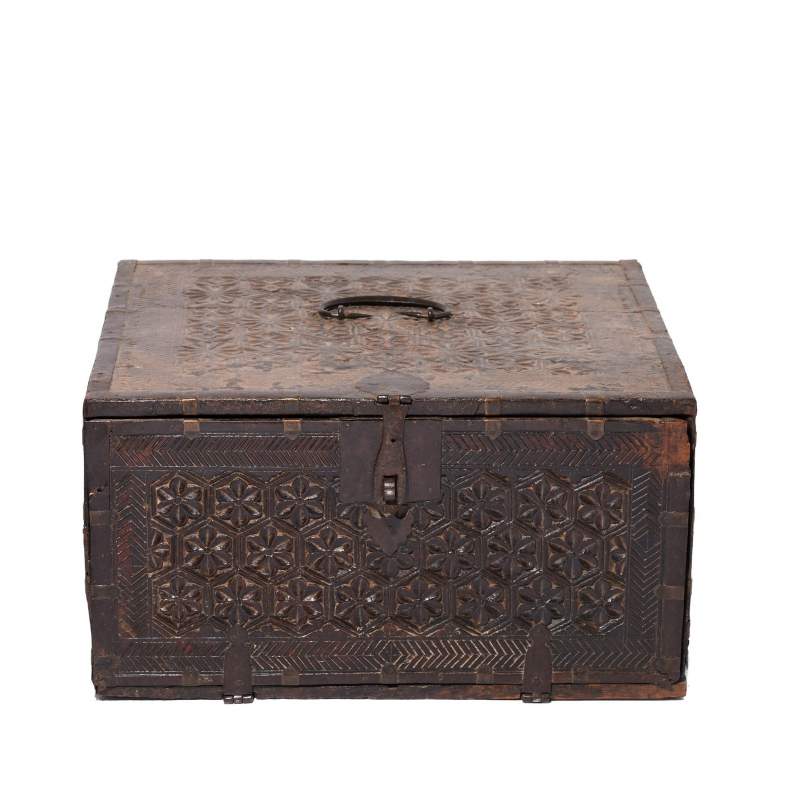
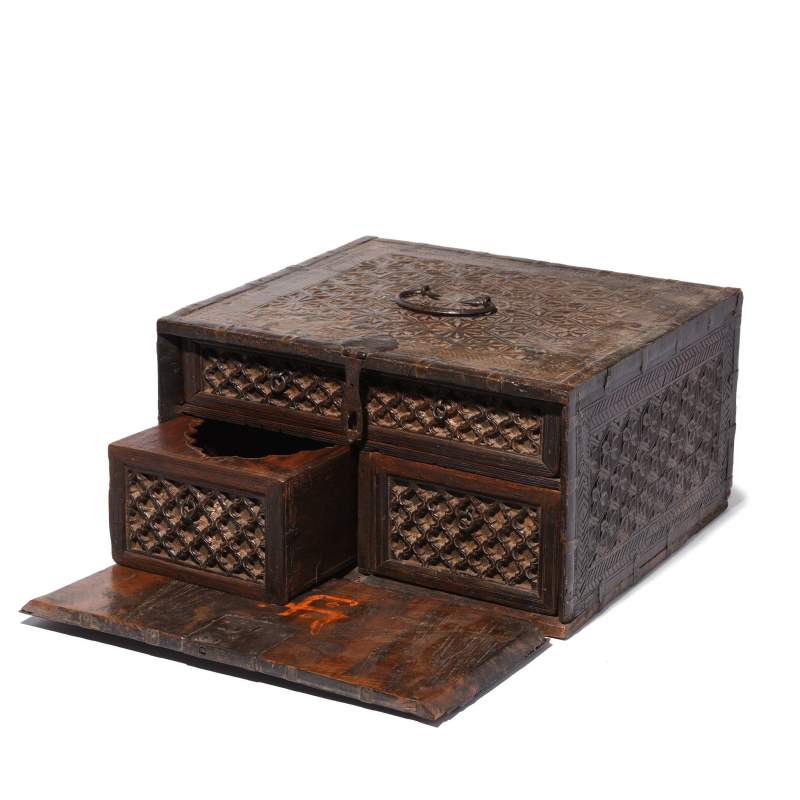
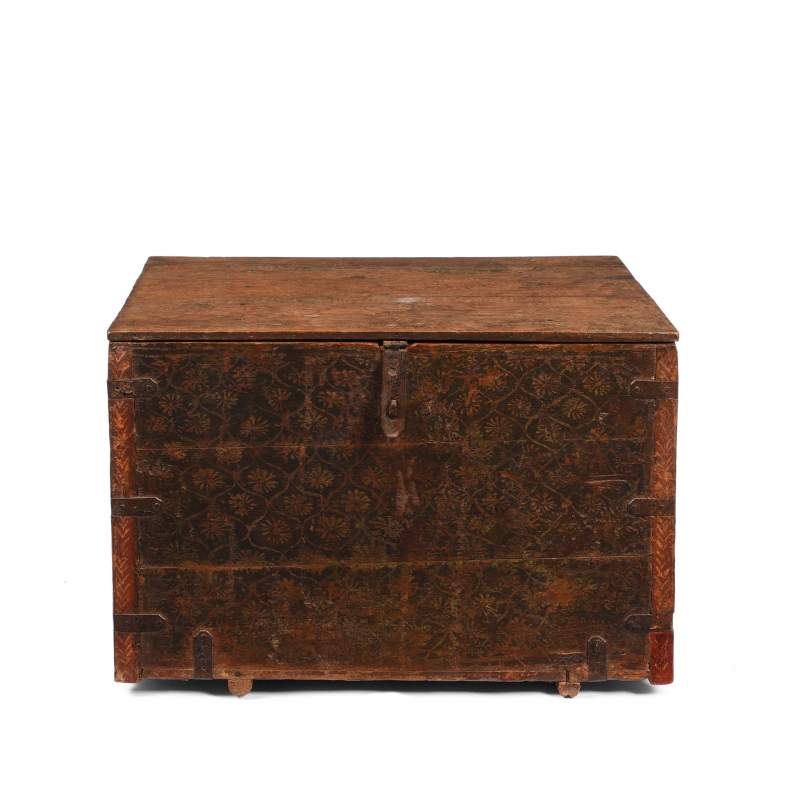
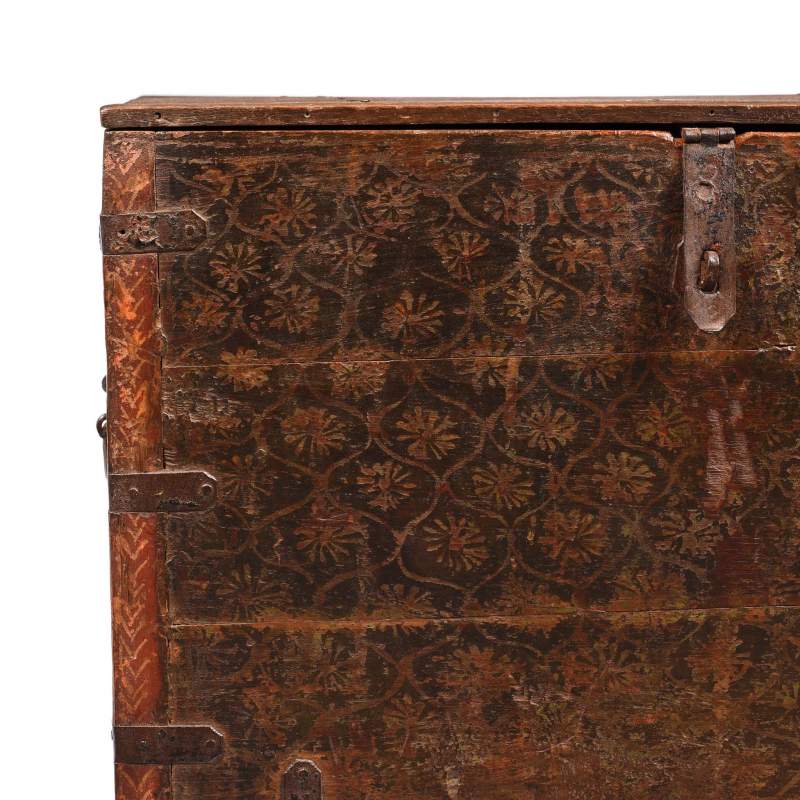
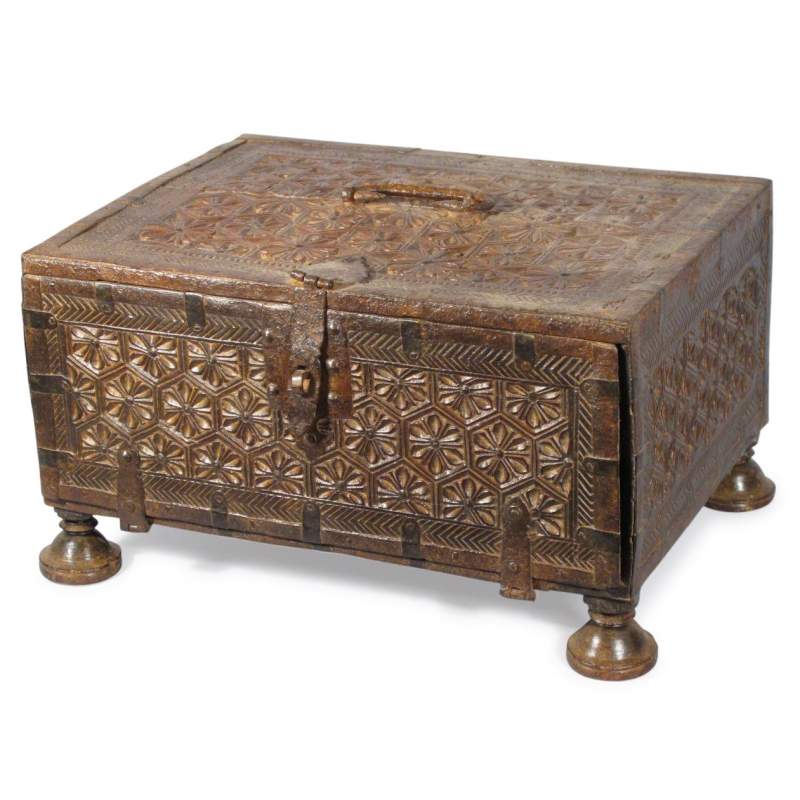
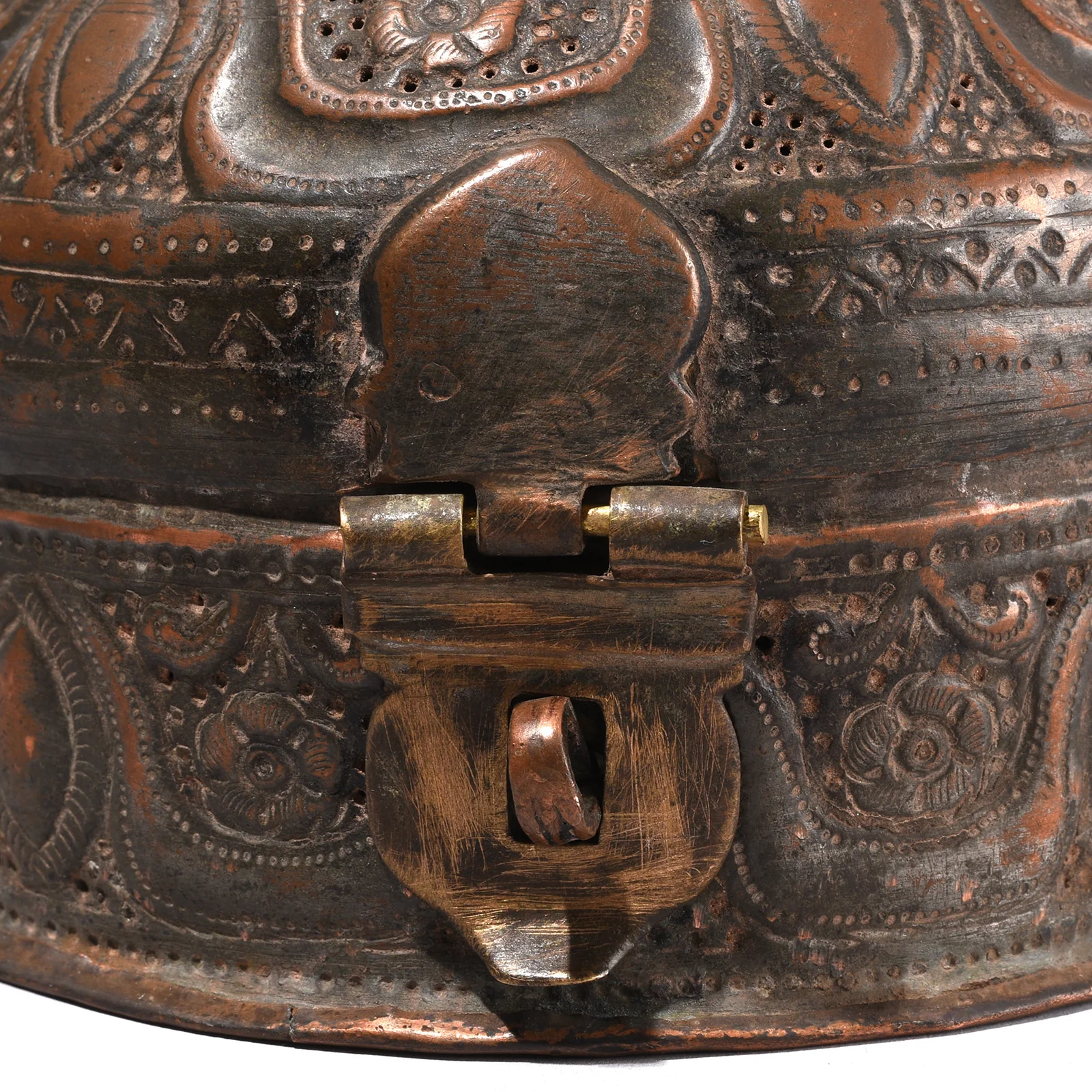
This antique Indian copper box was used for the storage of paan leaves. This style of copper plated tin Repoussé work is usually associated with the traditional Islamic inhabitants of Kashmir. Many boxes of this style originally contained individual compartments for the different components used in making paan.
Paan is a preparation, that combines a paste of spices in a betel leaf, which is chewed for its stimulant and psychoactive effects. After chewing it is either spat out or swallowed.
Paan has many variations. Slaked lime (chunam) paste is often added to bind the leaves. The skilled Paan maker is known as a paanwala in North India.
A similar example can be found in the British Museum (ACC # 1991,1116.1) stated to be from Kashmir. Another similar example can be found on page 71 of The Everyday Art of India by Robert F. Bussabarger & Betty Dashew Robins.
Dimensions:
15 x 15 x 21 (wxdxh cms)
From India
UK Delivery Charge - except Highlands & Islands £7.50
More delivery options available at checkout
Original: $306.16
-65%$306.16
$107.16More Images


Copper Paan Box From Kashmir - Late 19th Century
This antique Indian copper box was used for the storage of paan leaves. This style of copper plated tin Repoussé work is usually associated with the traditional Islamic inhabitants of Kashmir. Many boxes of this style originally contained individual compartments for the different components used in making paan.
Paan is a preparation, that combines a paste of spices in a betel leaf, which is chewed for its stimulant and psychoactive effects. After chewing it is either spat out or swallowed.
Paan has many variations. Slaked lime (chunam) paste is often added to bind the leaves. The skilled Paan maker is known as a paanwala in North India.
A similar example can be found in the British Museum (ACC # 1991,1116.1) stated to be from Kashmir. Another similar example can be found on page 71 of The Everyday Art of India by Robert F. Bussabarger & Betty Dashew Robins.
Dimensions:
15 x 15 x 21 (wxdxh cms)
From India
UK Delivery Charge - except Highlands & Islands £7.50
More delivery options available at checkout
Product Information
Product Information
Shipping & Returns
Shipping & Returns
Description
This antique Indian copper box was used for the storage of paan leaves. This style of copper plated tin Repoussé work is usually associated with the traditional Islamic inhabitants of Kashmir. Many boxes of this style originally contained individual compartments for the different components used in making paan.
Paan is a preparation, that combines a paste of spices in a betel leaf, which is chewed for its stimulant and psychoactive effects. After chewing it is either spat out or swallowed.
Paan has many variations. Slaked lime (chunam) paste is often added to bind the leaves. The skilled Paan maker is known as a paanwala in North India.
A similar example can be found in the British Museum (ACC # 1991,1116.1) stated to be from Kashmir. Another similar example can be found on page 71 of The Everyday Art of India by Robert F. Bussabarger & Betty Dashew Robins.
Dimensions:
15 x 15 x 21 (wxdxh cms)
From India
UK Delivery Charge - except Highlands & Islands £7.50
More delivery options available at checkout