Kasane Isho Dansu Chest From Nihonmatsu - Edo Era (1603 - 1869)
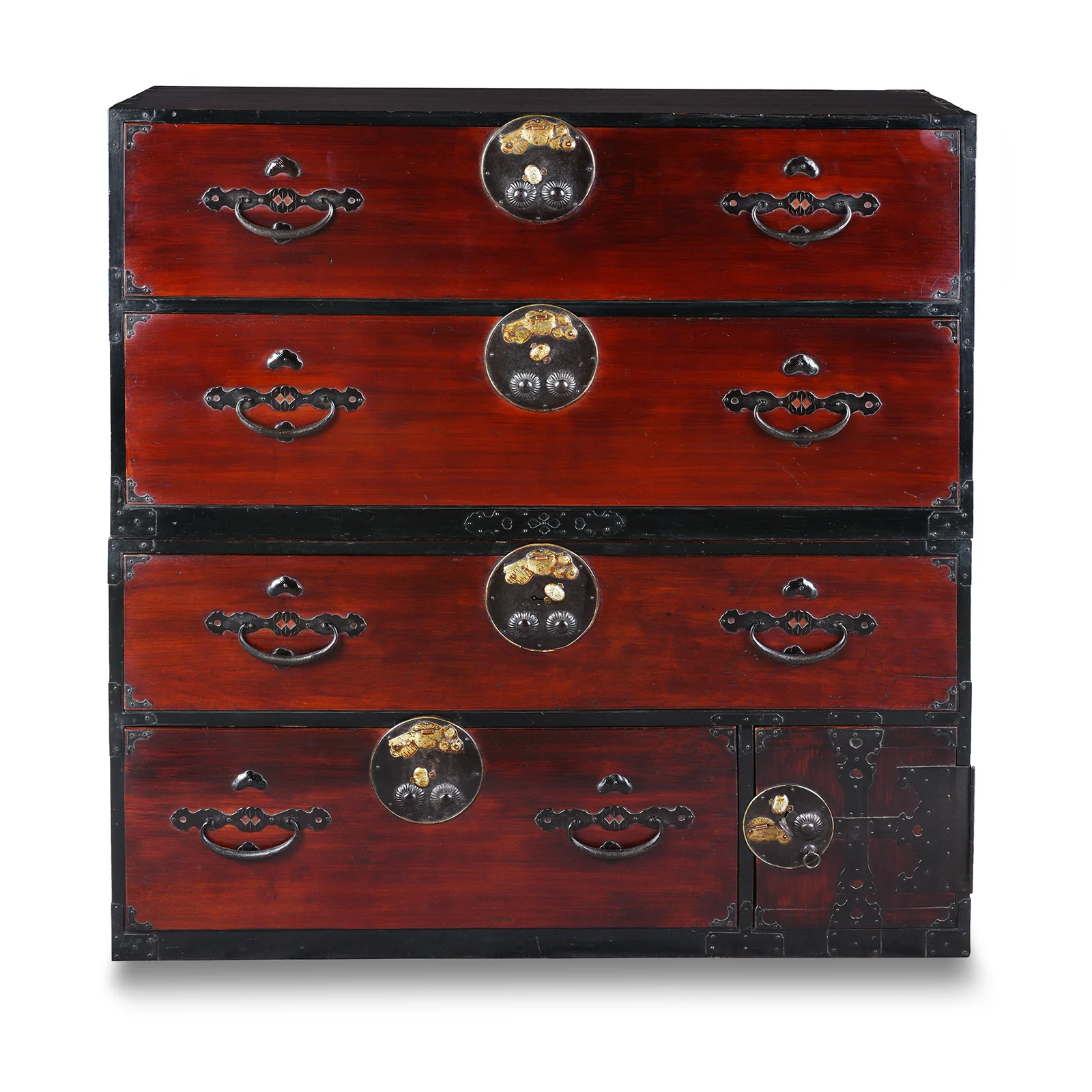
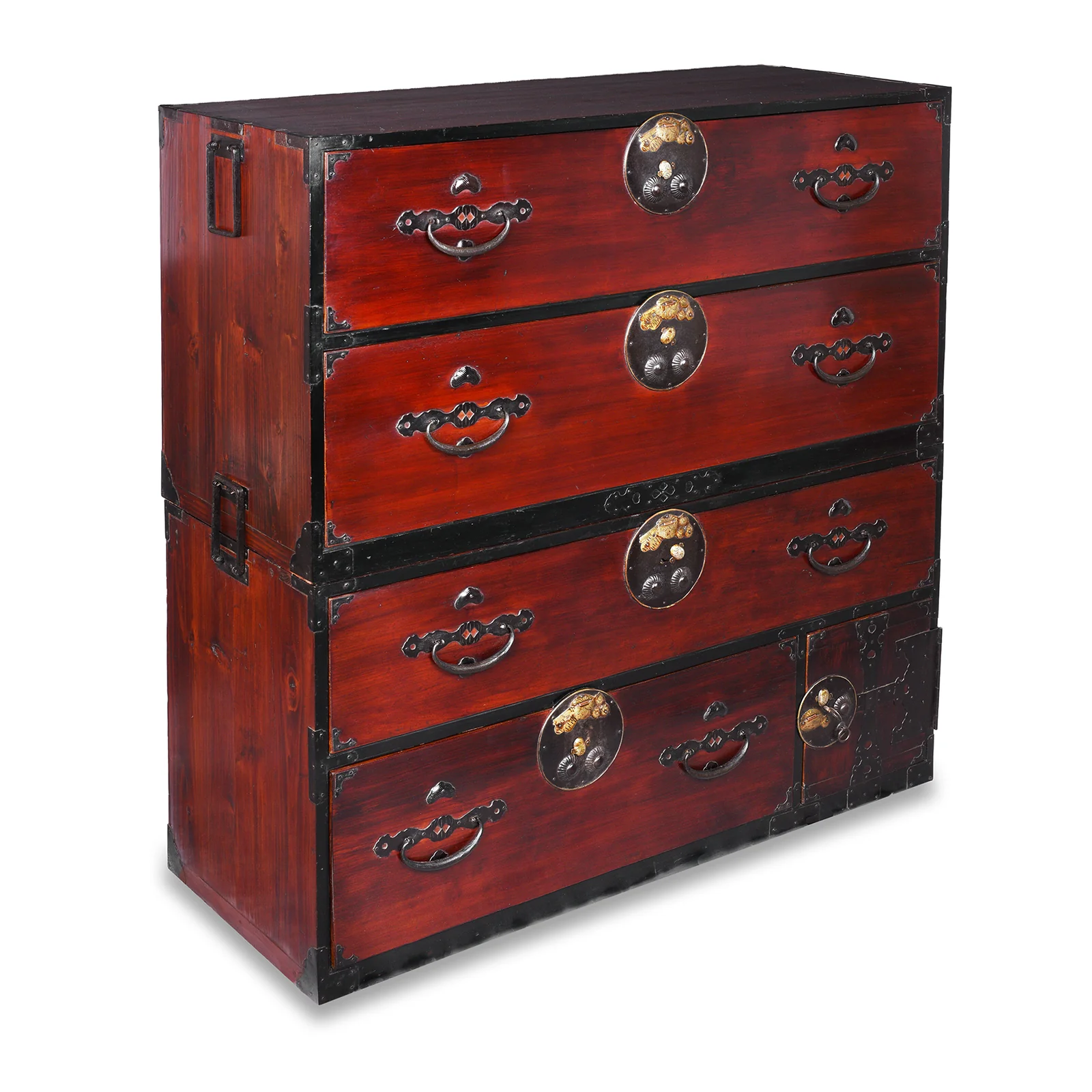
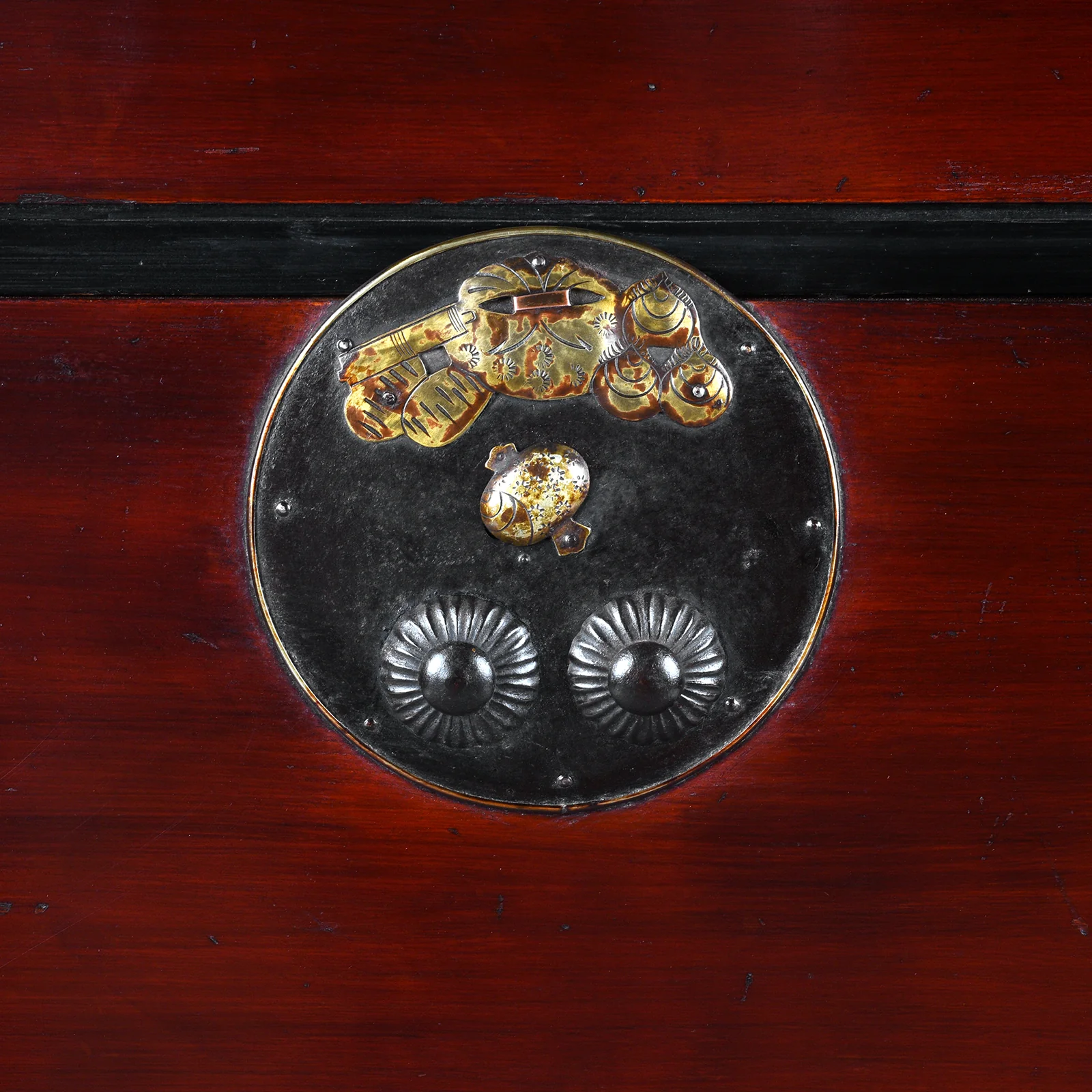
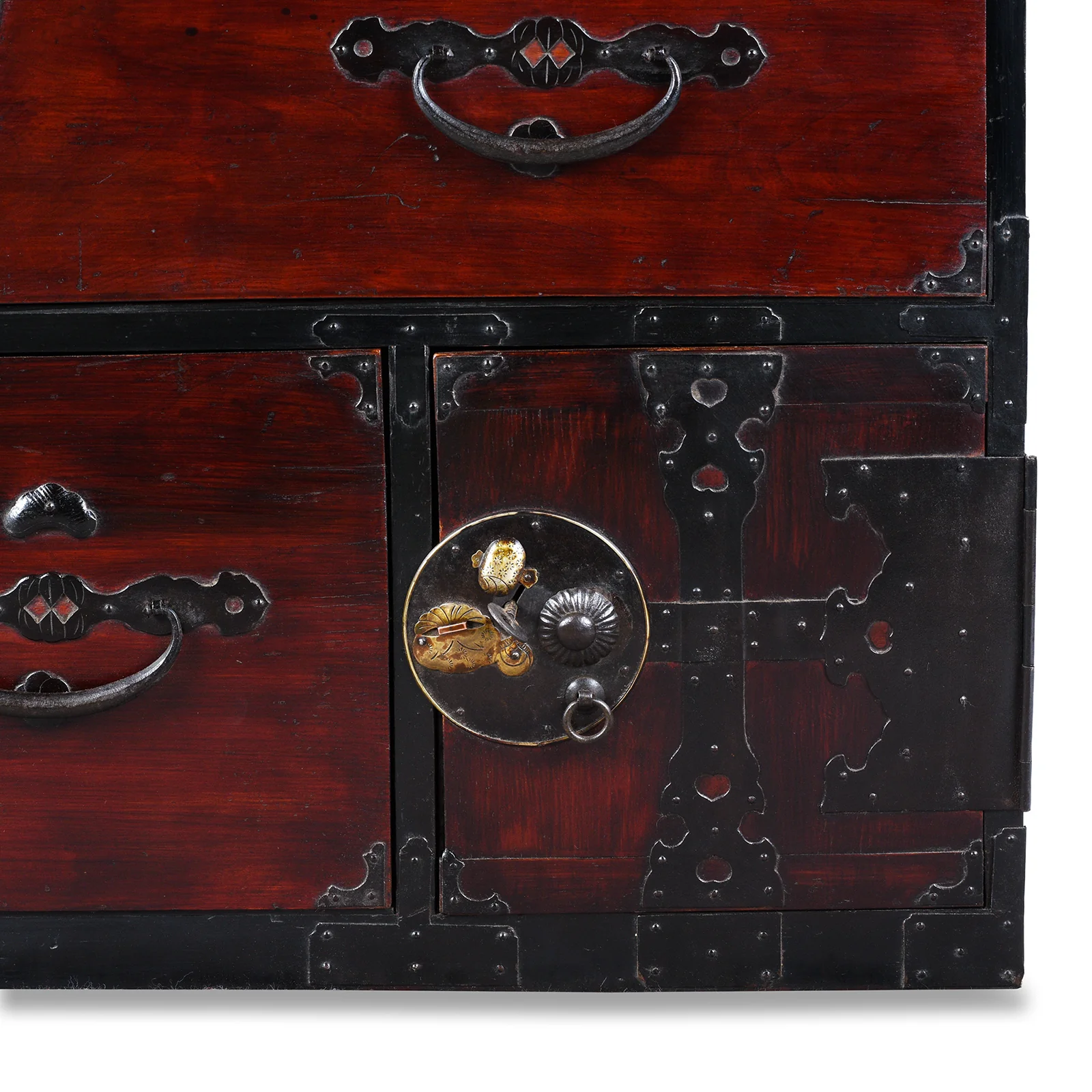
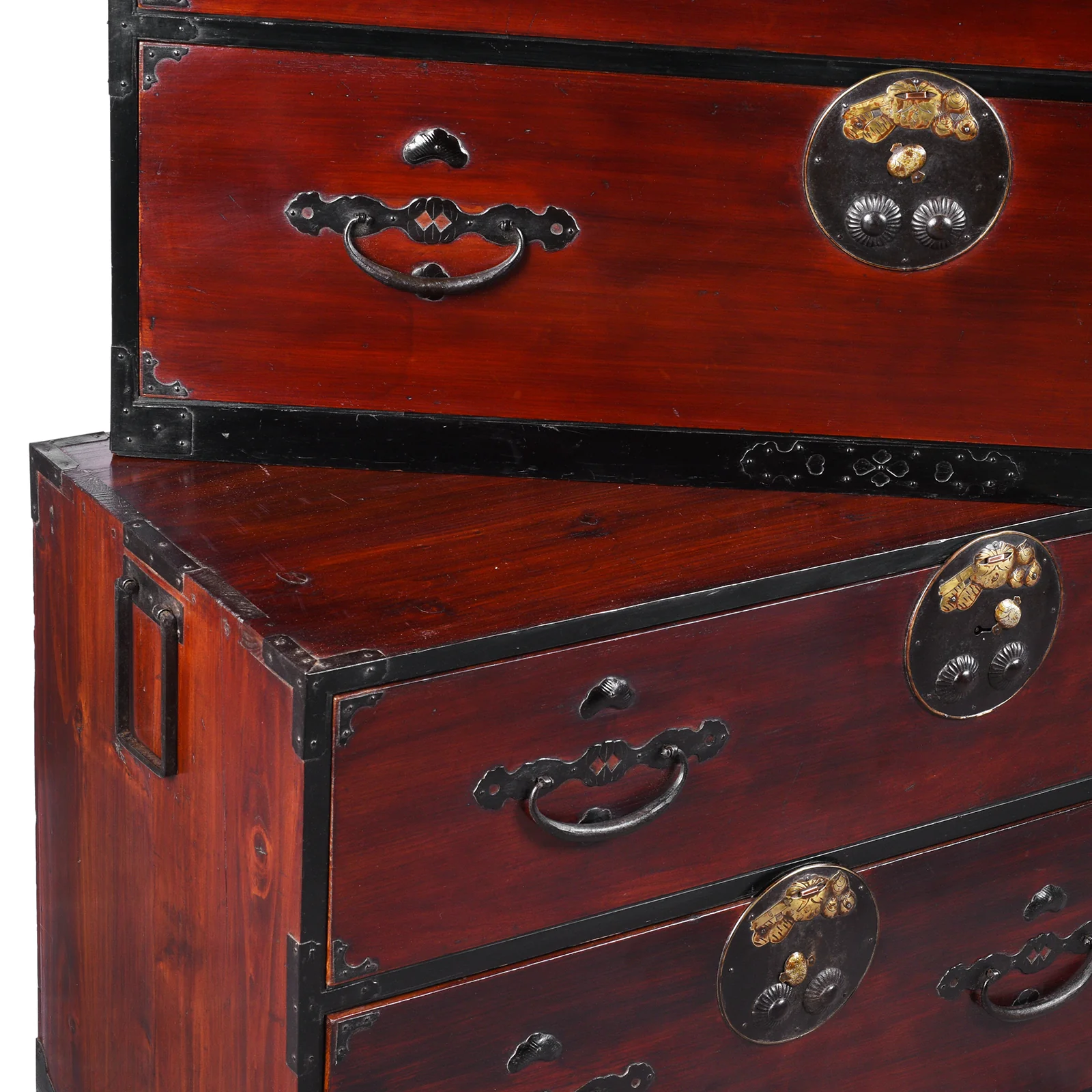
This striking 19th century Japanese isho kasane-dansu (stacking clothing chest) is a superb example of Edo period (1603 - 1869) craftsmanship, originating from the Nihonmatsu region—renowned for producing some of the largest and most refined tansu. Constructed in two stackable sections, the chest combines practicality with a bold aesthetic, its deep red lacquered finish beautifully contrasted by black iron strapping and distinctive circular lock plates with decorative brass accents.
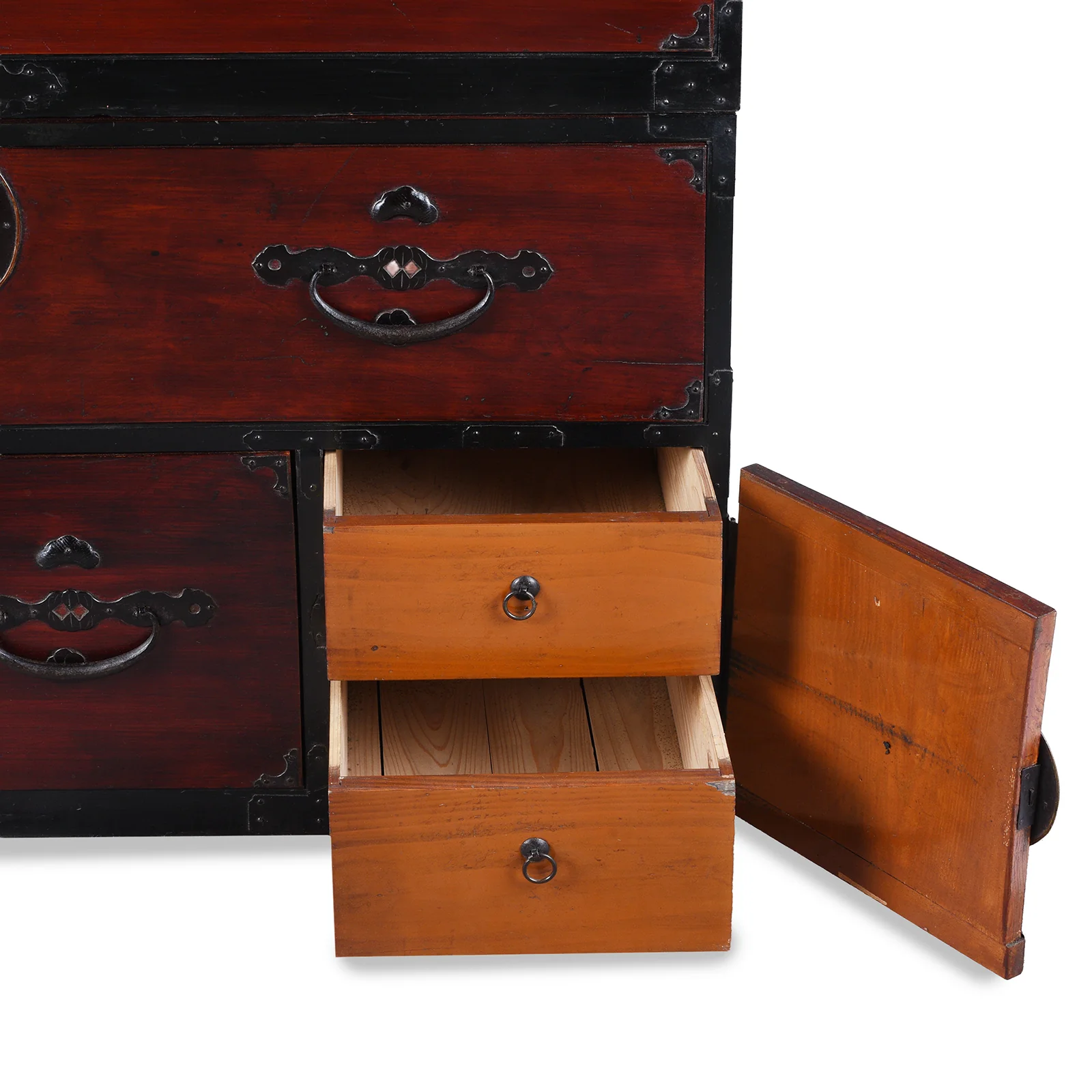
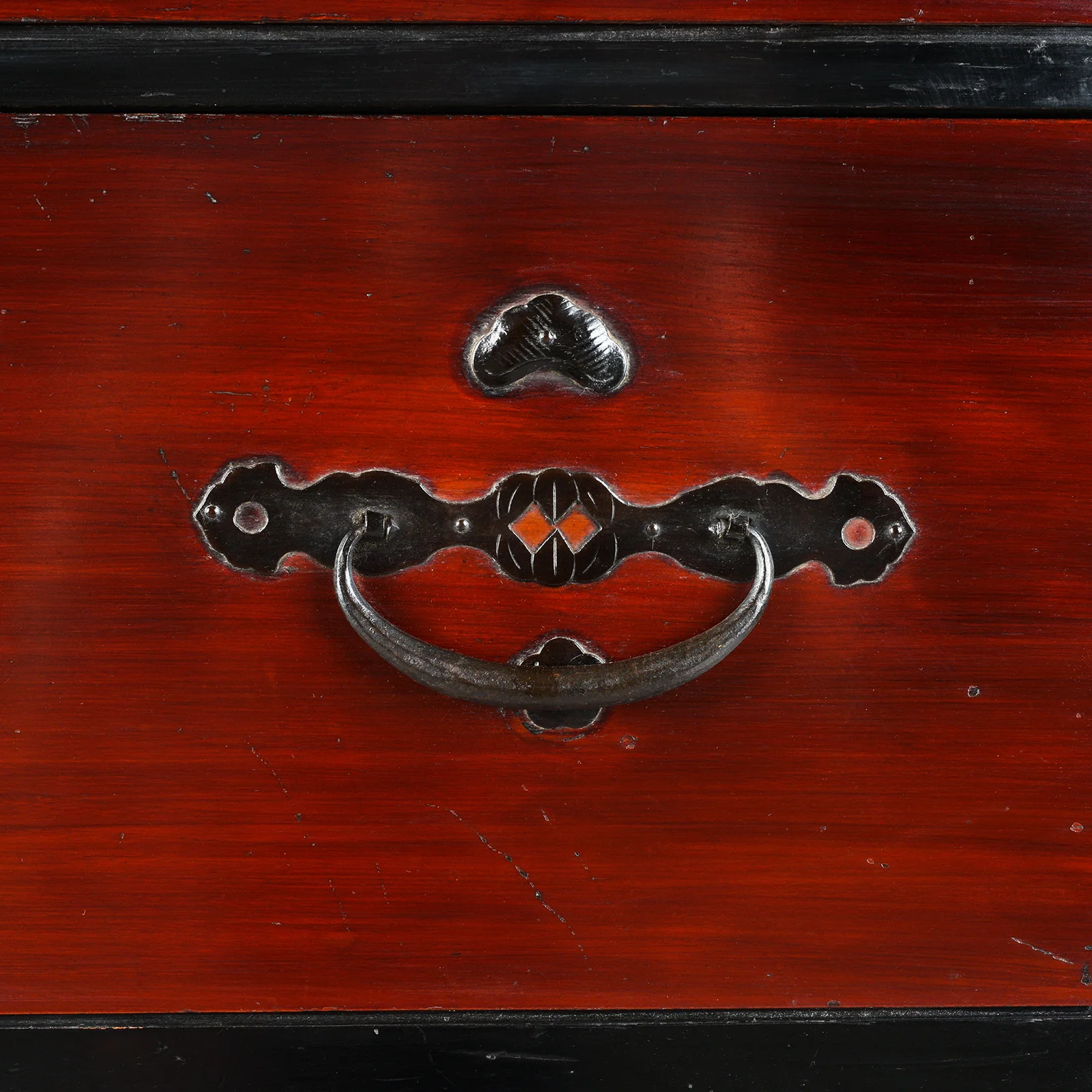
Designed for the storage of valuable garments, such chests were an essential part of domestic life in Japan, often used to separate seasonal clothing. The clean-lined façade is enriched with traditional iron handles and hardware, while the lower section incorporates a bank of smaller drawers and a compartment door, adding both visual interest and functional versatility. The proportions, materials, and hardware are all characteristic of Nihonmatsu workmanship, where innovative locking systems often replaced traditional key mechanisms.
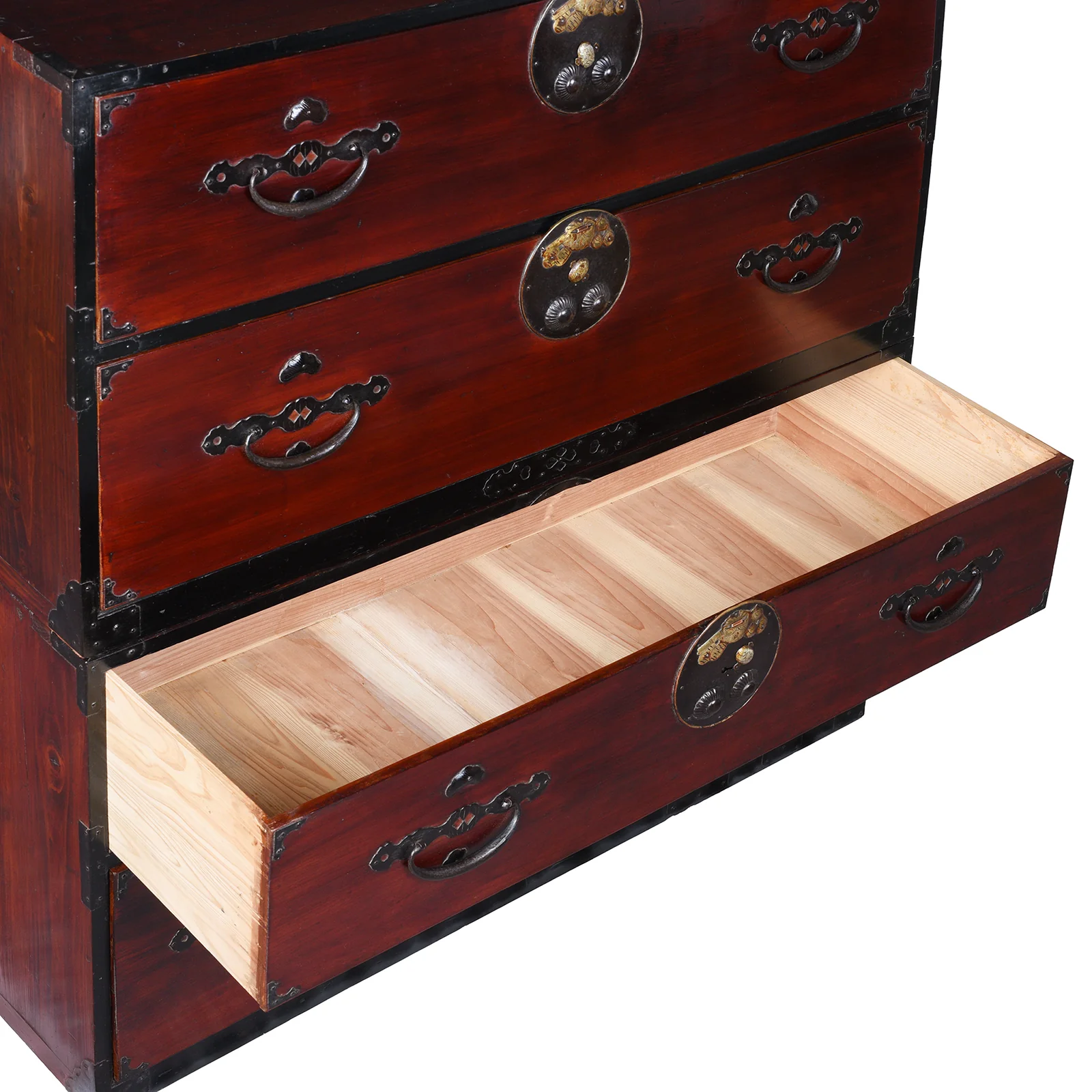
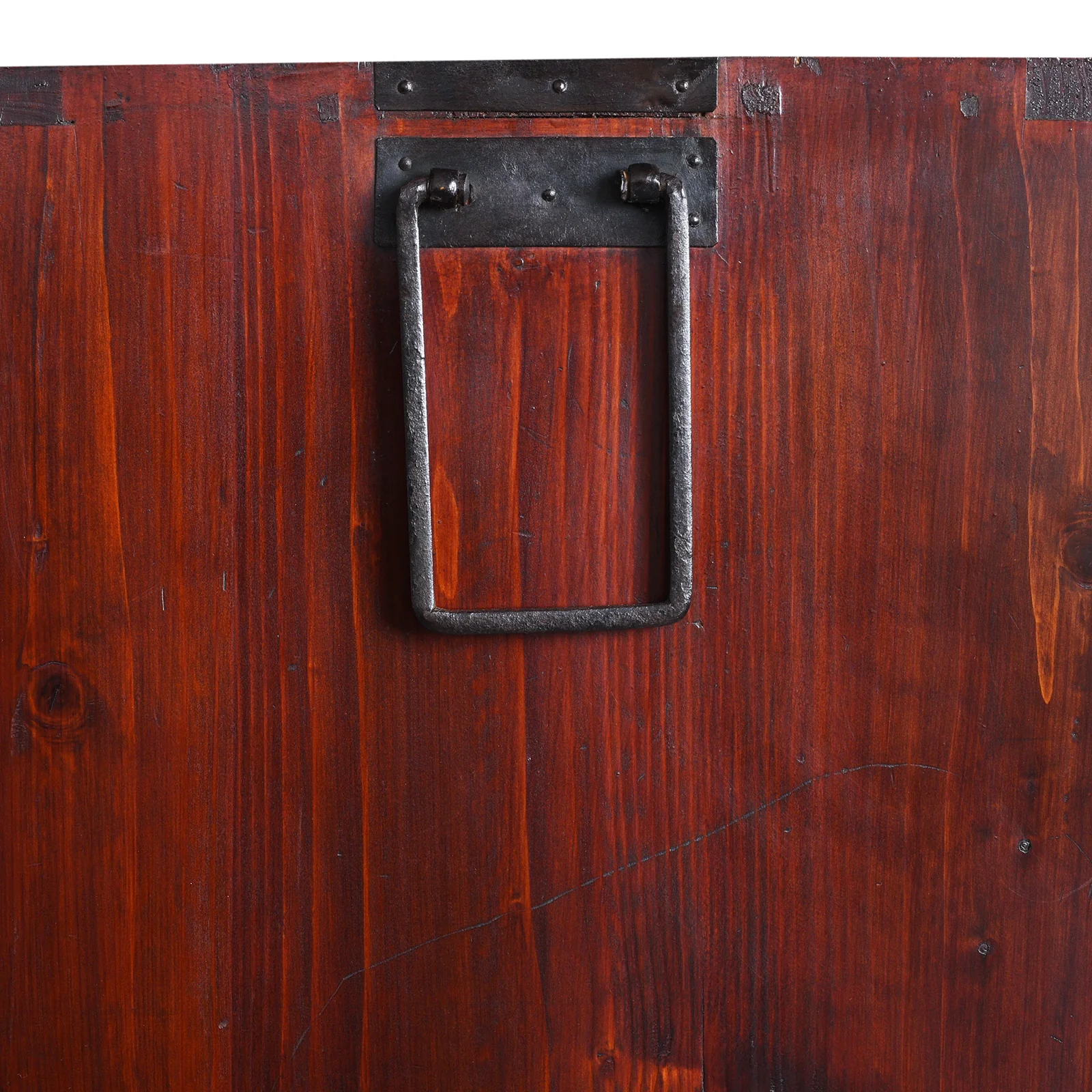
Internally, the drawers reveal pale, finely grained timber—likely paulownia (kiri)—valued for its lightness, resistance to moisture, and suitability for textile storage. Side carry handles further reflect the chest’s original portability, allowing it to be moved or stored as needed.
A closely related example can be found in Japanese Cabinetry: The Art & Craft of Tansu by Jackson & Owen (pp. 193–194), illustrating the enduring appeal and collectability of this form.
- Origin: Nihonmatsu, Japan
- Date: 19th Century, Edo Period
- Materials: Paulownia (kiri) and elm, iron hardware with brass detailing
- Construction: Two-part stacking chest (kasane-dansu)
- Design: Isho-dansu (clothing chest) with four main drawers, smaller drawers, and lower compartment
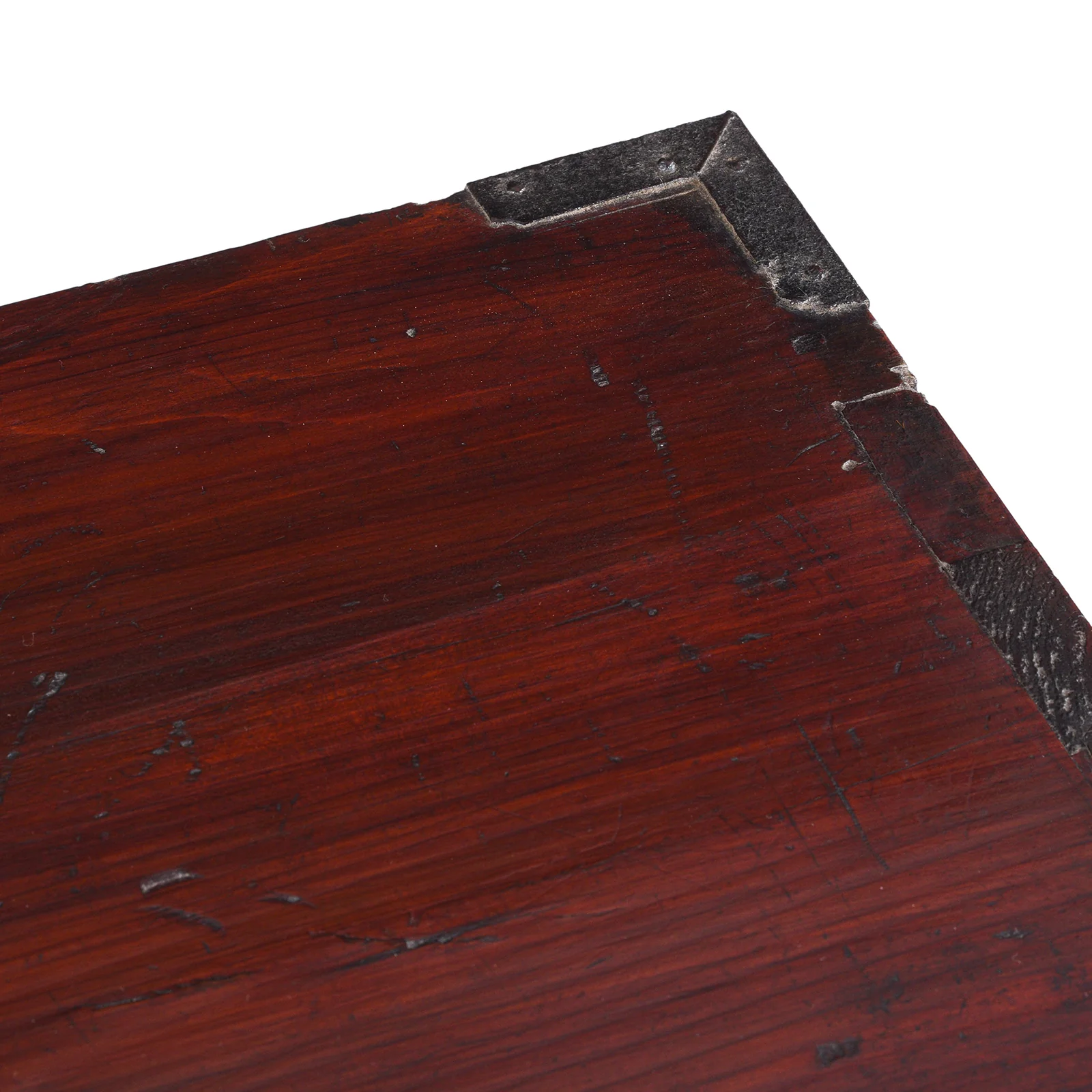
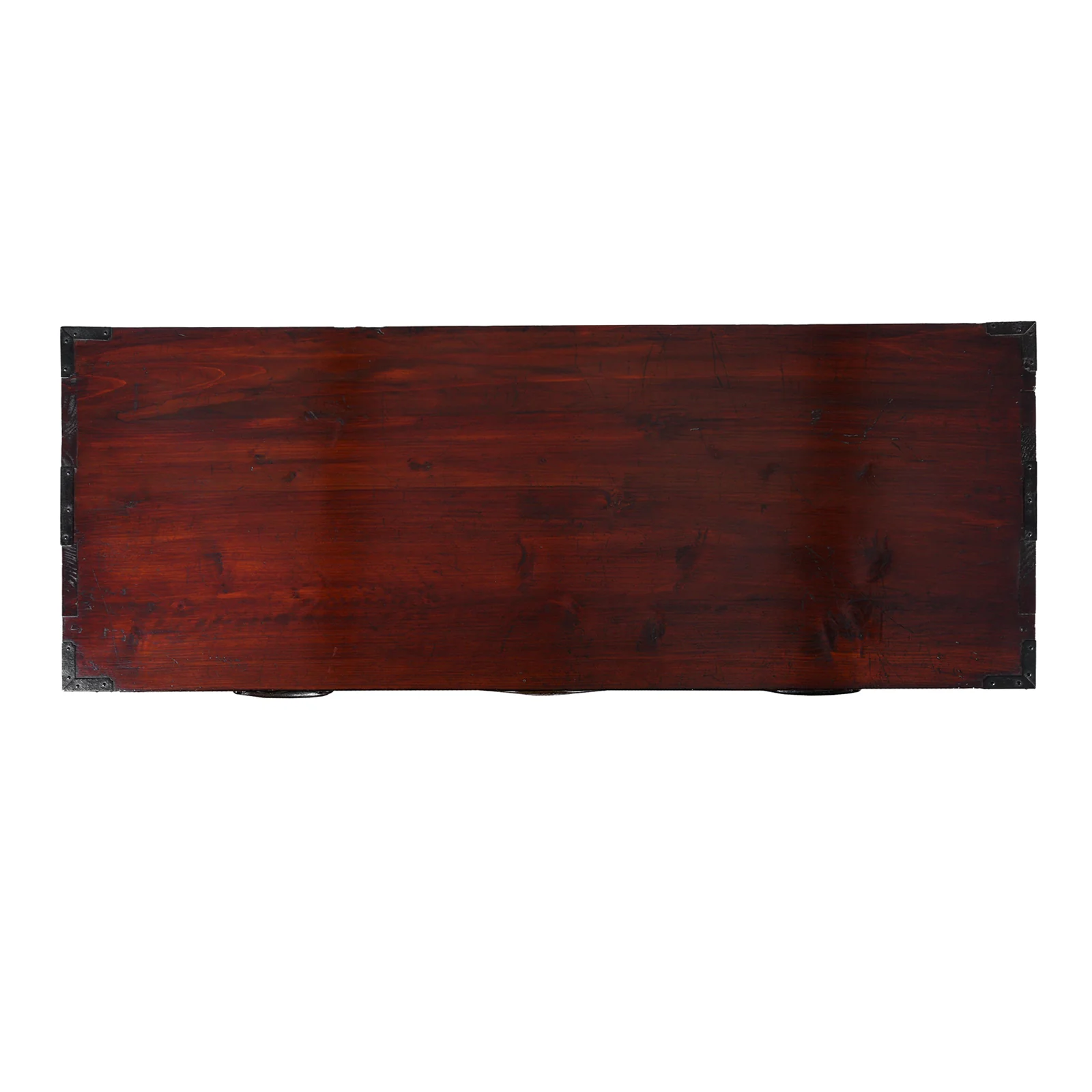
- Hardware: Traditional iron handles, corner brackets, and circular lock plates with decorative brass elements
- Function: Storage of clothing and textiles, often separated seasonally
- Condition: Good antique condition with age-related wear consistent with use
- Dimensions: W115 x D45 x H120 cm
More Images

Kasane Isho Dansu Chest From Nihonmatsu - Edo Era (1603 - 1869)
This striking 19th century Japanese isho kasane-dansu (stacking clothing chest) is a superb example of Edo period (1603 - 1869) craftsmanship, originating from the Nihonmatsu region—renowned for producing some of the largest and most refined tansu. Constructed in two stackable sections, the chest combines practicality with a bold aesthetic, its deep red lacquered finish beautifully contrasted by black iron strapping and distinctive circular lock plates with decorative brass accents.
Designed for the storage of valuable garments, such chests were an essential part of domestic life in Japan, often used to separate seasonal clothing. The clean-lined façade is enriched with traditional iron handles and hardware, while the lower section incorporates a bank of smaller drawers and a compartment door, adding both visual interest and functional versatility. The proportions, materials, and hardware are all characteristic of Nihonmatsu workmanship, where innovative locking systems often replaced traditional key mechanisms.
Internally, the drawers reveal pale, finely grained timber—likely paulownia (kiri)—valued for its lightness, resistance to moisture, and suitability for textile storage. Side carry handles further reflect the chest’s original portability, allowing it to be moved or stored as needed.
A closely related example can be found in Japanese Cabinetry: The Art & Craft of Tansu by Jackson & Owen (pp. 193–194), illustrating the enduring appeal and collectability of this form.
- Origin: Nihonmatsu, Japan
- Date: 19th Century, Edo Period
- Materials: Paulownia (kiri) and elm, iron hardware with brass detailing
- Construction: Two-part stacking chest (kasane-dansu)
- Design: Isho-dansu (clothing chest) with four main drawers, smaller drawers, and lower compartment
- Hardware: Traditional iron handles, corner brackets, and circular lock plates with decorative brass elements
- Function: Storage of clothing and textiles, often separated seasonally
- Condition: Good antique condition with age-related wear consistent with use
- Dimensions: W115 x D45 x H120 cm
Product Information
Product Information
Shipping & Returns
Shipping & Returns
Description
This striking 19th century Japanese isho kasane-dansu (stacking clothing chest) is a superb example of Edo period (1603 - 1869) craftsmanship, originating from the Nihonmatsu region—renowned for producing some of the largest and most refined tansu. Constructed in two stackable sections, the chest combines practicality with a bold aesthetic, its deep red lacquered finish beautifully contrasted by black iron strapping and distinctive circular lock plates with decorative brass accents.
Designed for the storage of valuable garments, such chests were an essential part of domestic life in Japan, often used to separate seasonal clothing. The clean-lined façade is enriched with traditional iron handles and hardware, while the lower section incorporates a bank of smaller drawers and a compartment door, adding both visual interest and functional versatility. The proportions, materials, and hardware are all characteristic of Nihonmatsu workmanship, where innovative locking systems often replaced traditional key mechanisms.
Internally, the drawers reveal pale, finely grained timber—likely paulownia (kiri)—valued for its lightness, resistance to moisture, and suitability for textile storage. Side carry handles further reflect the chest’s original portability, allowing it to be moved or stored as needed.
A closely related example can be found in Japanese Cabinetry: The Art & Craft of Tansu by Jackson & Owen (pp. 193–194), illustrating the enduring appeal and collectability of this form.
- Origin: Nihonmatsu, Japan
- Date: 19th Century, Edo Period
- Materials: Paulownia (kiri) and elm, iron hardware with brass detailing
- Construction: Two-part stacking chest (kasane-dansu)
- Design: Isho-dansu (clothing chest) with four main drawers, smaller drawers, and lower compartment
- Hardware: Traditional iron handles, corner brackets, and circular lock plates with decorative brass elements
- Function: Storage of clothing and textiles, often separated seasonally
- Condition: Good antique condition with age-related wear consistent with use
- Dimensions: W115 x D45 x H120 cm