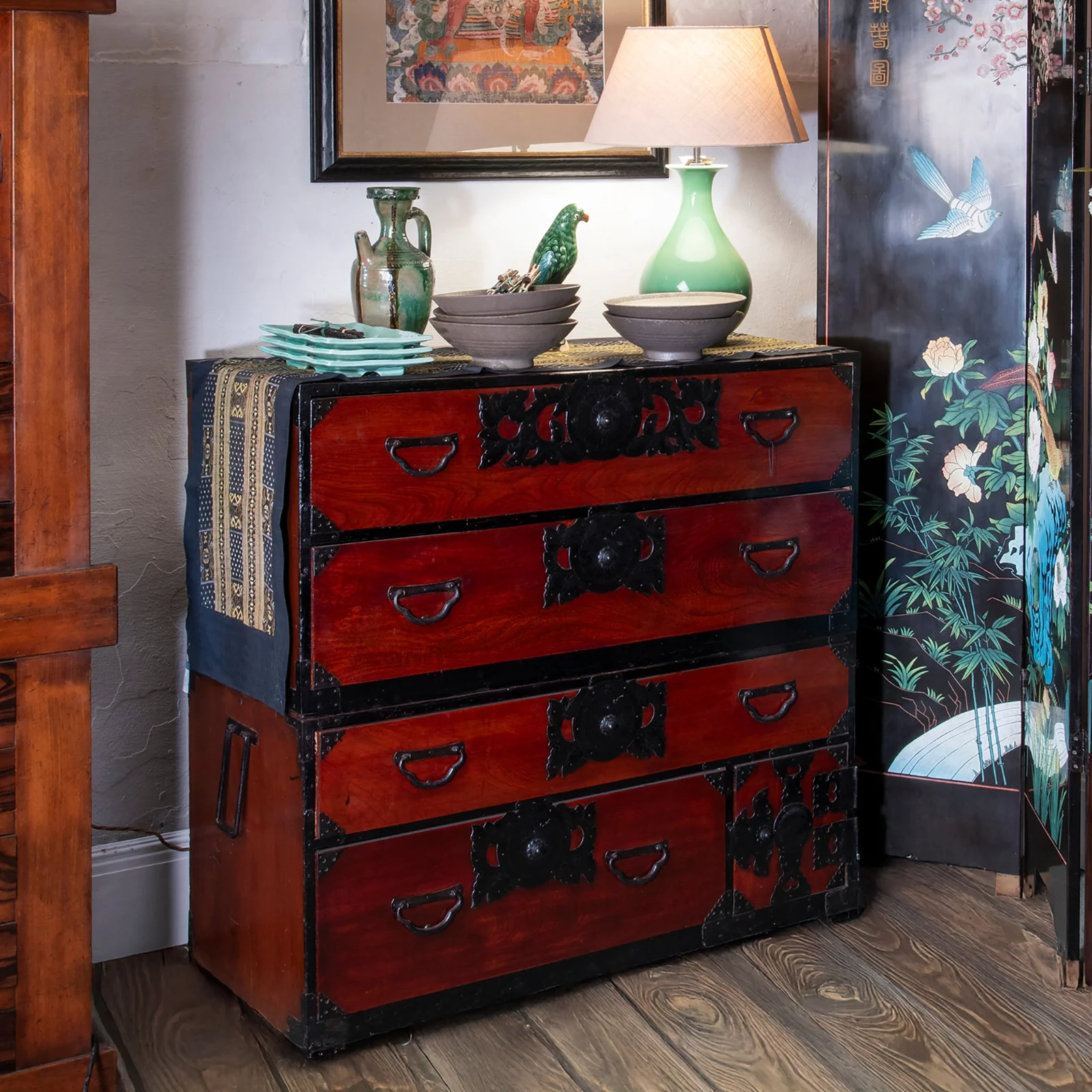
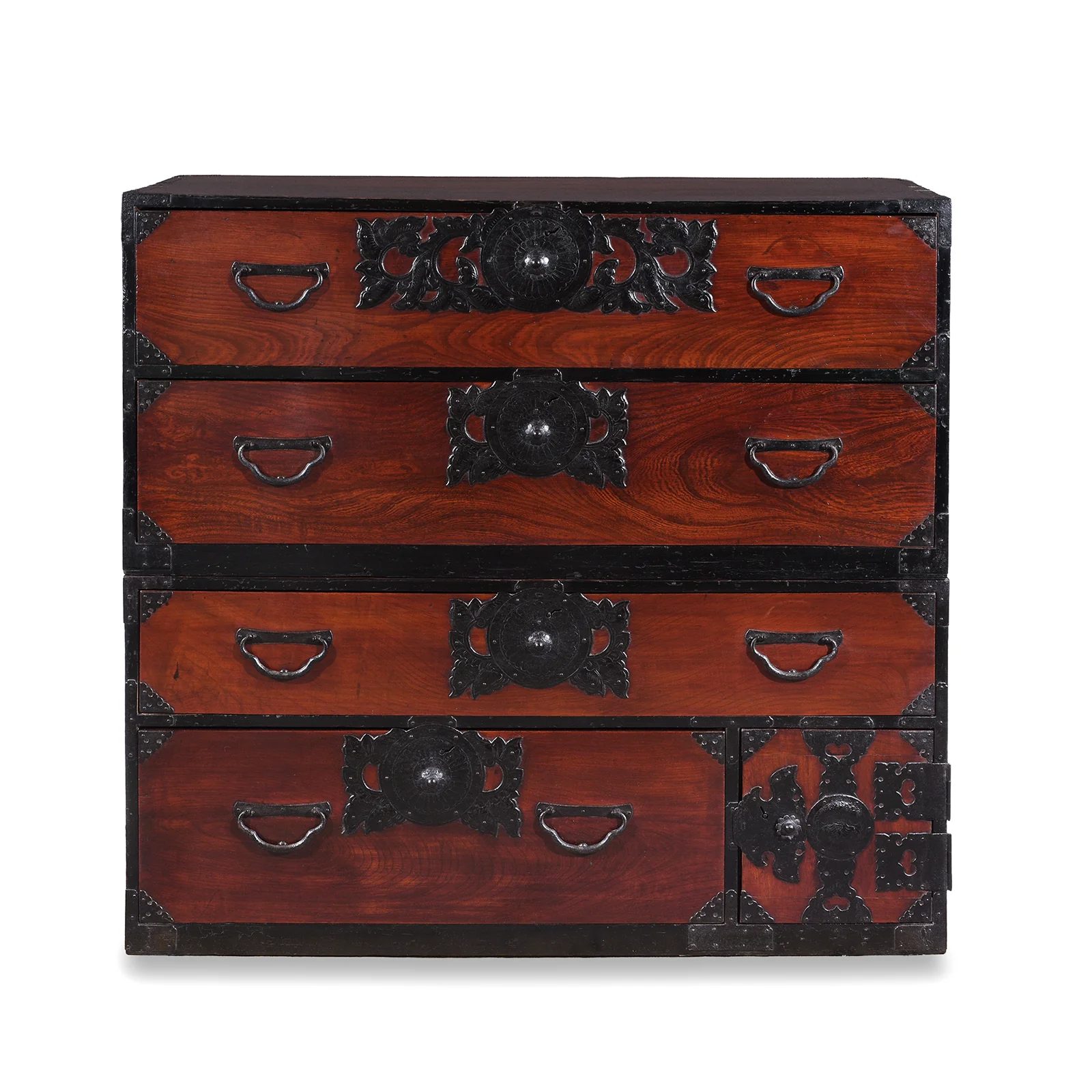
Isho Kasane Dansu from Sendai, Japan - 19th Century
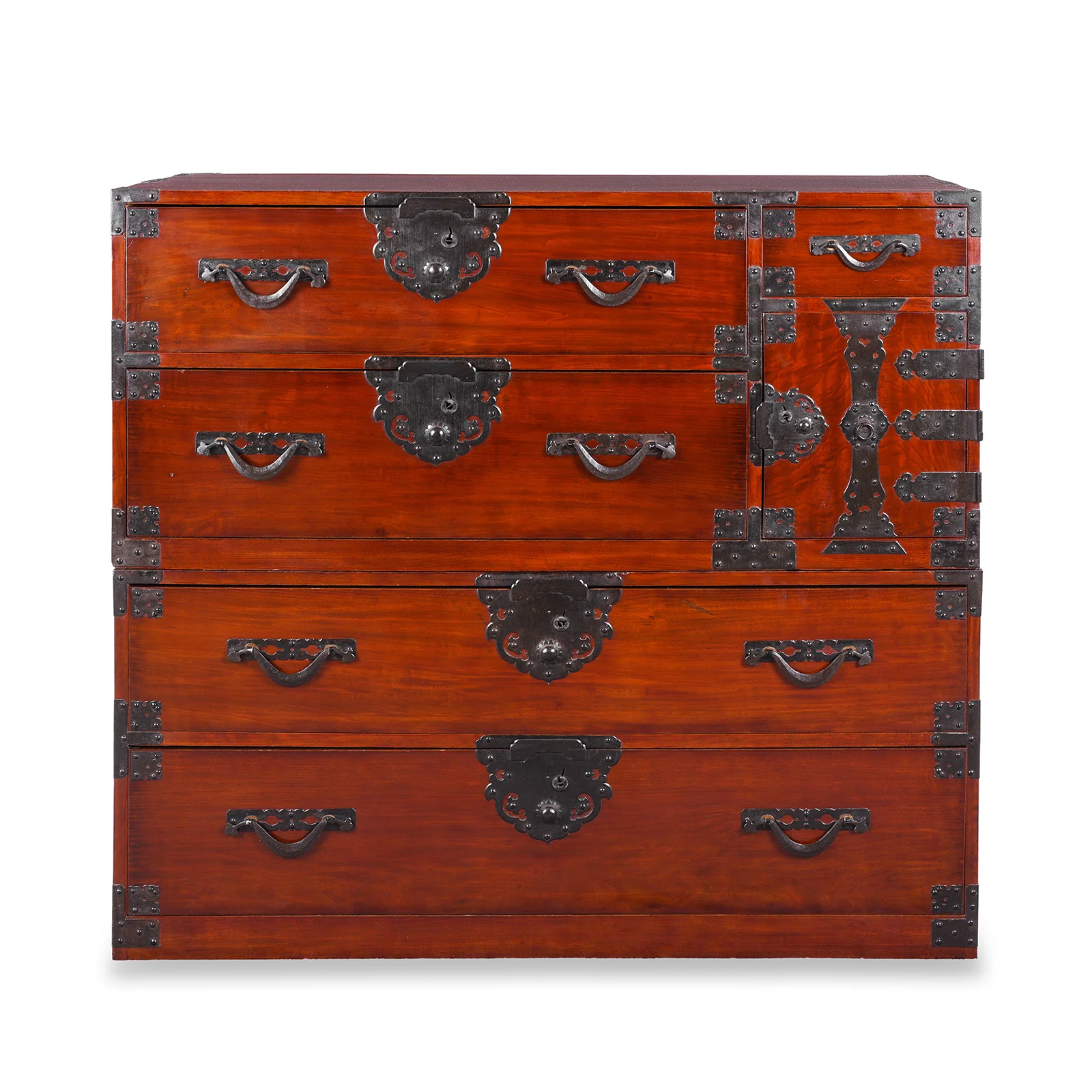
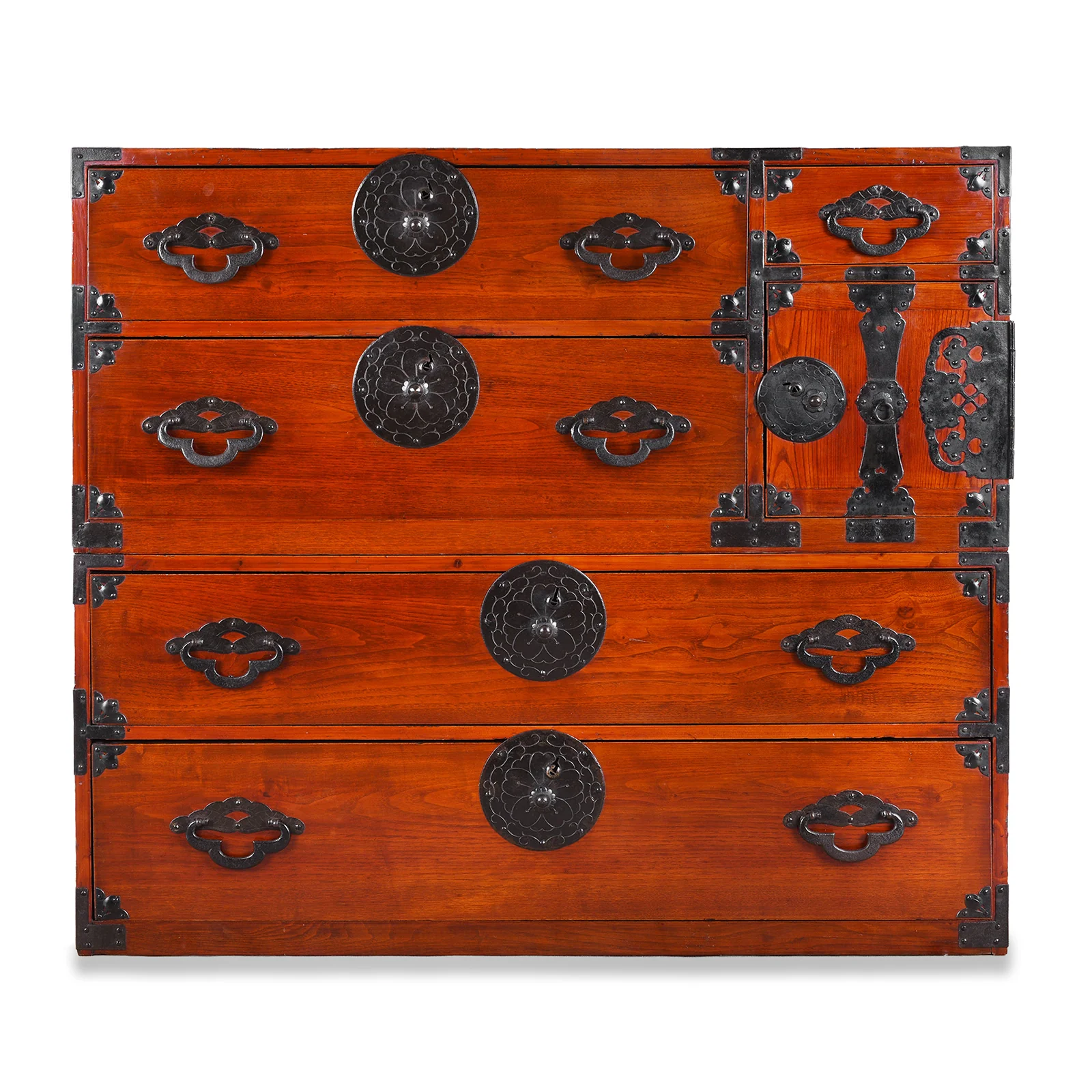
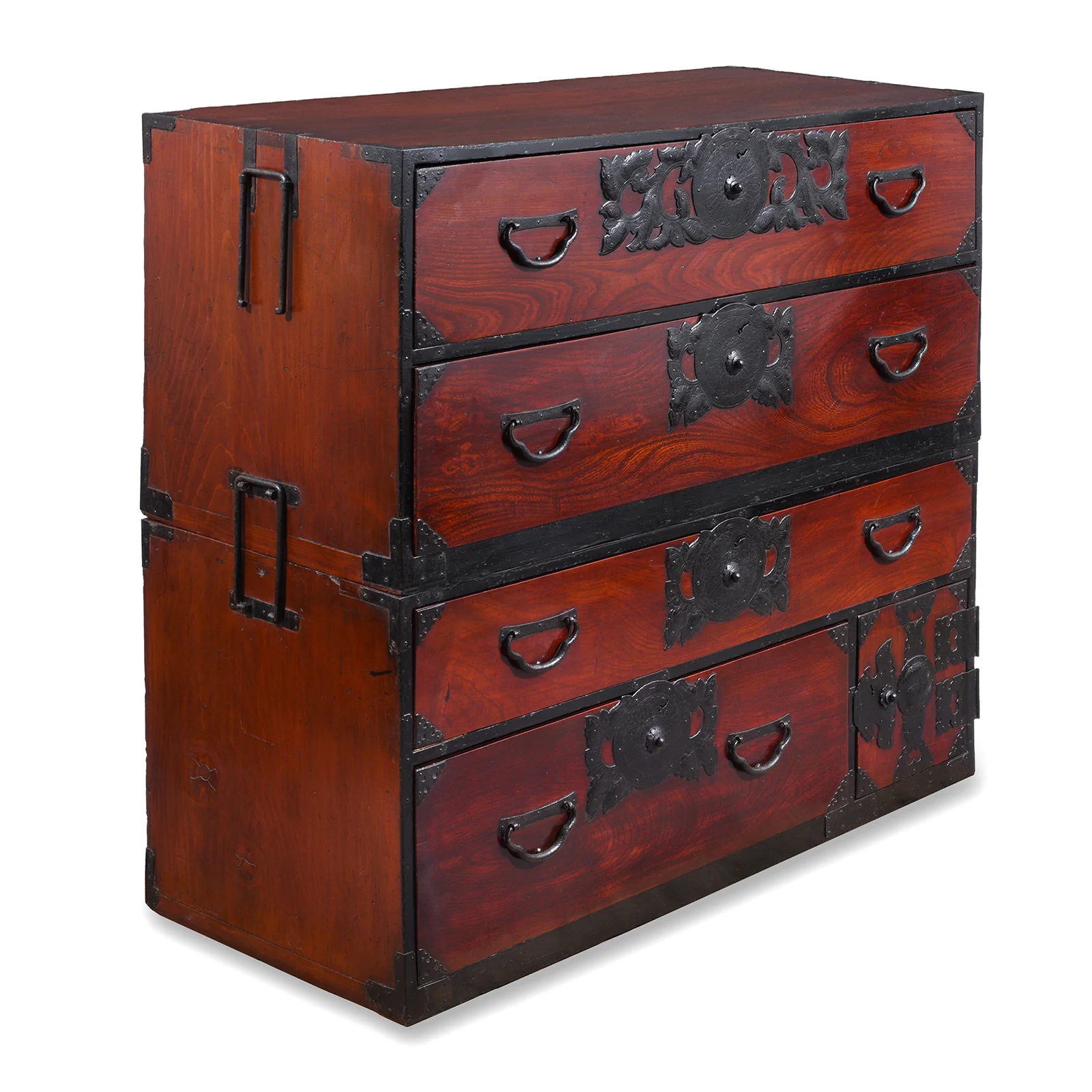
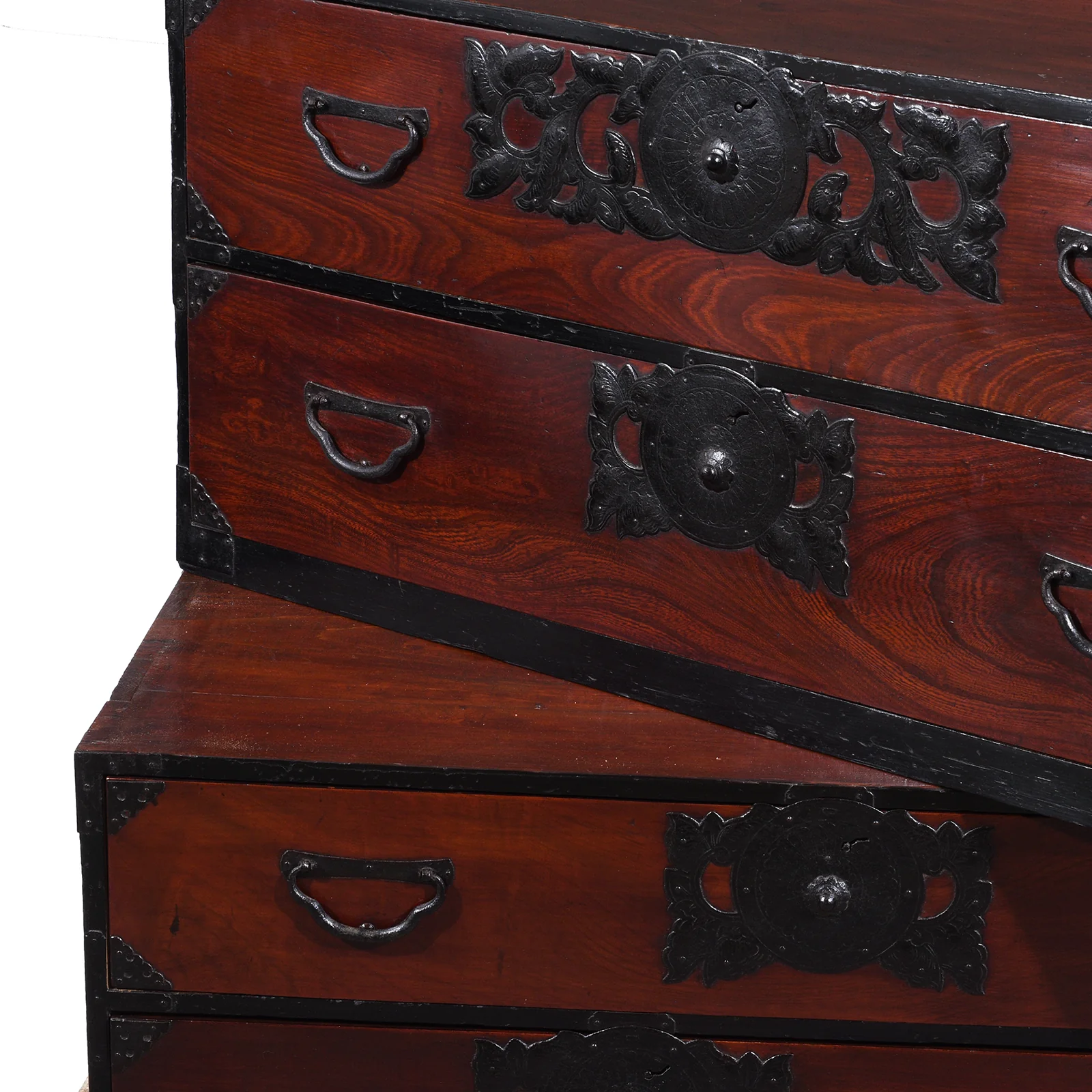
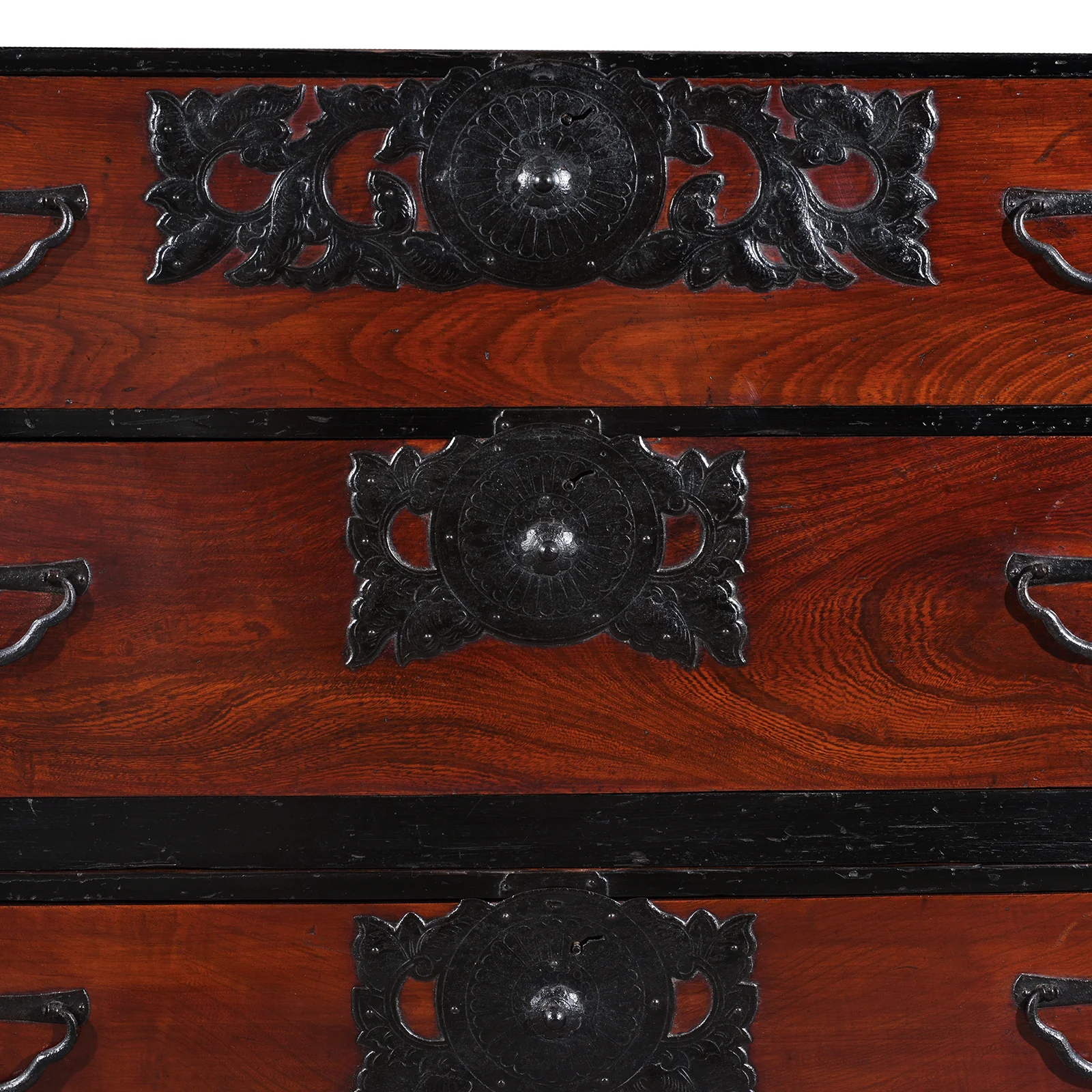
This isho kasane dansu is characteristic of Sendai clothing tansu made in the 1880's (late Meji period 1868-1912). Sendai was renowned for its refined tansu-making tradition. This style of tansu is defined by its prominent karakusa (literally translating to 'Chinese plants') arabesque motif depicting chrysanthemum flowers. This style of Sendai tansu was produced between 1887 and 1915. This particular piece being relatively early period of production.
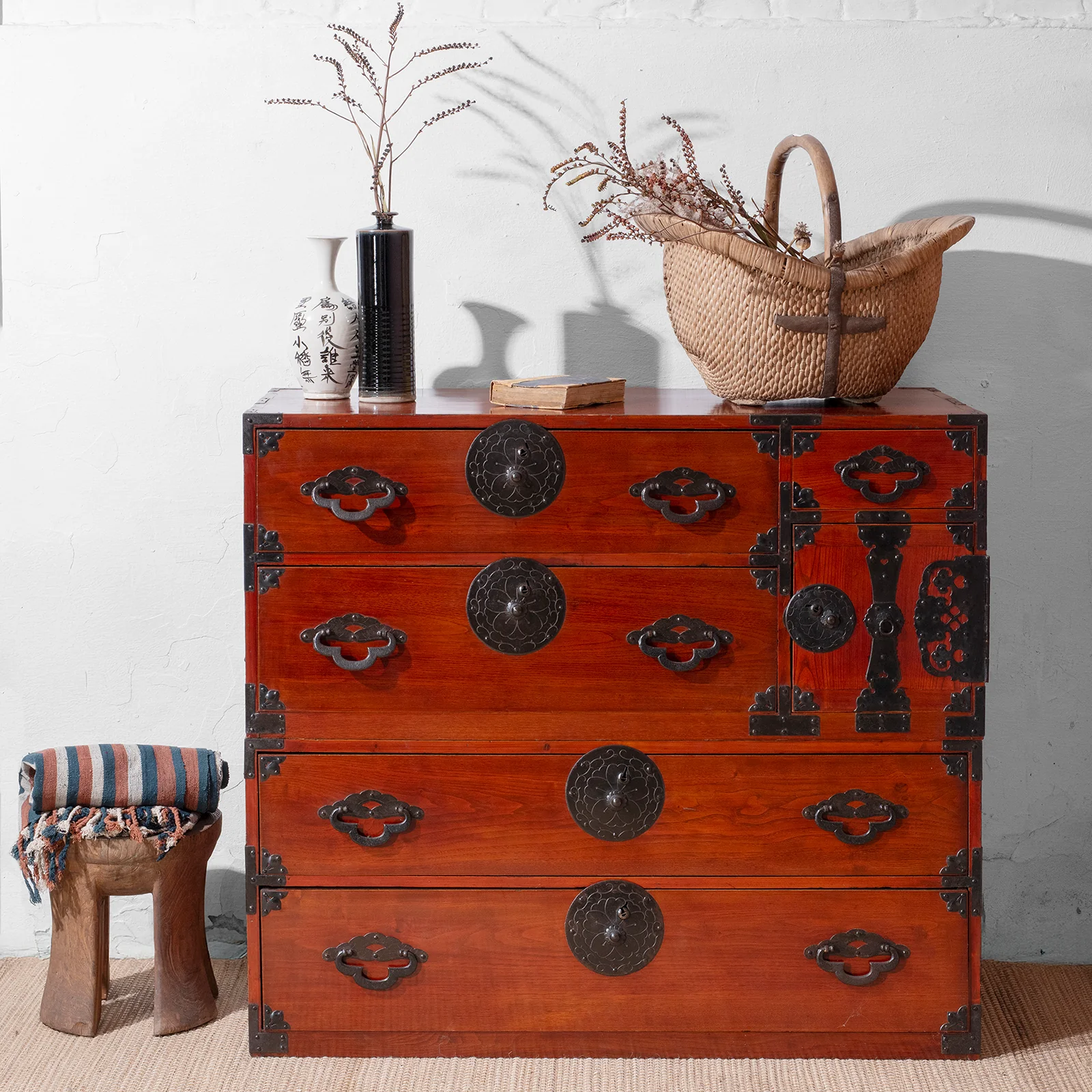
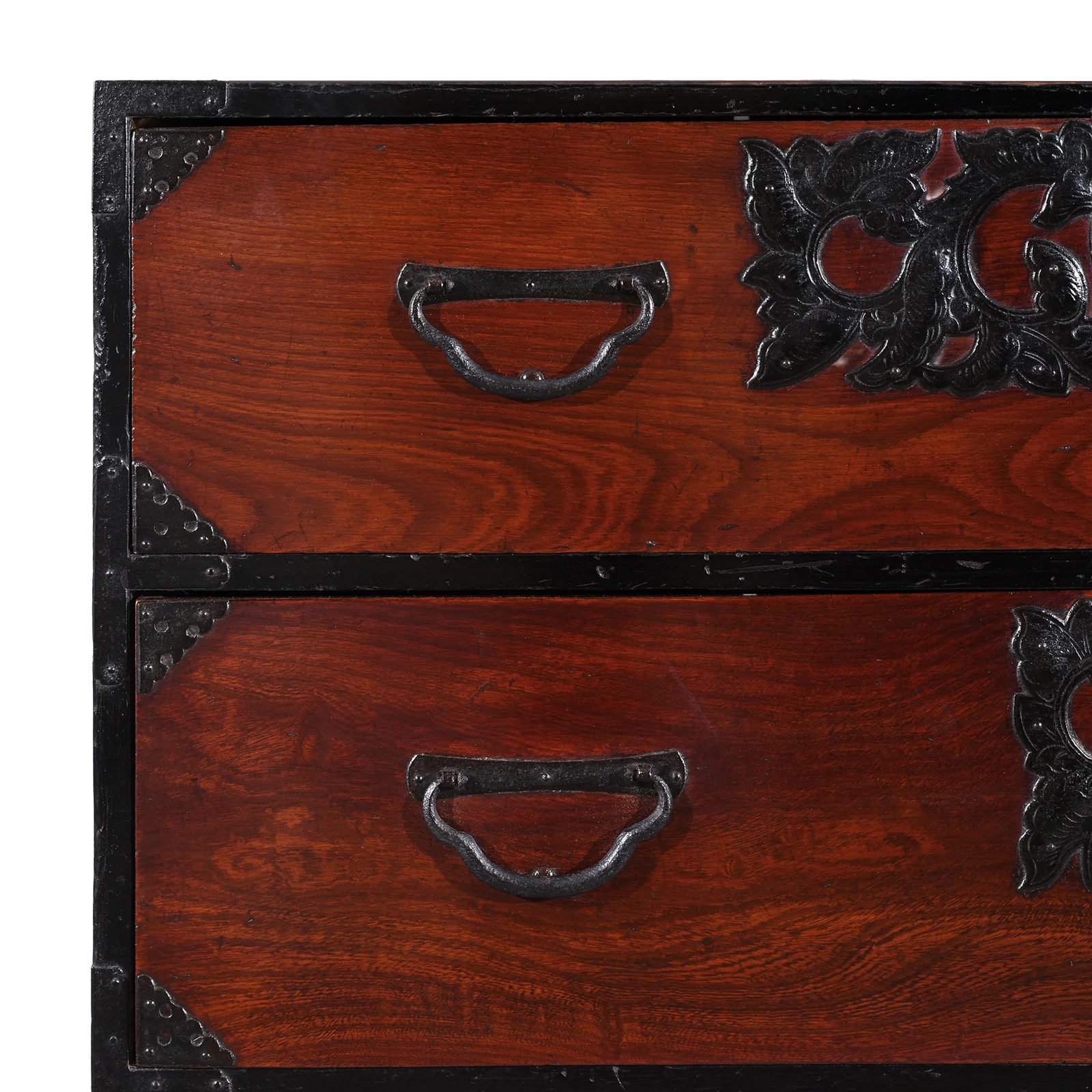
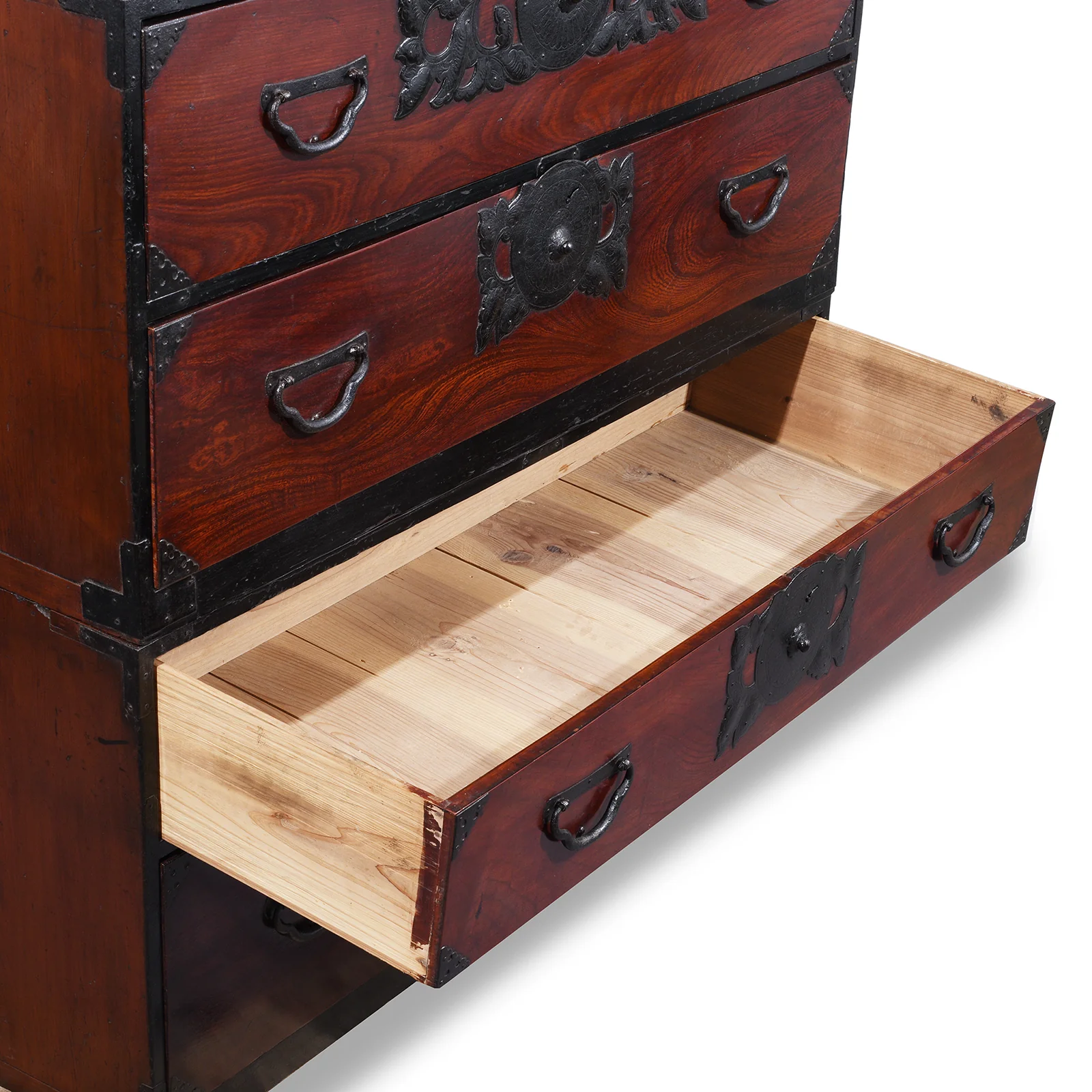
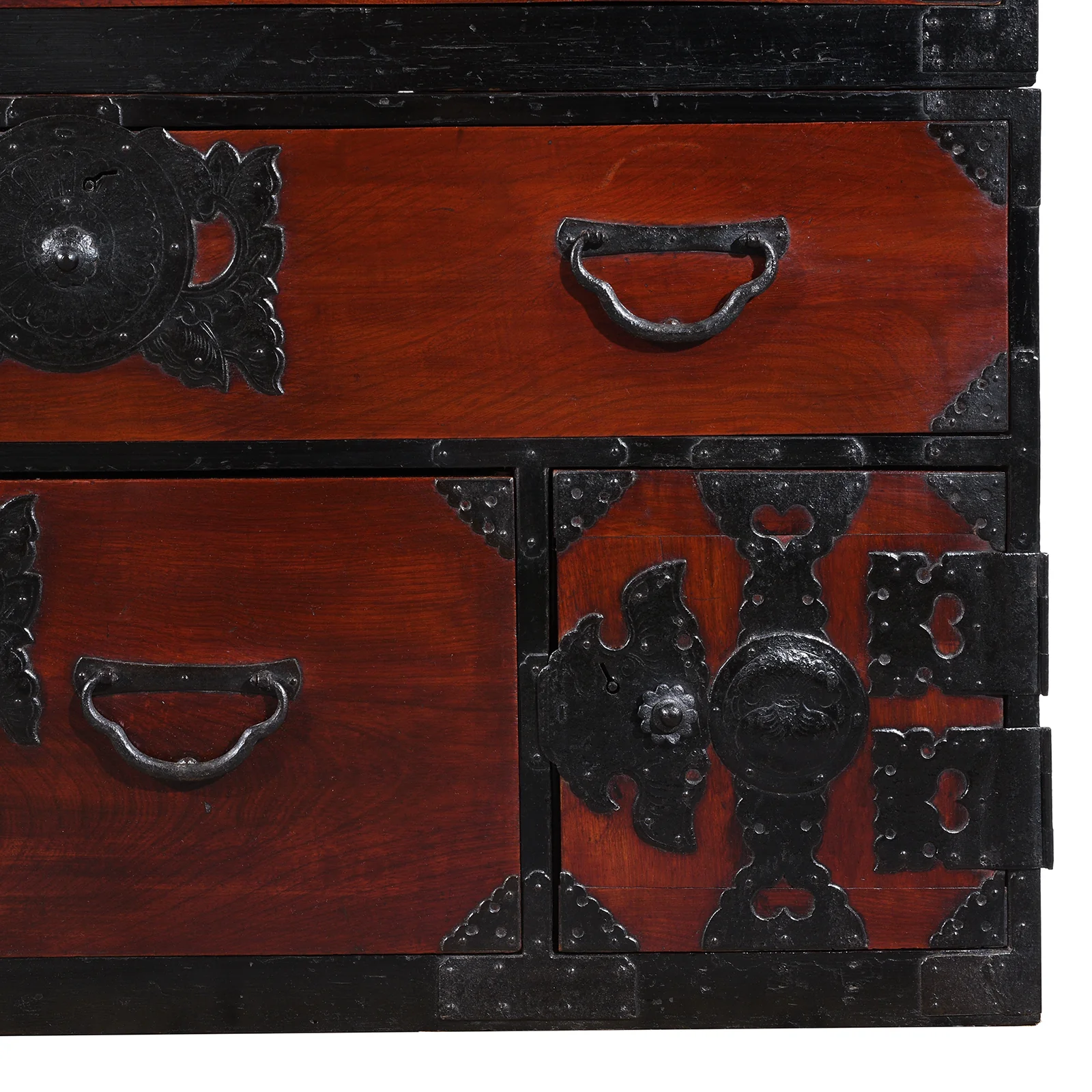
This tansu has vermillion kijiro urushi lacquered keyaki (red elm) drawer fronts which give the tansu a reddish tone. The casing is cryptomeria wood. They mokko handles are sand cast and all hardware is black painted iron.
Designed in a stacking, two-section form, this chest reflects the practical elegance of Japanese domestic life - where separate chests were used for summer and winter clothing, with one stored away when not in season. The rich grain of the wood is beautifully contrasted by masterfully crafted ironwork, a hallmark of Sendai craftsmanship.
The ornate fittings are decorated with chrysanthemum motifs, a symbol of longevity and imperial association in Japanese art. This style of elaborate metalwork emerged in the mid-Meiji period following the 1876 ban on wearing swords, when Sendai's famed swordsmiths turned their skills to producing exceptional tansu hardware. The fittings' flowing, organic shapes - eschewing rigid lines - speak to the artistry and heritage of this celebrated regional style.
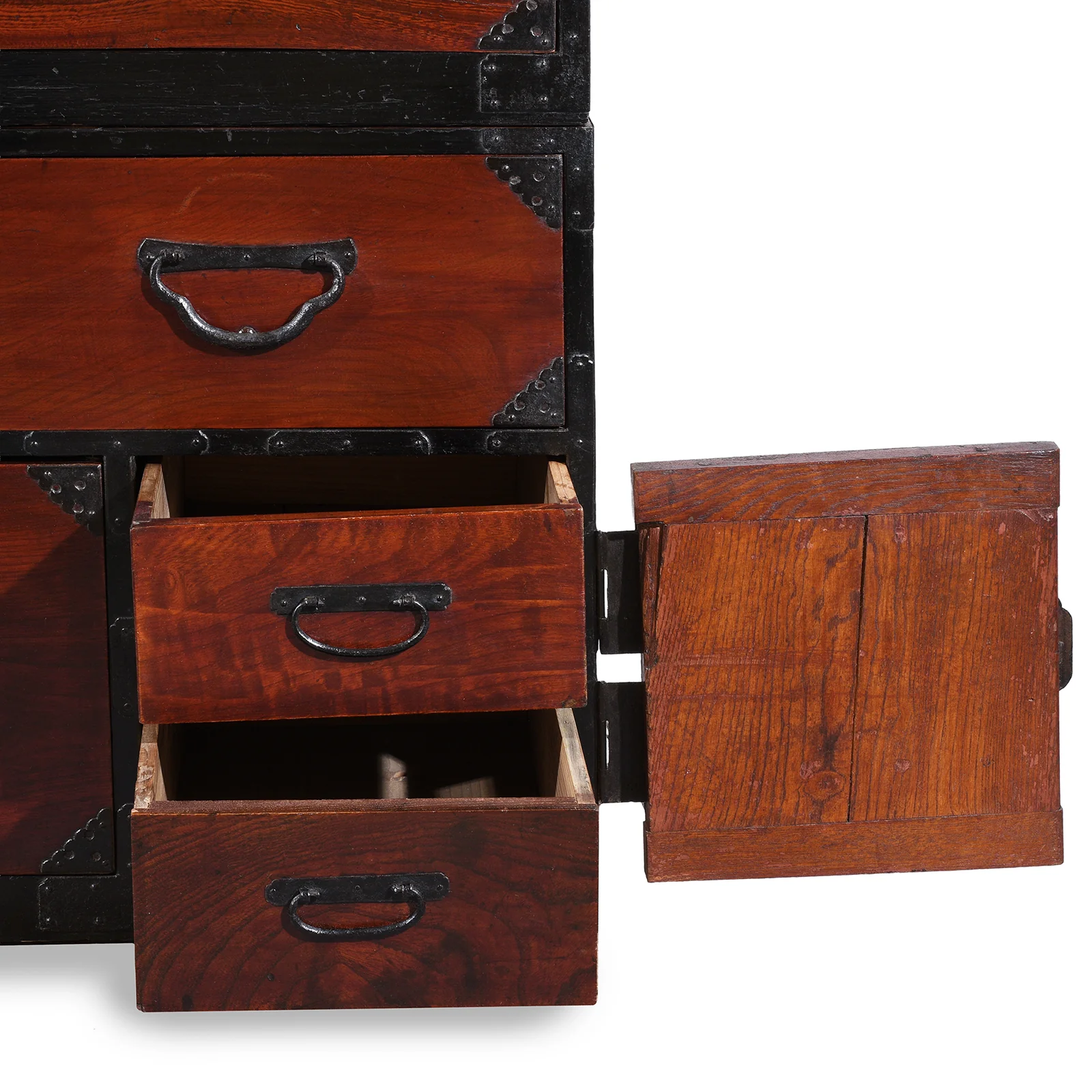
This piece has four large drawers and two smaller drawers behind a hinged door.
- Origin: Japan, Sendai province
- Date: 1896 - 1900 (Meiji period)
- Materials: Keyaki (zelkova) wood drawer fronts and cryptomeria wood frame. hand-forged iron fittings
- Features: Stacking two-section design, chrysanthemum motif ironwork, traditional clothing chest form
- Condition: Restored in our workshops - Excellent antique condition with age-related patina
- Dimensions: W108 x D45 x H100 cm
References:
For a similar example, see Tansu by T & K Heineken, Figure 145 which is in the Heineken Collection.
For other examples and further reading see Traditional Japanese Chests: A Definitive Guide by Kazuko Koizumi, Fig 27.
Original: $4,597.90
-65%$4,597.90
$1,609.26More Images

Isho Kasane Dansu from Sendai, Japan - 19th Century
This isho kasane dansu is characteristic of Sendai clothing tansu made in the 1880's (late Meji period 1868-1912). Sendai was renowned for its refined tansu-making tradition. This style of tansu is defined by its prominent karakusa (literally translating to 'Chinese plants') arabesque motif depicting chrysanthemum flowers. This style of Sendai tansu was produced between 1887 and 1915. This particular piece being relatively early period of production.
This tansu has vermillion kijiro urushi lacquered keyaki (red elm) drawer fronts which give the tansu a reddish tone. The casing is cryptomeria wood. They mokko handles are sand cast and all hardware is black painted iron.
Designed in a stacking, two-section form, this chest reflects the practical elegance of Japanese domestic life - where separate chests were used for summer and winter clothing, with one stored away when not in season. The rich grain of the wood is beautifully contrasted by masterfully crafted ironwork, a hallmark of Sendai craftsmanship.
The ornate fittings are decorated with chrysanthemum motifs, a symbol of longevity and imperial association in Japanese art. This style of elaborate metalwork emerged in the mid-Meiji period following the 1876 ban on wearing swords, when Sendai's famed swordsmiths turned their skills to producing exceptional tansu hardware. The fittings' flowing, organic shapes - eschewing rigid lines - speak to the artistry and heritage of this celebrated regional style.
This piece has four large drawers and two smaller drawers behind a hinged door.
- Origin: Japan, Sendai province
- Date: 1896 - 1900 (Meiji period)
- Materials: Keyaki (zelkova) wood drawer fronts and cryptomeria wood frame. hand-forged iron fittings
- Features: Stacking two-section design, chrysanthemum motif ironwork, traditional clothing chest form
- Condition: Restored in our workshops - Excellent antique condition with age-related patina
- Dimensions: W108 x D45 x H100 cm
References:
For a similar example, see Tansu by T & K Heineken, Figure 145 which is in the Heineken Collection.
For other examples and further reading see Traditional Japanese Chests: A Definitive Guide by Kazuko Koizumi, Fig 27.
Product Information
Product Information
Shipping & Returns
Shipping & Returns
Description
This isho kasane dansu is characteristic of Sendai clothing tansu made in the 1880's (late Meji period 1868-1912). Sendai was renowned for its refined tansu-making tradition. This style of tansu is defined by its prominent karakusa (literally translating to 'Chinese plants') arabesque motif depicting chrysanthemum flowers. This style of Sendai tansu was produced between 1887 and 1915. This particular piece being relatively early period of production.
This tansu has vermillion kijiro urushi lacquered keyaki (red elm) drawer fronts which give the tansu a reddish tone. The casing is cryptomeria wood. They mokko handles are sand cast and all hardware is black painted iron.
Designed in a stacking, two-section form, this chest reflects the practical elegance of Japanese domestic life - where separate chests were used for summer and winter clothing, with one stored away when not in season. The rich grain of the wood is beautifully contrasted by masterfully crafted ironwork, a hallmark of Sendai craftsmanship.
The ornate fittings are decorated with chrysanthemum motifs, a symbol of longevity and imperial association in Japanese art. This style of elaborate metalwork emerged in the mid-Meiji period following the 1876 ban on wearing swords, when Sendai's famed swordsmiths turned their skills to producing exceptional tansu hardware. The fittings' flowing, organic shapes - eschewing rigid lines - speak to the artistry and heritage of this celebrated regional style.
This piece has four large drawers and two smaller drawers behind a hinged door.
- Origin: Japan, Sendai province
- Date: 1896 - 1900 (Meiji period)
- Materials: Keyaki (zelkova) wood drawer fronts and cryptomeria wood frame. hand-forged iron fittings
- Features: Stacking two-section design, chrysanthemum motif ironwork, traditional clothing chest form
- Condition: Restored in our workshops - Excellent antique condition with age-related patina
- Dimensions: W108 x D45 x H100 cm
References:
For a similar example, see Tansu by T & K Heineken, Figure 145 which is in the Heineken Collection.
For other examples and further reading see Traditional Japanese Chests: A Definitive Guide by Kazuko Koizumi, Fig 27.