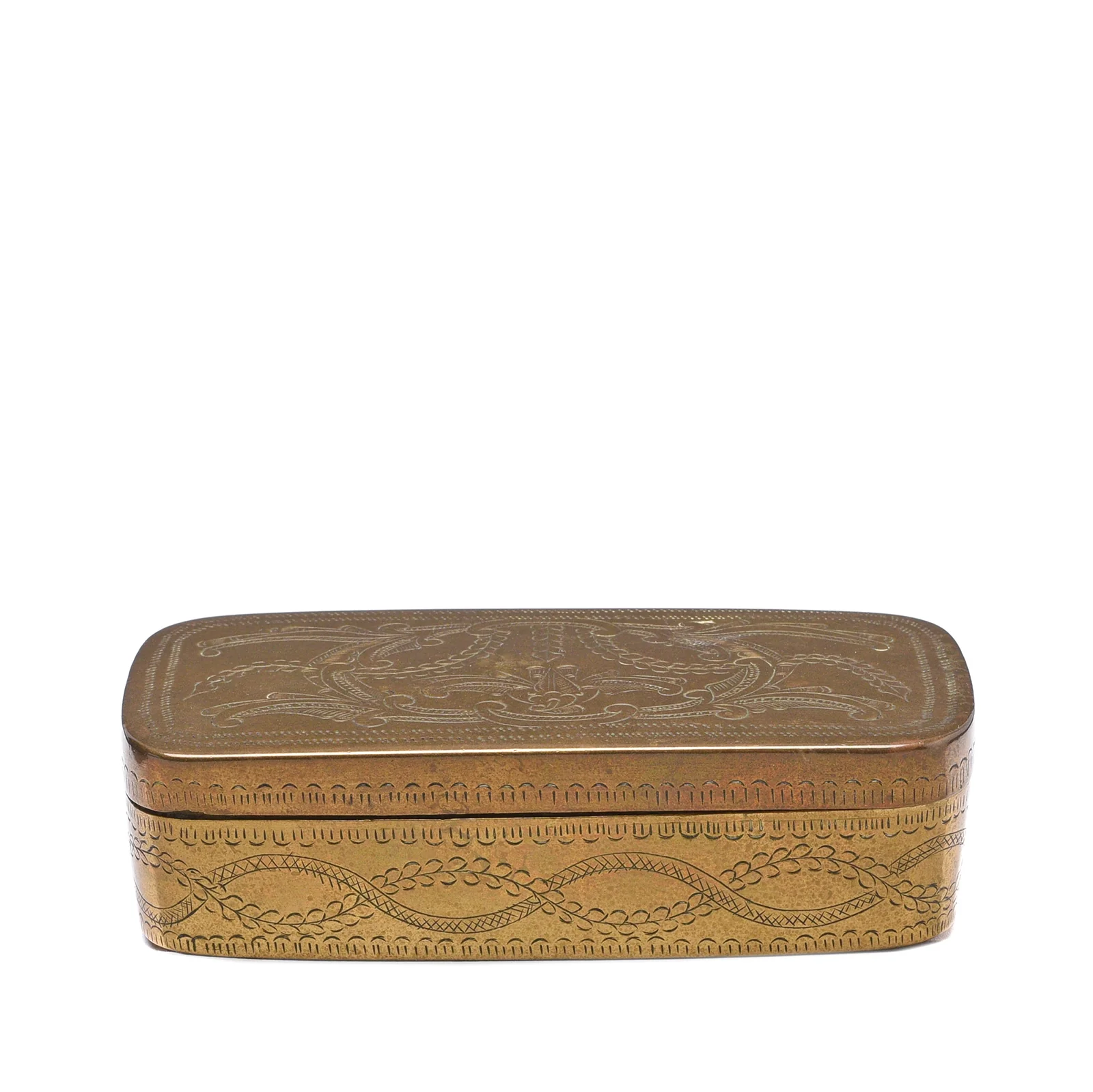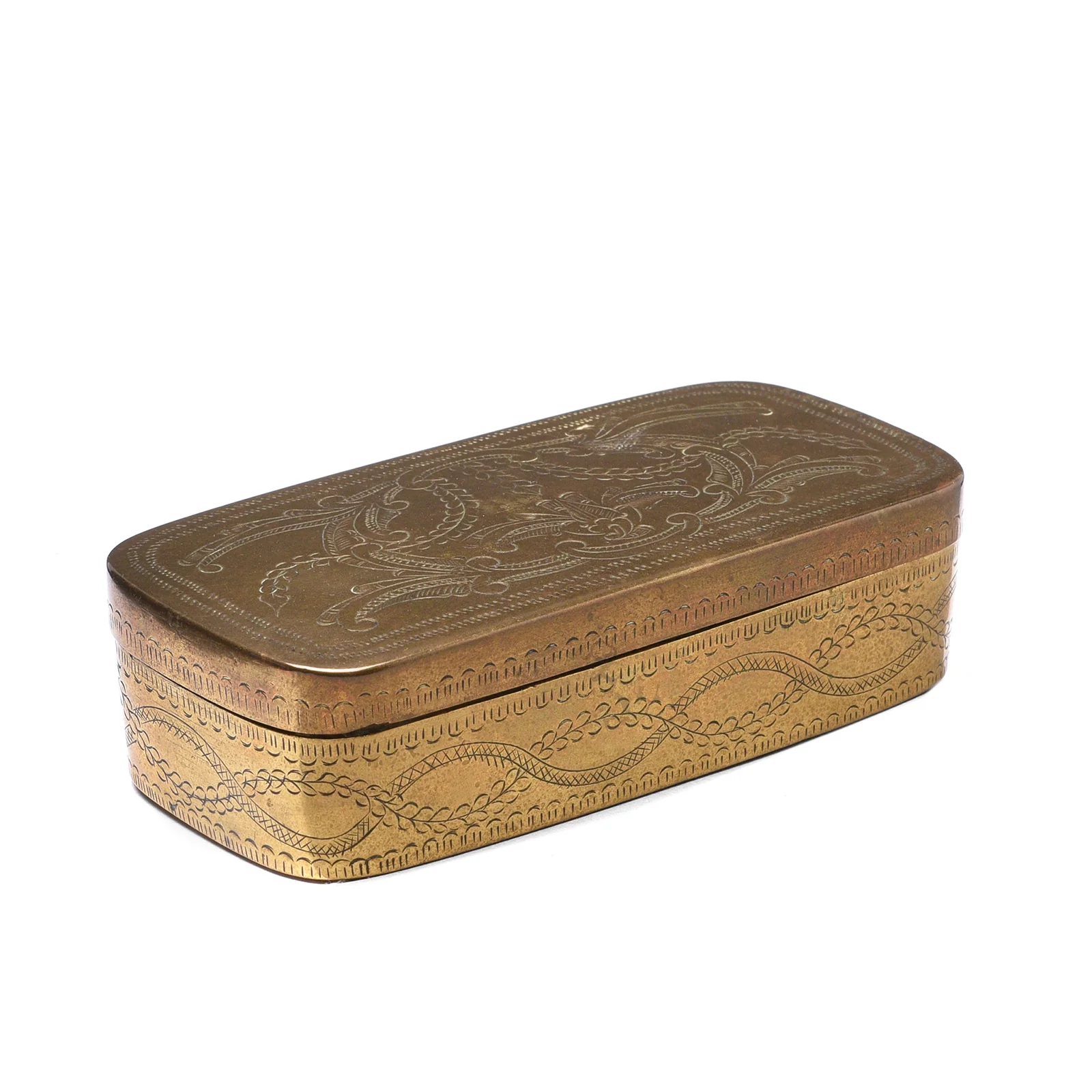

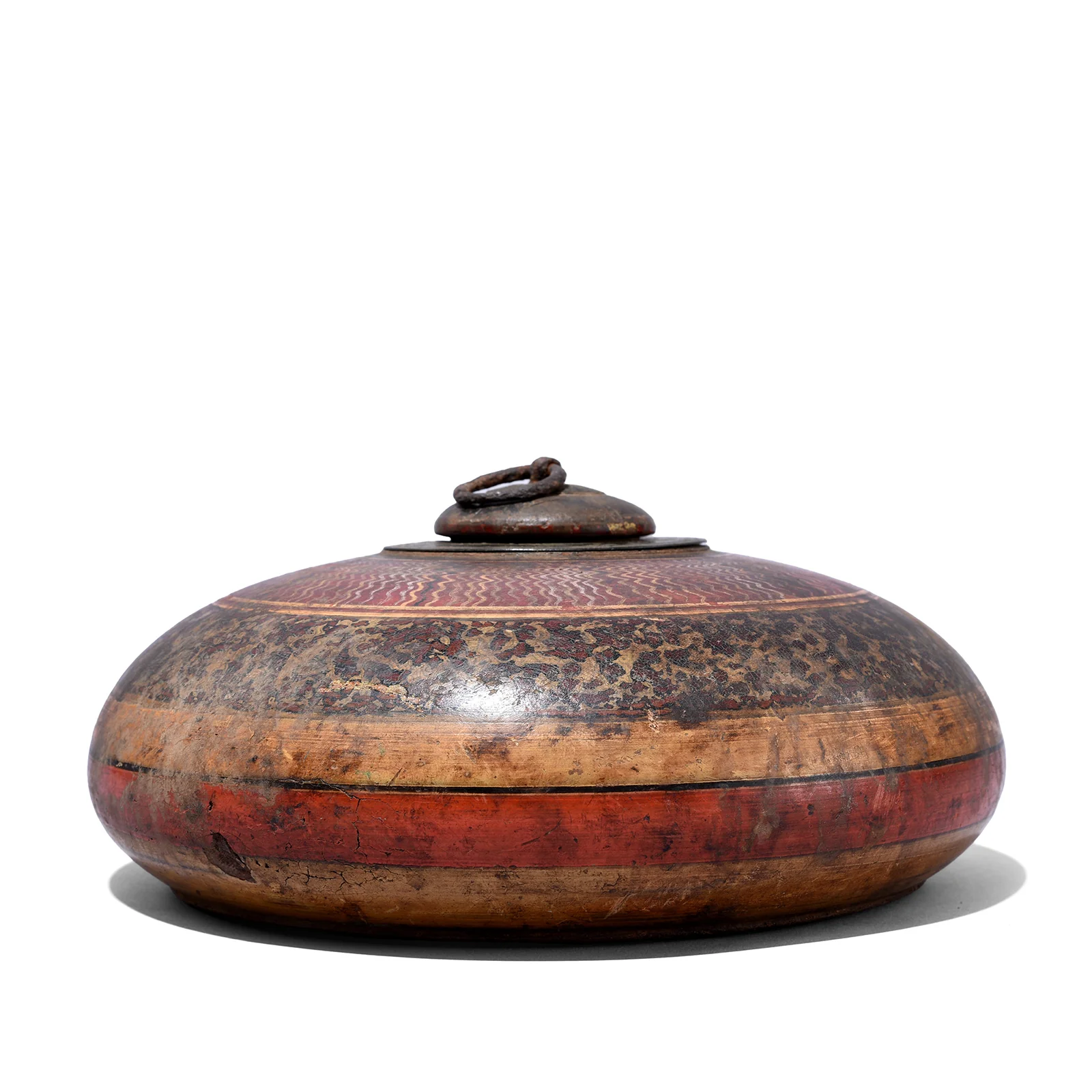
Lacquered Tobacco Box From Rajasthan - Ca 1910
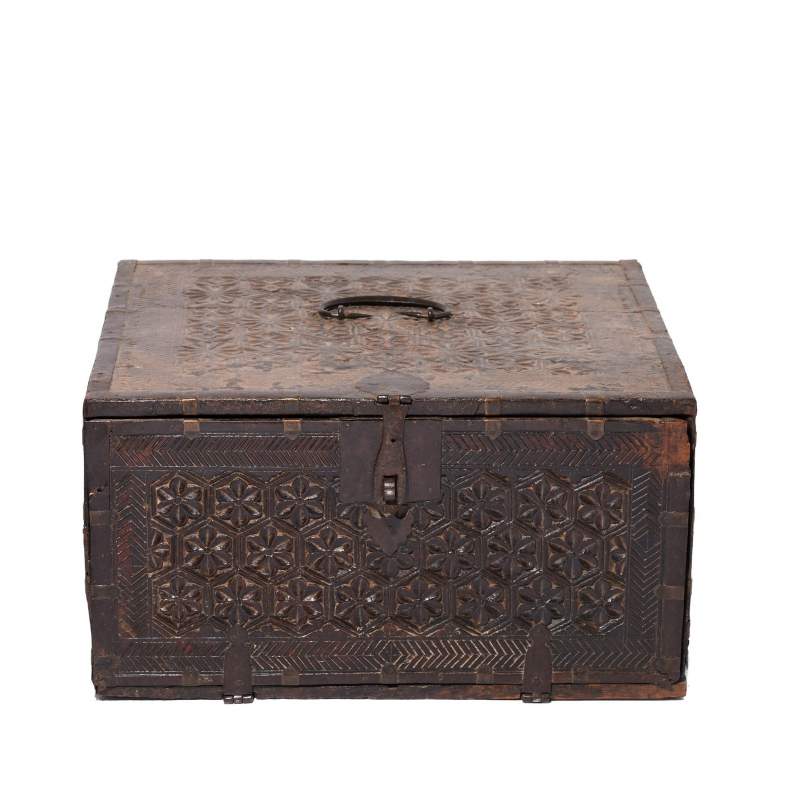
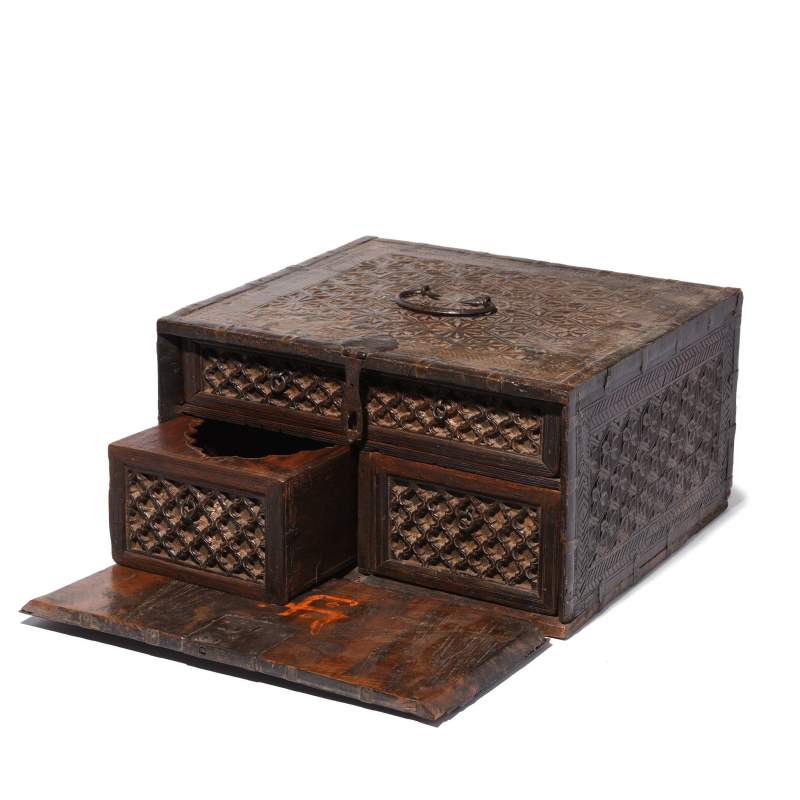
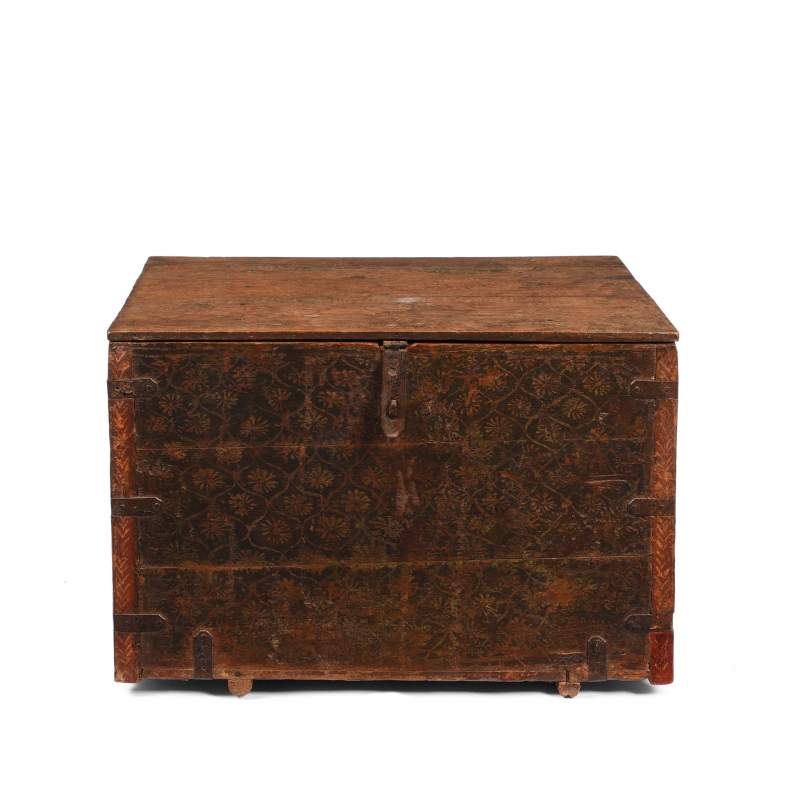
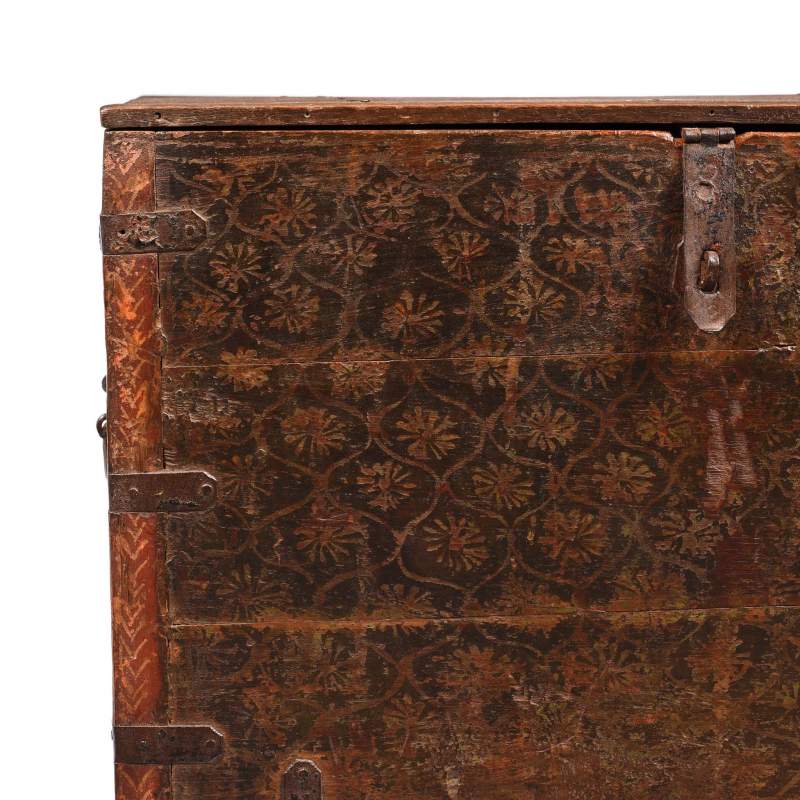
These tobacco pots were used for storing tobacco and opium and have become difficult to find. They were sealed to keep the tobacco and opium sealed from moisture and were often highly valued and well cared for. Opium boxes like these are real collectors' pieces.
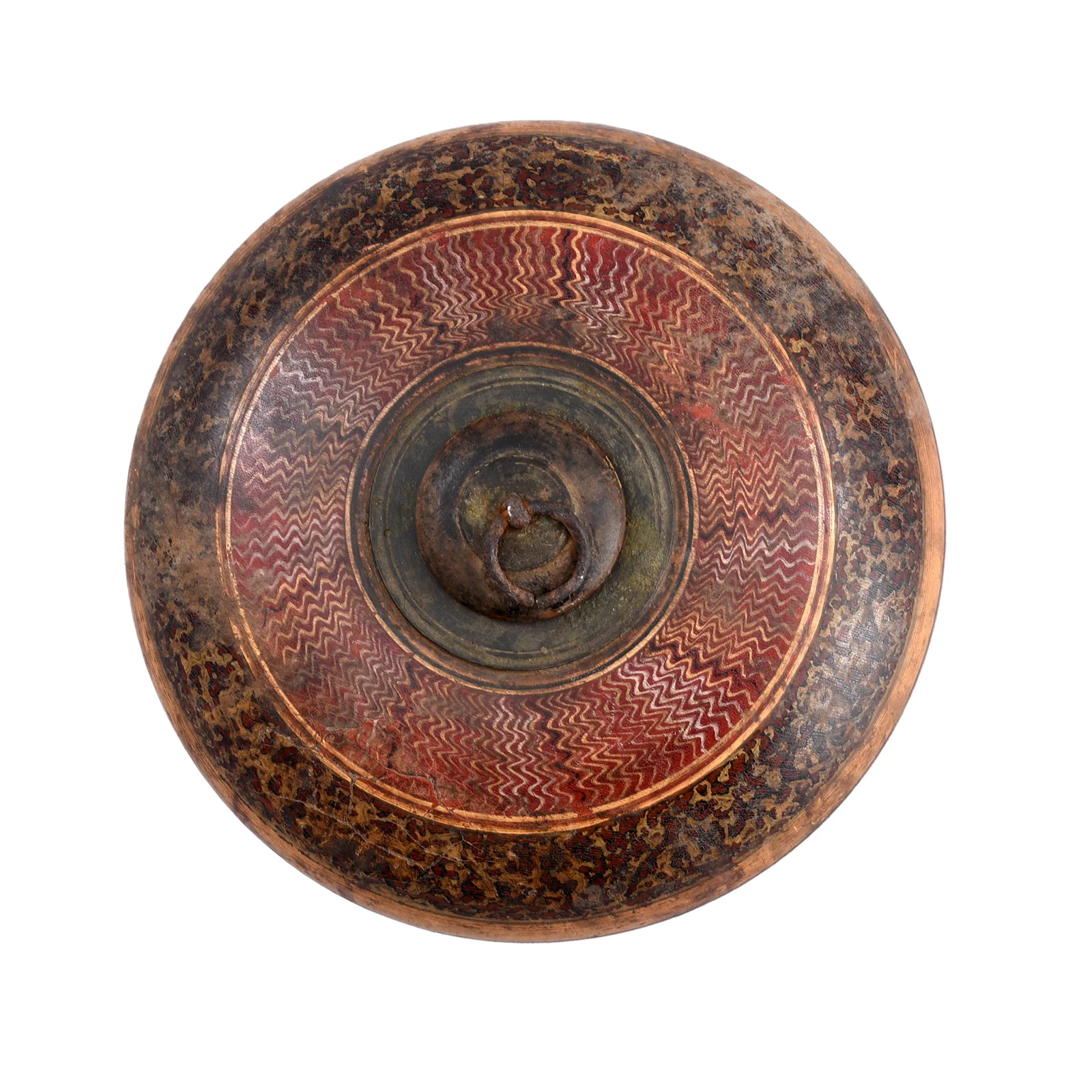
Two-colour spotted pots like these are from the border area of Rajasthan and neighbouring Sindh. The practice of lacquering came from Sindh many Sindhi people migrated to Rajasthan and Kutch bringing tradition with them.
This piece dates to the beginning of the 20th century and an intricate lacquer design has been lovingly applied by hand. These pots are found in Rajasthan & Gujarat and are made from a single piece of wood. The glossy polished surface is achieved using kevda leaves (pandanns odoratissimus) dipped in oil.
Lacquering is done by the craftsman on a hand-powered lathe by pressing coloured sticks of lac against the wooden pot. As the pot revolved, the heat generated softened the lac and a thin lacquer of colour was deposited on the wood. Quite intricate designs can be created by the craftsman using different techniques. Patterns have been incised through the top layer of lacquer revealing colours beneath.
These pots were well cared for and in constant use.
References:
A similar example can be seen in "Folk Art & Culture of Gujarat: A Guide to the Collection of the Shreyas Folk Museum of Gujarat" by Jyotindra Jain - Figure 42.
See Museums of India 'National Handicrafts & Handlooms Museum: New Delhi' by Jyotindra Jain & Aarti Aggarwala - Page 93.
Original: $274.87
-65%$274.87
$96.20More Images

Lacquered Tobacco Box From Rajasthan - Ca 1910
These tobacco pots were used for storing tobacco and opium and have become difficult to find. They were sealed to keep the tobacco and opium sealed from moisture and were often highly valued and well cared for. Opium boxes like these are real collectors' pieces.
Two-colour spotted pots like these are from the border area of Rajasthan and neighbouring Sindh. The practice of lacquering came from Sindh many Sindhi people migrated to Rajasthan and Kutch bringing tradition with them.
This piece dates to the beginning of the 20th century and an intricate lacquer design has been lovingly applied by hand. These pots are found in Rajasthan & Gujarat and are made from a single piece of wood. The glossy polished surface is achieved using kevda leaves (pandanns odoratissimus) dipped in oil.
Lacquering is done by the craftsman on a hand-powered lathe by pressing coloured sticks of lac against the wooden pot. As the pot revolved, the heat generated softened the lac and a thin lacquer of colour was deposited on the wood. Quite intricate designs can be created by the craftsman using different techniques. Patterns have been incised through the top layer of lacquer revealing colours beneath.
These pots were well cared for and in constant use.
References:
A similar example can be seen in "Folk Art & Culture of Gujarat: A Guide to the Collection of the Shreyas Folk Museum of Gujarat" by Jyotindra Jain - Figure 42.
See Museums of India 'National Handicrafts & Handlooms Museum: New Delhi' by Jyotindra Jain & Aarti Aggarwala - Page 93.
Product Information
Product Information
Shipping & Returns
Shipping & Returns
Description
These tobacco pots were used for storing tobacco and opium and have become difficult to find. They were sealed to keep the tobacco and opium sealed from moisture and were often highly valued and well cared for. Opium boxes like these are real collectors' pieces.
Two-colour spotted pots like these are from the border area of Rajasthan and neighbouring Sindh. The practice of lacquering came from Sindh many Sindhi people migrated to Rajasthan and Kutch bringing tradition with them.
This piece dates to the beginning of the 20th century and an intricate lacquer design has been lovingly applied by hand. These pots are found in Rajasthan & Gujarat and are made from a single piece of wood. The glossy polished surface is achieved using kevda leaves (pandanns odoratissimus) dipped in oil.
Lacquering is done by the craftsman on a hand-powered lathe by pressing coloured sticks of lac against the wooden pot. As the pot revolved, the heat generated softened the lac and a thin lacquer of colour was deposited on the wood. Quite intricate designs can be created by the craftsman using different techniques. Patterns have been incised through the top layer of lacquer revealing colours beneath.
These pots were well cared for and in constant use.
References:
A similar example can be seen in "Folk Art & Culture of Gujarat: A Guide to the Collection of the Shreyas Folk Museum of Gujarat" by Jyotindra Jain - Figure 42.
See Museums of India 'National Handicrafts & Handlooms Museum: New Delhi' by Jyotindra Jain & Aarti Aggarwala - Page 93.